

A bone marrow transplant in India is a life-saving medical procedure. It helps treat several serious blood disorders, cancers, and immune system diseases. India has become one of the most preferred destinations for bone marrow transplant because of new and advanced medical technologies, experienced specialists, and comparatively affordable treatment costs.
At Health Nirvaana, we’ve guided international patients through this exact journey — from finding the right hospital and specialist to handling the medical visa and travel logistics. This guide walks you through everything you need to know: types of transplants, the procedure, cost, donor selection, recovery, and why patients choose India.
Bone marrow transplant is also known as hematopoietic stem cell transplant (HSCT). It replaces damaged or unhealthy bone marrow with healthy stem cells that can produce new blood cells — a lifeline for patients whose normal blood cell production has been disrupted.
This article is for general informational purposes only and is not a substitute for professional medical advice. Please consult a qualified doctor to discuss your specific condition and treatment options.
What Is a Bone Marrow Transplant?
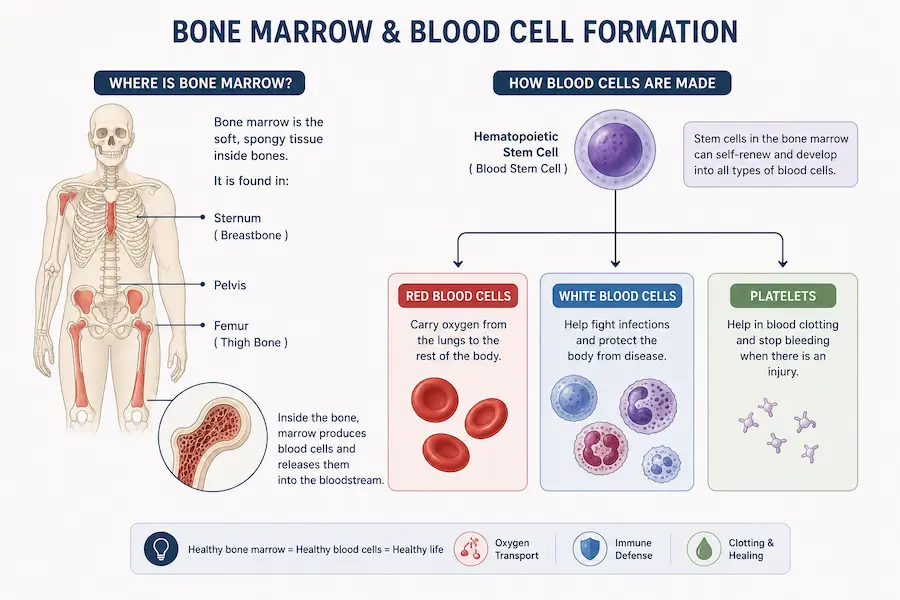
Bone marrow is a soft tissue found inside certain bones that produces essential blood cells — red blood cells, white blood cells, and platelets.
When bone marrow is affected by leukemia, lymphoma, aplastic anemia, or genetic disorders, it may stop producing healthy blood cells. A bone marrow transplant replaces the unhealthy marrow with healthy stem cells to restore normal blood production. During a transplant, healthy stem cells are introduced into the patient’s body, travel to the bone marrow, and begin producing new, healthy blood cells.
Why Is a Bone Marrow Transplant Needed?
Doctors recommend bone marrow transplantation when conventional treatments aren’t enough to control a disease. Common conditions treated through BMT include:
1. Blood Cancers
BMT is commonly used for acute leukemia, chronic leukemia, lymphoma, and multiple myeloma — replacing cancerous or damaged blood-forming cells with healthy ones. Read more about our comprehensive cancer treatment options in India.
2. Aplastic Anemia
This occurs when bone marrow fails to produce enough blood cells. A transplant can restore normal marrow function in suitable patients.
3. Genetic Blood Disorders
Some inherited disorders — thalassemia major, sickle cell disease, certain immune deficiency disorders — may require transplantation.
4. Bone Marrow Failure Disorders
Patients with severe bone marrow failure may benefit from this treatment when other therapies are unsuccessful.
Types of Bone Marrow Transplant in India
There are two main types performed in India:
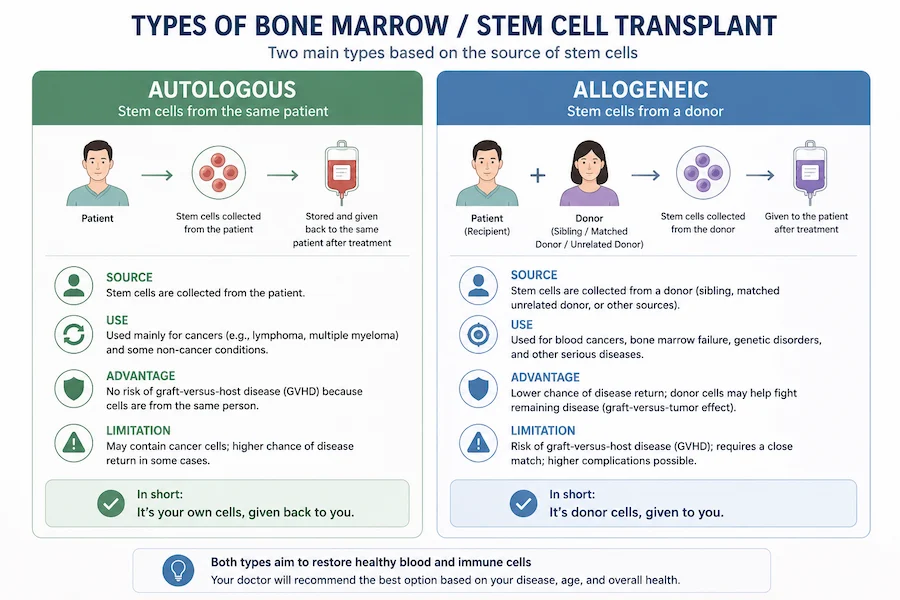
Autologous Bone Marrow Transplant
The patient’s own healthy stem cells are collected, stored, and returned after intensive treatment. Lower risk of rejection, no donor matching required, reduced risk of graft-versus-host disease. Commonly used for multiple myeloma and lymphoma.
Allogeneic Bone Marrow Transplant
Stem cells are collected from a donor whose tissue type matches the patient — a sibling, family member, unrelated matched donor, or partially matched donor. Often used for leukemia, aplastic anemia, and genetic disorders.
Process of Bone Marrow Transplant in India
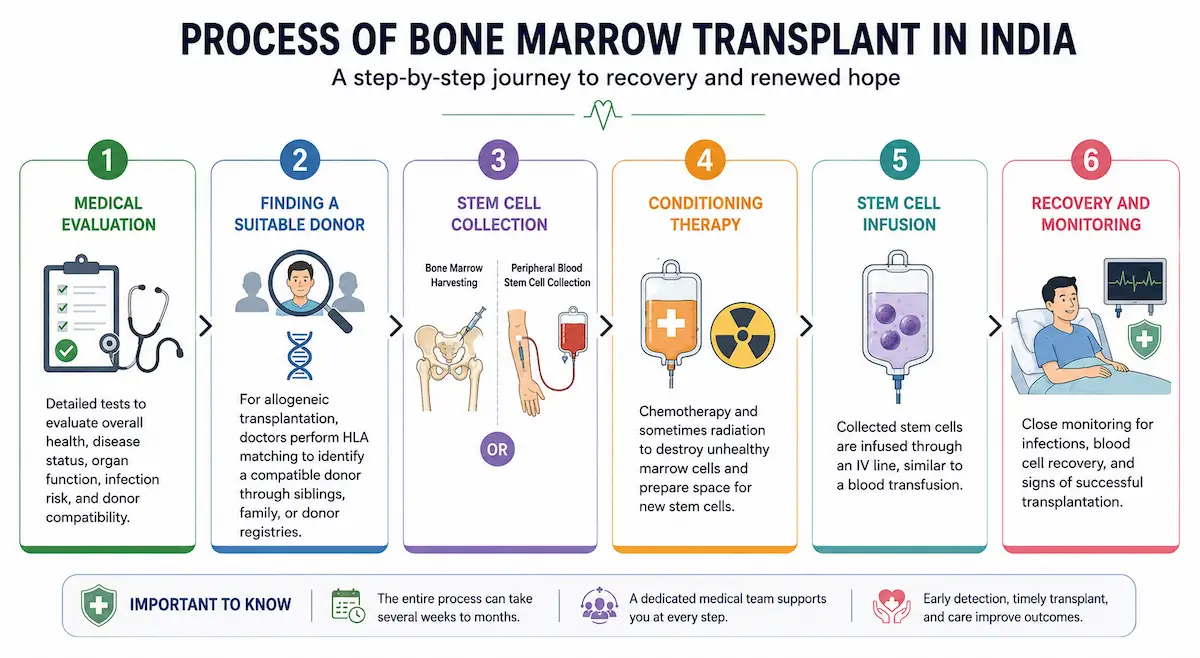
A bone marrow transplant involves several important stages:
Step 1: Medical Evaluation — Detailed tests to evaluate overall health, disease status, organ function, infection risk, and donor compatibility.
Step 2: Finding a Suitable Donor — For allogeneic transplantation, doctors perform HLA matching to identify a compatible donor through siblings, family, or donor registries.
Step 3: Stem Cell Collection — Through bone marrow harvesting or peripheral blood stem cell collection.
Step 4: Conditioning Therapy — Chemotherapy and sometimes radiation to destroy unhealthy marrow cells and prepare space for new stem cells.
Step 5: Stem Cell Infusion — Collected stem cells are infused through an IV line, similar to a blood transfusion.
Step 6: Recovery and Monitoring — Close monitoring for infections, blood cell recovery, and signs of successful transplantation.
Cost of Bone Marrow Transplant in India
The cost varies depending on the type of transplant, hospital, doctor’s expertise, patient’s condition, hospital stay duration, and donor requirements. Post-transplant medications add to the cost too.
Generally, bone marrow transplant costs in India range from approximately ₹10 lakh to ₹40 lakh or more, depending on case complexity. Autologous transplants are usually less expensive than allogeneic ones since donor-related expenses are reduced.
For a personalized cost estimate based on your specific condition, get in touch with our team — we’ll connect you with the right hospital and give you a transparent breakdown before you travel. You can also browse our treatment packages for a sense of how we structure pricing across specialties.
Best Hospitals for Bone Marrow Transplant in India
India has several advanced hospitals with specialized transplant units, experienced hematologists, dedicated transplant teams, and infection-controlled facilities. Through Health Nirvaana, patients get access to some of the country’s leading BMT centers, including:
- Max Healthcare — one of the most established BMT programs in Delhi-NCR, with a dedicated bone marrow transplant unit
- Artemis Hospitals — advanced transplant and critical care infrastructure in Gurgaon
- Fortis Hospitals — a wide network with strong outcomes across major Indian cities
When choosing a hospital, consider the transplant team’s experience, number of successful procedures, donor-matching facilities, infection control standards, and patient support services — this is exactly where our team helps guide the decision.
Who Can Donate Bone Marrow?
Many people can become potential donors if they meet health requirements — selection is based on HLA compatibility, age, overall health, and medical history. Bone marrow donation doesn’t always involve surgery; in many cases, stem cells are collected from blood through a procedure similar to blood donation.
Recovery After Bone Marrow Transplant

Recovery time varies. The first few weeks are the most critical since the immune system remains weak. Patients typically need regular blood tests, a special diet, follow-up appointments, and post-transplant medication. Complete recovery may take several months, with doctors advising a healthy lifestyle throughout.
Success Rate of Bone Marrow Transplant in India
Success depends on the type and stage of disease, patient’s age and overall health, donor compatibility, transplant type, and the medical team’s experience. Many patients in India have successfully undergone BMT and returned to normal or improved quality of life with proper treatment and follow-up care.
Why Choose India for Bone Marrow Transplant?
India has become a preferred destination because of advanced medical facilities, experienced specialists, and affordable treatment. Modern transplant units with international-standard technology, highly trained hematologists, and significantly lower costs compared to Western countries make India a compelling choice.
Risks and Complications of Bone Marrow Transplant
Though life-saving, BMT can involve risks: infection, low blood cell counts during recovery, organ-related complications, graft-versus-host disease (in donor transplants), and chemotherapy side effects. Doctors take preventive measures and provide close monitoring throughout treatment to reduce these risks.
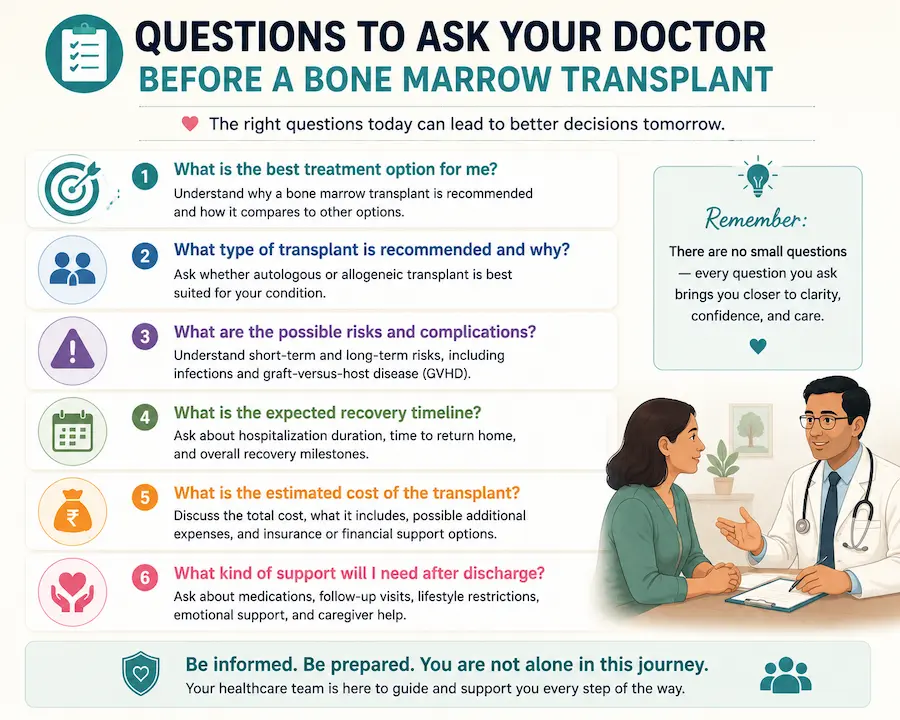
Questions to Ask Your Doctor Before a Bone Marrow Transplant
Before undergoing transplantation, discuss: the best treatment option, type of transplant recommended, possible risks, recovery timeline, estimated cost, and support needed after discharge. Having clear information helps patients and families make informed decisions.
FAQs
Q: What is the bone marrow transplant cost in India?
A: Bone marrow transplant cost in India typically ranges from ₹10 lakh to ₹40 lakh, depending on the type of transplant (autologous vs. allogeneic), hospital, and complexity of the case. Autologous transplants are generally on the lower end since they don’t involve donor-related expenses.
Q: Is bone marrow transplant covered under insurance in India?
A: Many health insurance plans in India cover bone marrow transplant partially or fully, depending on the policy. It’s important to check coverage details with your insurer beforehand, as donor search and certain pre-transplant tests may not always be included.
Q: What is the success rate of bone marrow transplant in India?
A: Success rates vary based on the disease type and stage, patient’s age and health, donor compatibility, and the hospital’s experience. India’s leading transplant centers report strong outcomes comparable to international standards.
Q: How long does recovery take after a bone marrow transplant?
A: Initial recovery typically takes a few weeks in the hospital, with complete recovery taking several months. The first few weeks are the most critical as the immune system remains weak.
Q: Which is the best hospital for bone marrow transplant in India?
A: Leading hospitals for bone marrow transplant in India include Max Healthcare, Artemis Hospitals, and Fortis Hospitals — all known for dedicated transplant units, experienced hematologists, and strong success rates.
Conclusion
A bone marrow transplant in India gives new life to patients suffering from serious blood disorders, cancers, and immune system diseases. Advanced hospitals, experienced specialists, and affordable treatment options have made India a trusted destination for this procedure.
Choosing the right hospital, understanding the procedure, and finding a suitable donor are essential steps toward successful treatment. Talk to our team at Health Nirvaana — we help you navigate every step, from your first consultation to your journey home.
Leave a Reply