
Urology Treatment in India
Considering urology treatment in India? Here's what you need to know about common conditions, robotic surgery, and what to expect .
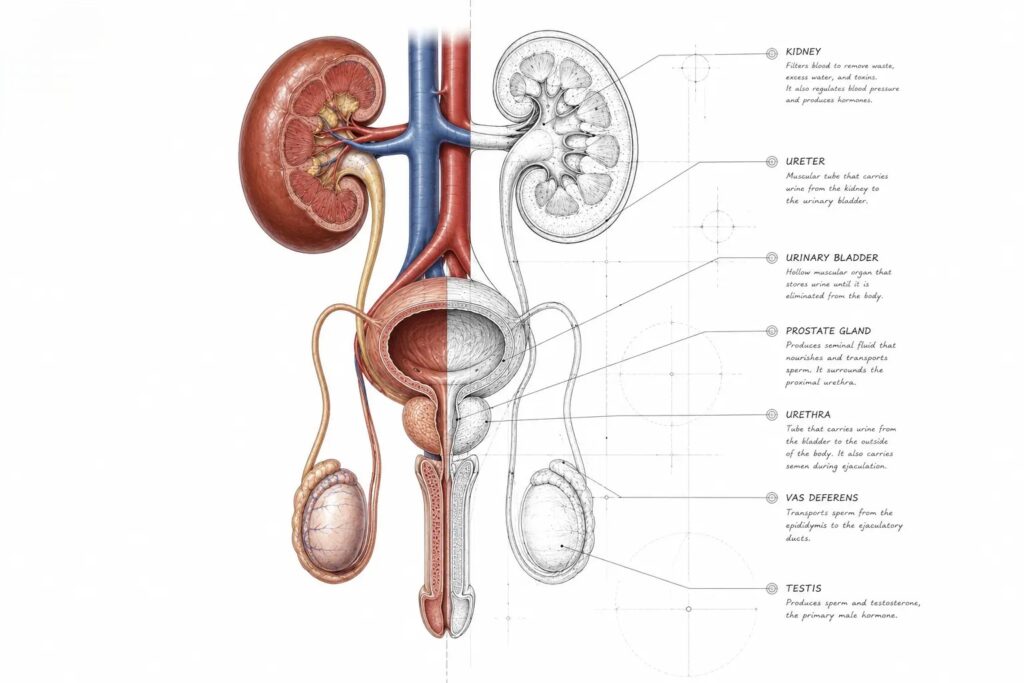
Urology covers the urinary tract — kidneys, ureters, bladder, and urethra — in both men and women, and also the male reproductive organs, including the prostate. The conditions treated by urologists range from the relatively straightforward (kidney stones, urinary tract infections) to the serious and potentially life-threatening (kidney cancer, prostate cancer, bladder cancer).
Prostate disease, in particular, is something that most men will encounter at some point. The prostate is a small gland that sits below the bladder and surrounds the urethra. It tends to enlarge as men age — a condition called benign prostatic hyperplasia (BPH) — causing urinary symptoms that, while not dangerous, can significantly affect quality of life. Separately, prostate cancer is the most common cancer in men and, when caught early, is highly treatable. The challenge is that early prostate cancer rarely causes symptoms at all, which is why screening matters.
Kidney stones are another of the most common urological conditions globally. Formed from minerals and salts that crystallise inside the kidney, they cause some of the most severe pain a person can experience when they move into the ureter. Most small stones pass on their own. Larger ones — or stones that are blocking the urinary tract — require intervention: either ultrasonic fragmentation (lithotripsy), laser treatment through a small camera inserted into the ureter, or in some cases keyhole surgery.
Beyond prostate cancer, benign prostatic hyperplasia (BPH) is one of the most common reasons men seek urology treatment in India. As the prostate enlarges with age, it can press against the urethra, causing frequent urination, weak urine flow, or difficulty starting and stopping. When lifestyle changes and medication no longer control symptoms, a TURP (transurethral resection of the prostate) is typically recommended — a minimally invasive procedure performed through the urethra, without any external incision.
Kidney stone treatment follows a similar logic of matching the intervention to the severity of the case. Smaller stones are often treated with shockwave lithotripsy, breaking them into fragments small enough to pass naturally. Larger or more stubborn
Robotic surgery has transformed urological oncology — particularly prostate cancer surgery. Robotic-assisted radical prostatectomy (RARP) gives surgeons a level of precision and magnification that open surgery cannot match, resulting in better nerve preservation, lower blood loss, and faster recovery. This technology is available in India at a fraction of the cost of equivalent treatment in the US or UK.This makes robotic urology treatment in India a strong option at a fraction of Western costs.
The numbers speak for themselves. Robotic prostate surgery in the United States costs $50,000–$120,000 all in. In India, a complete package including the procedure, hospital stay, and follow-up is $8,000–$18,000. The robotic systems used are identical. The surgeons have, in many cases, trained in the same programmes and performed comparable volumes of cases.
For non-cancer conditions — kidney stones, BPH, bladder issues — India offers efficient, well-priced treatment with very short waiting times. A patient referred for a TURP (transurethral resection of the prostate) in the UK might wait four to six months. In India, the procedure can often be scheduled within one to two weeks.
Each treatment below has its own page explaining exactly what the procedure involves, what to expect before and after, and a full cost breakdown. Click "View details" on any row to read more.