
Kidney Stone Removal (RIRS / URS / Laser Lithotripsy) in India
Kidney Stone Removal (RIRS / URS / Laser Lithotripsy) in India
Patients researching treatment abroad often start by checking the kidney stone removal cost in India against prices for the same laser techniques at home.
Trusted by patients from Uganda, Sierra Leone, DR Congo, South Sudan, Ethiopia and 30+ countries for affordable, high-success urology care.
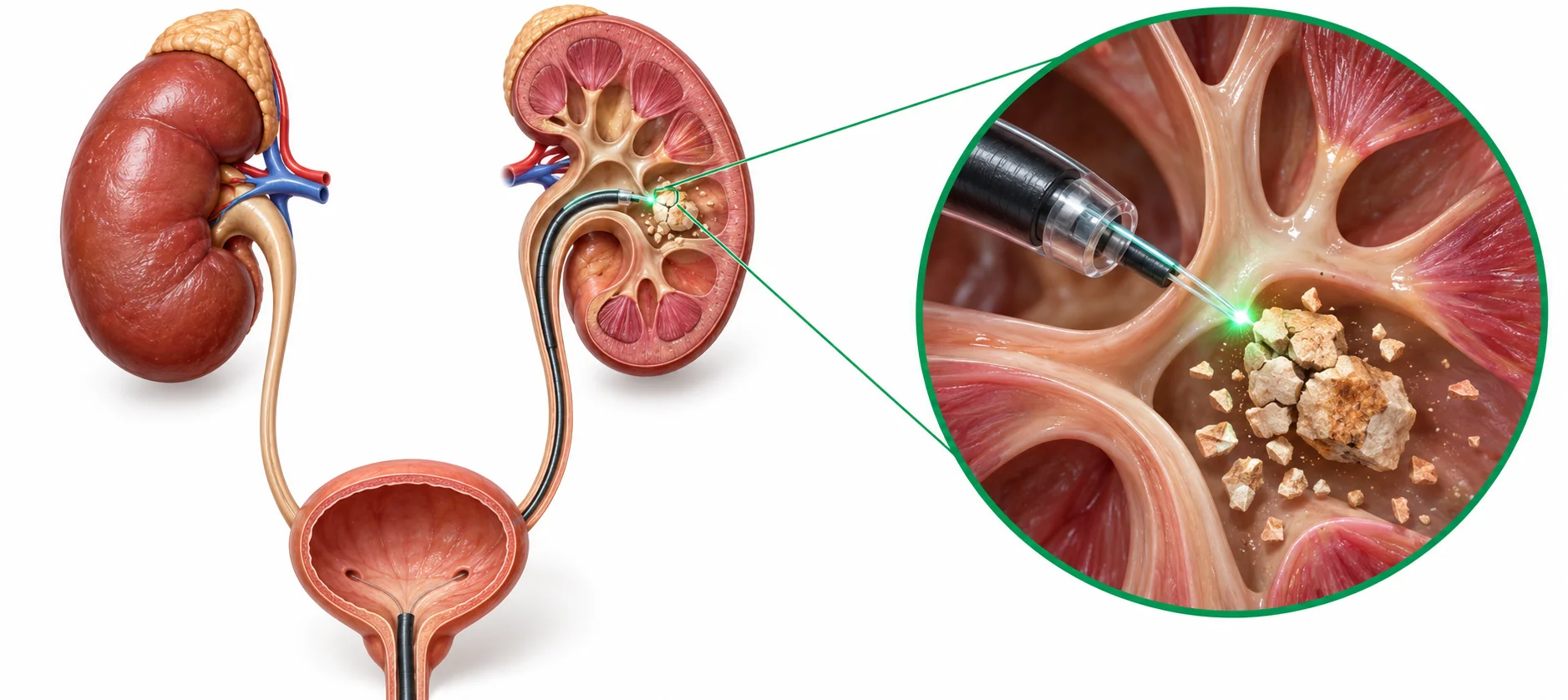
What Is Kidney Stone Removal (RIRS / URS)?
Kidney stones form when minerals and salts dissolved in the urine crystallise inside the kidney and stick together. Small stones under 5–6 mm often pass on their own, though the process can be excruciatingly painful; larger stones, or stones lodged in the ureter, need active treatment.
There are two main minimally invasive approaches. URS (Ureteroscopy) with laser lithotripsy passes a thin, flexible camera through the urethra and bladder up into the ureter or kidney, with no incisions of any kind. Once the stone is located, a laser fibre fragments it into dust or tiny pieces small enough to pass naturally. You can read more about kidney stones and treatment options from the NIDDK's overview of kidney stones.
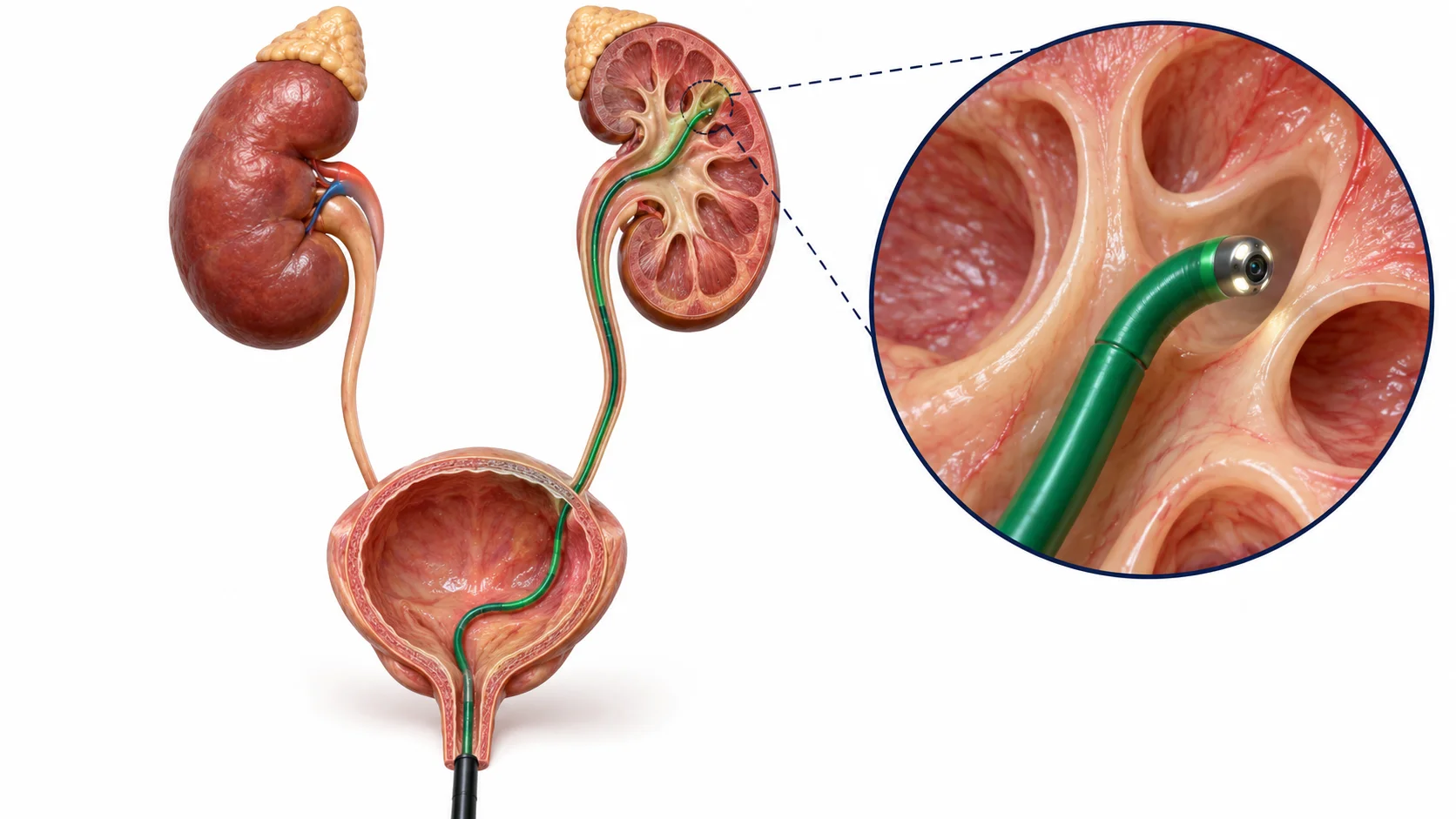
RIRS (Retrograde Intrarenal Surgery) uses the same principle, but with a flexible camera that bends to navigate deep into the kidney and treat stones within the collecting system — used specifically for kidney stones up to about 2 cm not accessible by other approaches. Both procedures are performed under general or spinal anaesthesia, and most patients go home the next morning with a temporary stent.
Who Needs Kidney Stone Removal?
- A stone over 10 mm, which almost always needs a procedure
- A stone between 6–10 mm that hasn't passed on its own with hydration and medication
- A stone lodged in the ureter, causing pain that isn't resolving
- A kidney stone up to about 2 cm that isn't accessible by other approaches, suited to RIRS
- Confirmed stone size, location, and composition on a CT scan, guiding the right technique
- A history of recurrent stones, where active removal and later metabolic testing can help reduce future episodes
Your urologist will assess your stone and recommend URS or RIRS based on its size and location. Patients managing other urological conditions may also find our robotic prostate cancer surgery cost in India page useful.
Types of Kidney Stone Removal We Facilitate
The right technique depends on where the stone sits and how large it is.
URS with Laser Lithotripsy
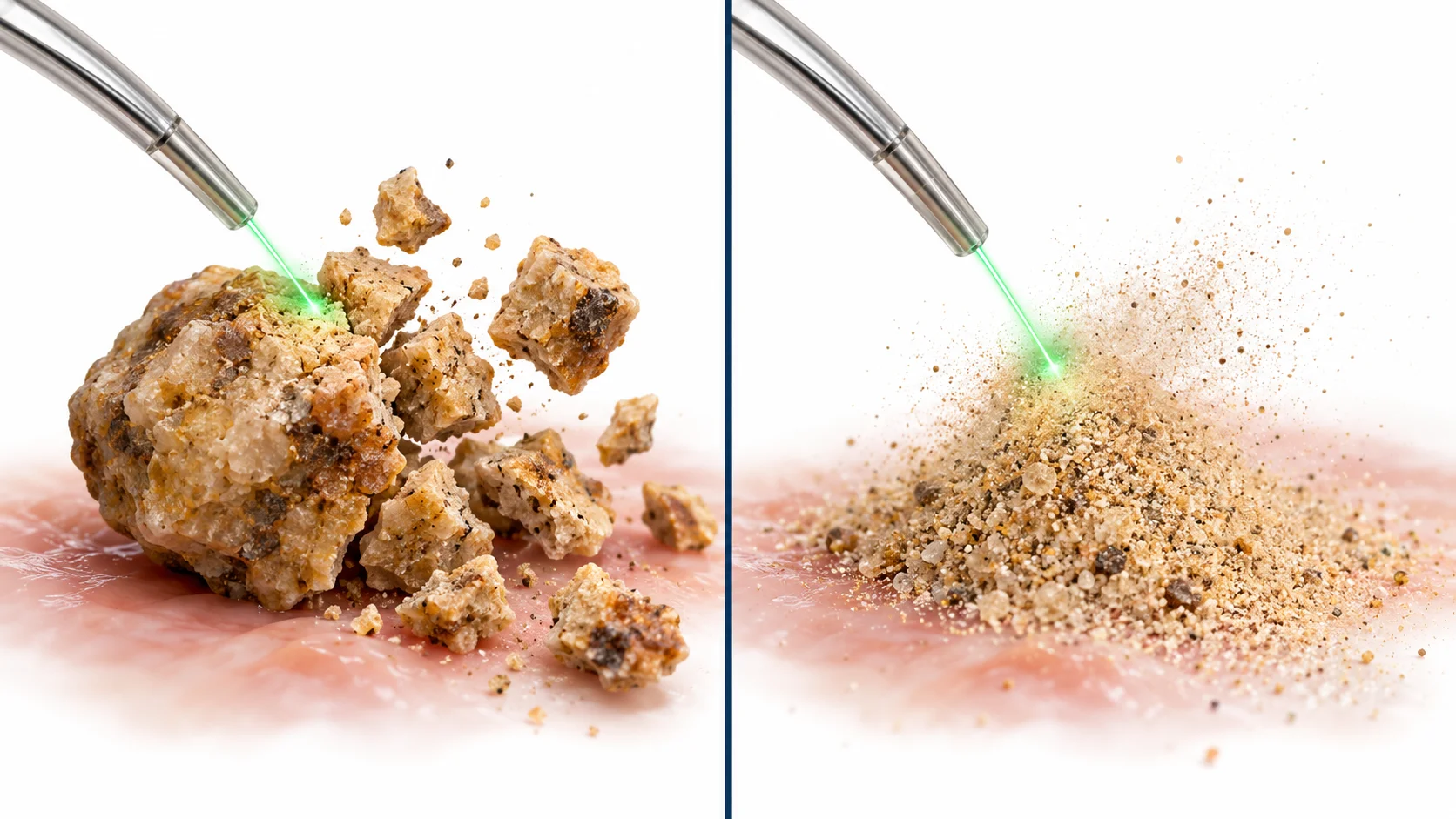
The standard treatment for ureteric stones, and increasingly used for kidney stones too — no incisions, with the laser fragmenting the stone under direct camera vision.
RIRS (Retrograde Intrarenal Surgery)
A flexible, bendable camera navigates deep into the kidney to treat stones up to about 2 cm within the collecting system.
Laser Dusting
The laser reduces the stone to fine dust that passes naturally in the urine, minimising discomfort compared to larger fragments.
Stent Placement & Removal
A temporary stent helps the ureter heal and drain after the procedure, removed 2–4 weeks later in a brief outpatient visit.
What to Expect — Step by Step

Pre-operative assessment
A CT scan confirms the stone's size, location, and composition, guiding whether URS or RIRS is the right approach.
The procedure
Performed under general or spinal anaesthesia, the ureteroscope locates the stone and the laser fragments it into dust or tiny pieces.
Temporary stent placement
A thin tube is left inside the ureter to help it heal and drain while any remaining fragments pass.
Discharge (next morning)
Most patients go home the next morning with the stent in place.
Early recovery (Days 1–5)
Most patients are back to their normal routine within 3–5 days, with mild stent-related discomfort possible during this period.
Stent removal (2–4 weeks)
The stent is removed in a brief outpatient procedure under local anaesthesia or light sedation.
Key Benefits
No incisions of any kind — instruments enter through the natural urinary tract
Highly effective, with stone-free rates of 85–95% for appropriately selected stones
Same-day or next-morning discharge in most cases
The laser fragments stones completely, reducing them to dust that passes without discomfort
Rapid return to normal activity, with most patients back to routine within 3–5 days
RIRS reaches stones up to 2 cm deep in the kidney that other approaches can't access
Risks — and What We Do to Minimise Them
Like any urological procedure, URS and RIRS carry risks including infection, bleeding, and rarely, injury to the ureter. The temporary stent can cause urinary frequency, mild bladder discomfort, or a dull ache in the flank, particularly at the end of urination, and some stone fragments occasionally need a further session to fully clear.
These risks are why we only work with accredited hospitals with experienced urologists, modern laser technology, and clear stent management protocols. Your urologist will review your personal risk profile in detail before you commit to the procedure.
Kidney Stone Removal Cost in India
| Region | Package Cost (USD) |
|---|---|
| India | $1,200 – $4,500 |
| Singapore | $6,000 – $15,000 |
| United Kingdom | $5,000 – $12,000 |
| United States | $10,000 – $30,000 |
Prices are indicative, all-inclusive package estimates covering the procedure, stent, and hospital stay. Actual cost depends on the hospital, stone complexity, and your individual clinical profile. Contact Health Nirvaana for a personalised quote.
Frequently Asked Questions
What is the kidney stone removal cost in India?
Kidney stone removal cost in India typically ranges from $1,200 to $4,500 as an all-inclusive package, compared to $10,000–$30,000 in the United States for the same procedure.
Is surgery always needed for kidney stones?
No. Stones smaller than 5–6 mm have a good chance of passing spontaneously, particularly with good hydration and medication to relax the ureter. Stones 6–10 mm can sometimes pass but often need help, and stones over 10 mm almost always need a procedure. Your urologist will assess the stone's size, location, and composition from a CT scan to guide the decision.
What is the stent for, and will I feel it?
The stent is a thin flexible tube running from the kidney to the bladder, keeping the ureter open and letting remaining stone fragments drain. Some patients find it causes urinary frequency, mild bladder discomfort, or a dull ache in the flank, particularly at the end of urination. It's removed 2–4 weeks later under local anaesthesia or light sedation in a brief outpatient procedure.
Will the stones come back?
Kidney stones have a significant recurrence rate — roughly 50% of patients develop another stone within 10 years without dietary changes. Your urologist will recommend stone analysis and blood/urine tests to identify the stone's type and underlying cause, and advise on dietary and lifestyle changes to reduce recurrence.
How long do I need to stay in India?
We recommend 7–10 days, covering the procedure, initial recovery, and a check before flying home. The stent itself is typically removed closer to home or on a planned return visit, 2–4 weeks after the original procedure.
Why Choose Health Nirvaana
We work only with accredited hospitals and experienced urologists using modern laser technology, so your kidney stone removal cost in India stays transparent from your first enquiry to your flight back home.
Ready to take the next step?
Share your CT scan and reports with our team and get a personalised treatment plan and cost estimate — no obligation.