
Prostate Surgery (HoLEP / TURP / Laser Surgery) in India
Prostate Surgery (HoLEP / TURP / Laser Surgery) in India
Men researching treatment for an enlarged prostate often start by checking the prostate surgery cost in India against prices for the same laser and endoscopic techniques at home.
Trusted by patients from Uganda, Sierra Leone, DR Congo, South Sudan, Ethiopia and 30+ countries for affordable, high-success urology care.
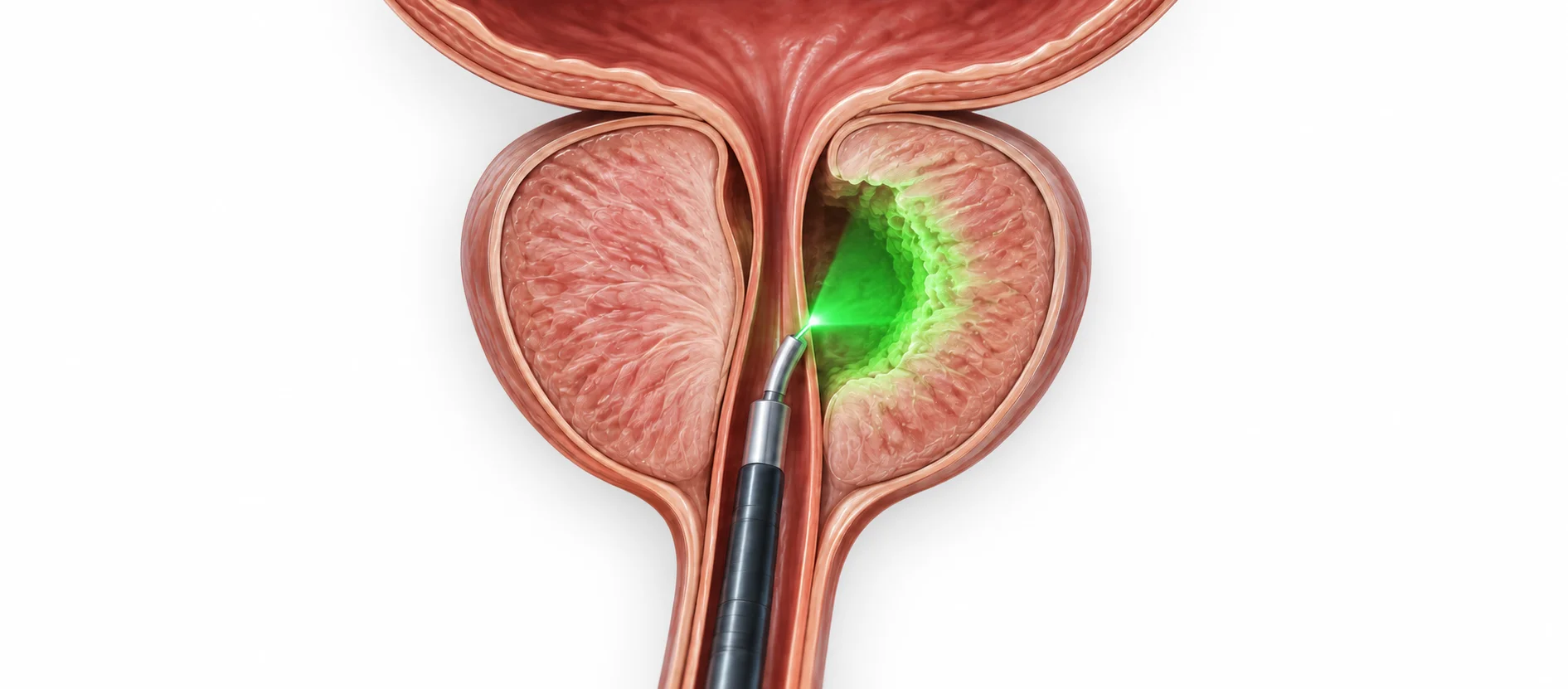
What Is Prostate Surgery for an Enlarged Prostate?
Benign Prostatic Hyperplasia (BPH), an enlarged prostate, is the most common reason men over 50 have urinary problems. As the prostate grows, it compresses the urethra, causing a slow or interrupted stream, difficulty starting, a feeling of incomplete emptying, and the need to get up repeatedly at night to urinate.
When medication no longer gives adequate relief, surgery removes or reduces the obstructing prostate tissue. All modern surgical approaches for BPH are done entirely through the urethra, with no cuts anywhere on the outside of the body. You can read more about BPH and its treatment from the NIDDK's overview of benign prostatic hyperplasia.
TURP (Transurethral Resection of the Prostate) is the traditional gold standard, removing obstructing tissue piece by piece using an electrical loop. HoLEP (Holmium Laser Enucleation of the Prostate) is the most advanced technique available, using a holmium laser to separate the entire central obstructing lobe as a whole piece before it's minced and removed — achieving more complete tissue removal than TURP, with less bleeding and a shorter hospital stay.
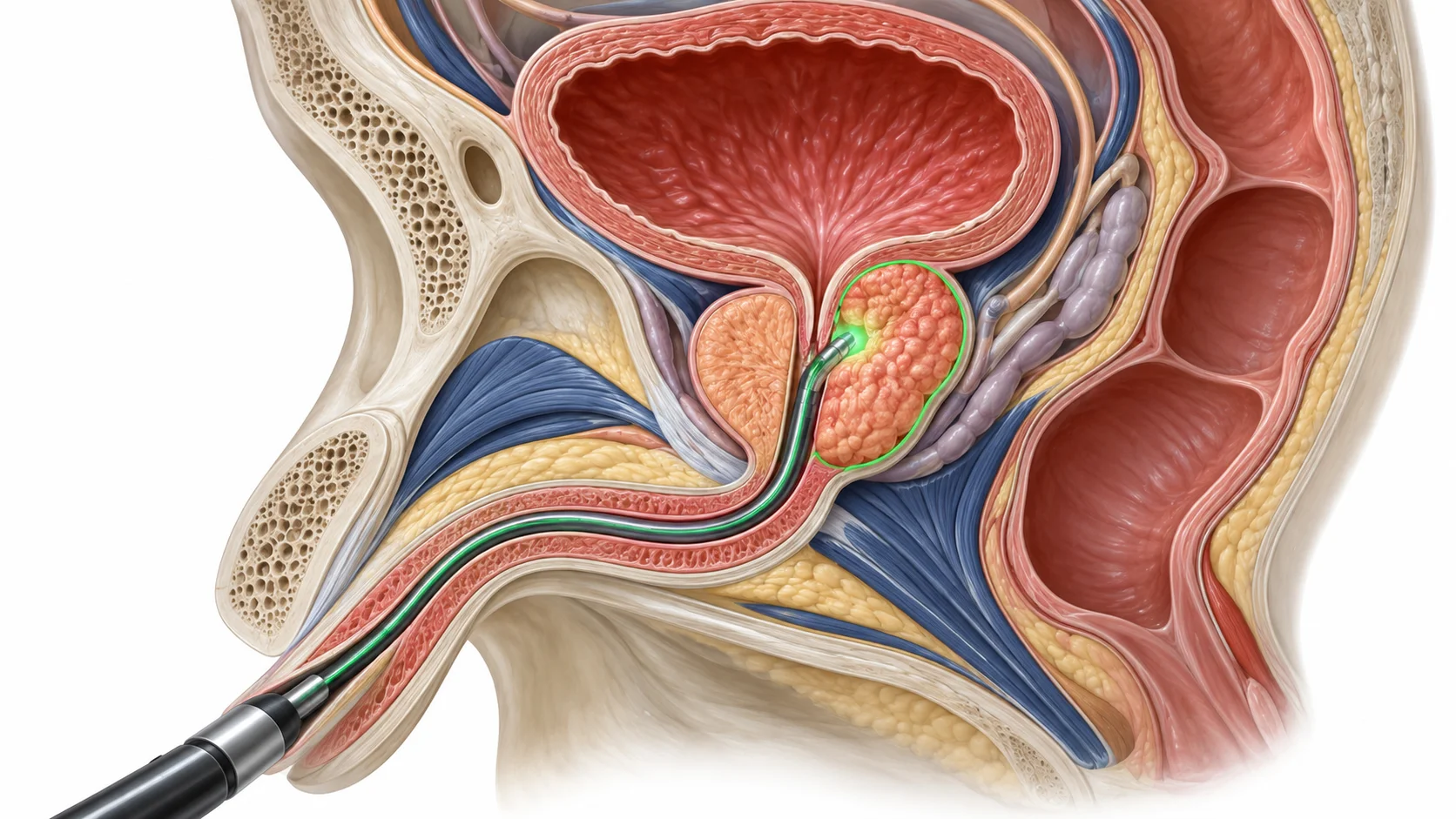
Who Needs Prostate Surgery?
- A slow or interrupted urinary stream, or difficulty starting to urinate
- A feeling of incomplete bladder emptying
- Needing to get up repeatedly at night to urinate
- Symptoms no longer adequately controlled by medication
- A large prostate better suited to HoLEP's more complete tissue removal
- Patients on blood-thinning medication, where HoLEP's reduced bleeding is a significant advantage
Your urologist will confirm whether TURP or HoLEP is the right fit after assessing your prostate size and symptoms. Patients also managing kidney stones may find our PCNL surgery cost in India page useful.
Types of Prostate Surgery We Facilitate
The right technique depends on prostate size, your overall health, and any medications you're taking.
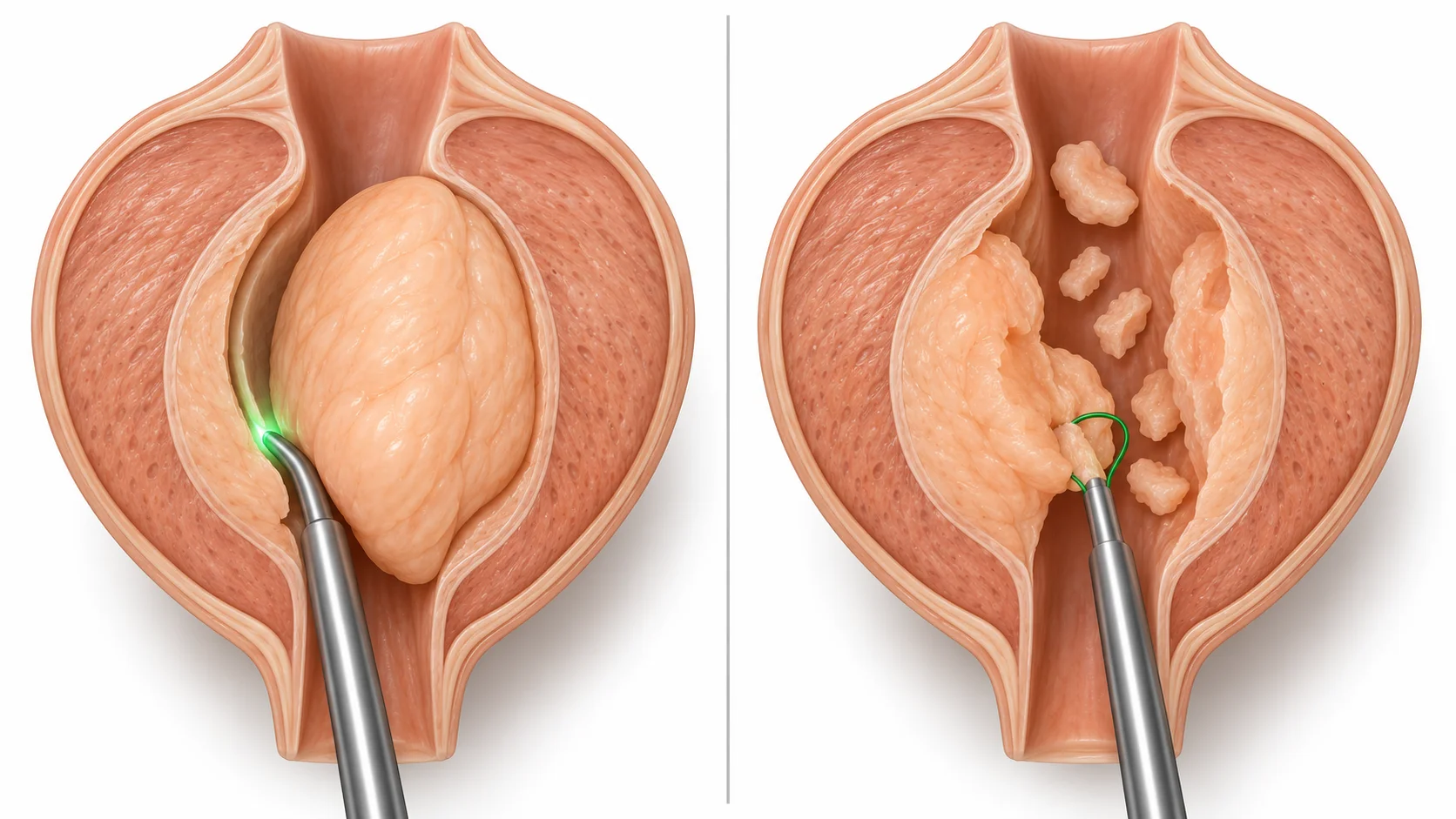
TURP
The traditional, well-proven gold standard, removing obstructing prostate tissue piece by piece using an electrical loop.
HoLEP
The most advanced technique, using a holmium laser to remove the entire obstructing lobe as a whole piece — more complete removal, less bleeding, and often a shorter stay.
Laser Prostate Surgery
Other laser-based approaches that vaporise or resect obstructing tissue, chosen based on prostate size and anatomy.
Revision Surgery
For patients with recurrent obstruction after a previous procedure, a repeat or revision operation clears tissue that has regrown or was incompletely treated.
What to Expect — Step by Step
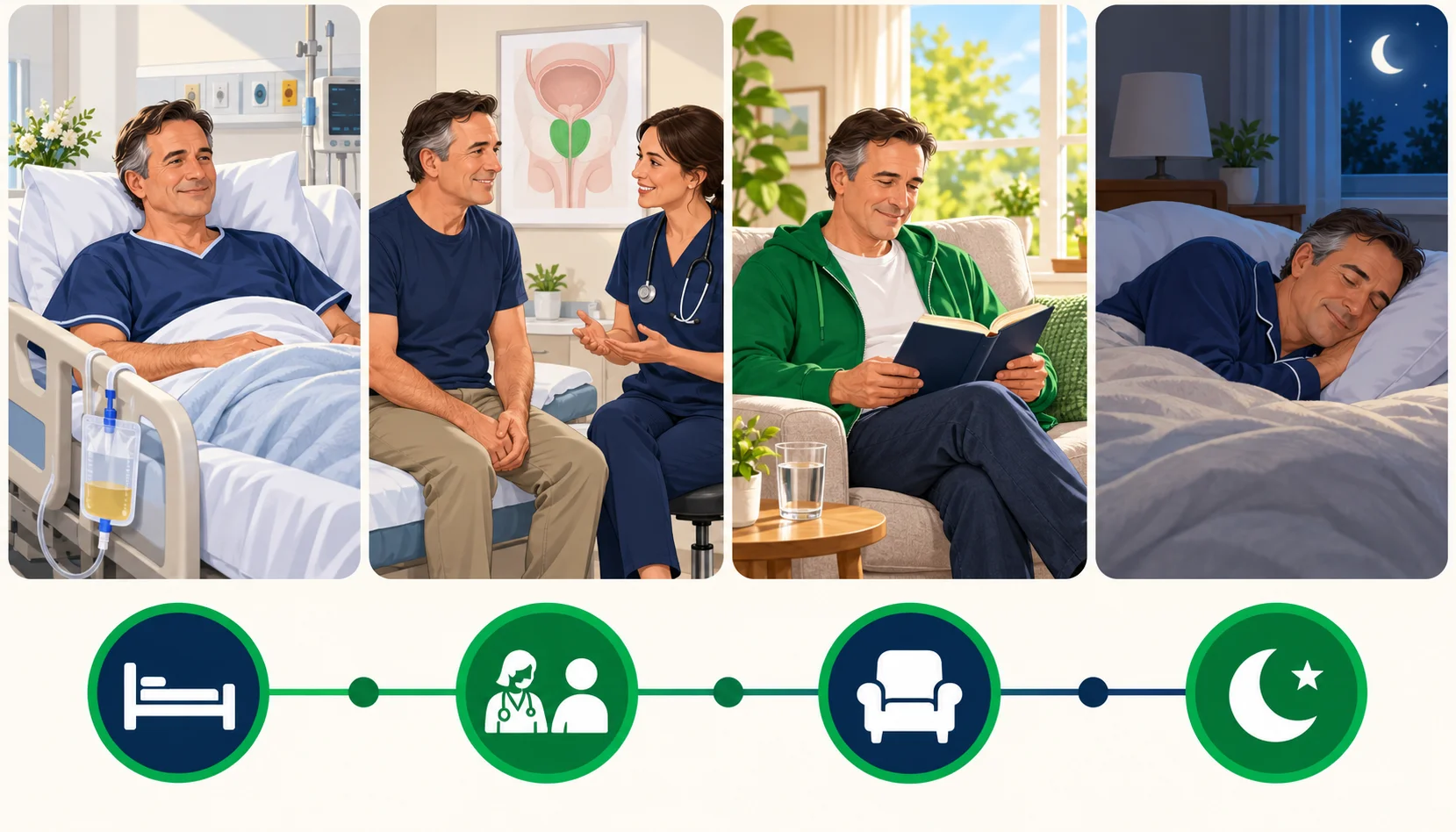
Pre-operative assessment
Your urologist assesses your symptoms, prostate size, and overall health to recommend TURP or HoLEP.
The operation (1–2 hours)
Performed entirely through the urethra under general or spinal anaesthesia, with no cuts on the outside of the body.
Catheter placement
A catheter is placed after the procedure to drain the bladder while the treated area heals.
Hospital recovery (1–4 days)
HoLEP often allows same-day or next-morning discharge; TURP may need a slightly longer stay depending on bleeding and recovery.
Catheter removal
Once healing is confirmed, the catheter is removed before you're discharged or shortly after.
Flow improvement (Days after catheter removal)
Patients typically notice a dramatic improvement in urinary flow and sleep quality within days of the catheter coming out.
Key Benefits
Immediately and durably relieves the urinary obstruction caused by an enlarged prostate
All approaches are endoscopic — no cuts on the skin, no external scarring
HoLEP allows same-day or next-morning discharge in many cases, with significantly less bleeding than TURP
Results are long-lasting, addressing the mechanical cause rather than just managing symptoms
Dramatic improvement in urinary flow and sleep quality within days of catheter removal
HoLEP's reduced bleeding is particularly valuable for patients on blood-thinning medication
Risks — and What We Do to Minimise Them
Like any prostate procedure, TURP and HoLEP carry risks including infection, bleeding, temporary urinary urgency or incontinence, retrograde ejaculation (a well-known and common effect of both techniques), and rarely, urethral stricture over time.
These risks are why we only work with accredited hospitals with experienced urologists, HoLEP laser technology for reduced bleeding where appropriate, and structured catheter care and follow-up. Your urologist will review your personal risk profile in detail before you commit to surgery.
Prostate Surgery Cost in India
| Region | Package Cost (USD) |
|---|---|
| India | $2,000 – $5,500 |
| Singapore | $8,000 – $18,000 |
| United Kingdom | $7,000 – $15,000 |
| United States | $15,000 – $35,000 |
Prices are indicative; HoLEP sits at the higher end of India's range and TURP at the lower end. In Singapore, HoLEP laser equipment adds cost. In the UK, NHS TURP is available but HoLEP is less widely offered. In the US, HoLEP is increasingly available at specialist centres. Contact Health Nirvaana for a personalised quote.
Frequently Asked Questions
What is the prostate surgery cost in India?
Prostate surgery cost in India typically ranges from $2,000 to $5,500, with HoLEP at the higher end and TURP at the lower end, compared to $15,000–$35,000 in the United States for the same procedures.
What's the difference between TURP and HoLEP?
TURP removes obstructing prostate tissue piece by piece using an electrical loop and is the traditional, well-proven gold standard. HoLEP uses a holmium laser to remove the entire obstructing lobe as one piece, achieving more complete tissue removal with less bleeding and often a shorter hospital stay.
How quickly will I notice an improvement?
Patients typically notice a dramatic improvement in urinary flow and quality of sleep within days of the catheter being removed, since the surgery addresses the mechanical obstruction directly.
Is prostate surgery better than medication?
Medication manages symptoms, but surgery addresses the mechanical cause and gives long-lasting results. It's generally considered once medication is no longer providing adequate relief.
Will I have any visible scars?
No. All modern surgical approaches for BPH, including TURP and HoLEP, are done entirely through the urethra, with no cuts anywhere on the outside of the body.
How long do I need to stay in India?
We recommend 10–14 days, covering the procedure, catheter removal, and follow-up before flying home. Your care coordinator will confirm the schedule for your specific treatment plan.
Why Choose Health Nirvaana
We work only with accredited hospitals and experienced urologists offering both TURP and advanced HoLEP laser technology, so your prostate surgery cost in India stays transparent from your first enquiry to your flight back home.
Ready to take the next step?
Share your symptoms and reports with our team and get a personalised treatment plan and cost estimate — no obligation.