
Bone Marrow Transplant Cost in India
Bone Marrow Transplant Cost in India
Considering bone marrow transplant cost in India? Here's what BMT / HSCT involves, who needs it, and what it costs — from $18,000, with autologous and allogeneic stem cell transplant options.
Trusted by patients from Uganda, Sierra Leone, DR Congo, South Sudan, Ethiopia and 30+ countries for affordable hematology, oncology, and transplant care.
What Is a Bone Marrow Transplant?
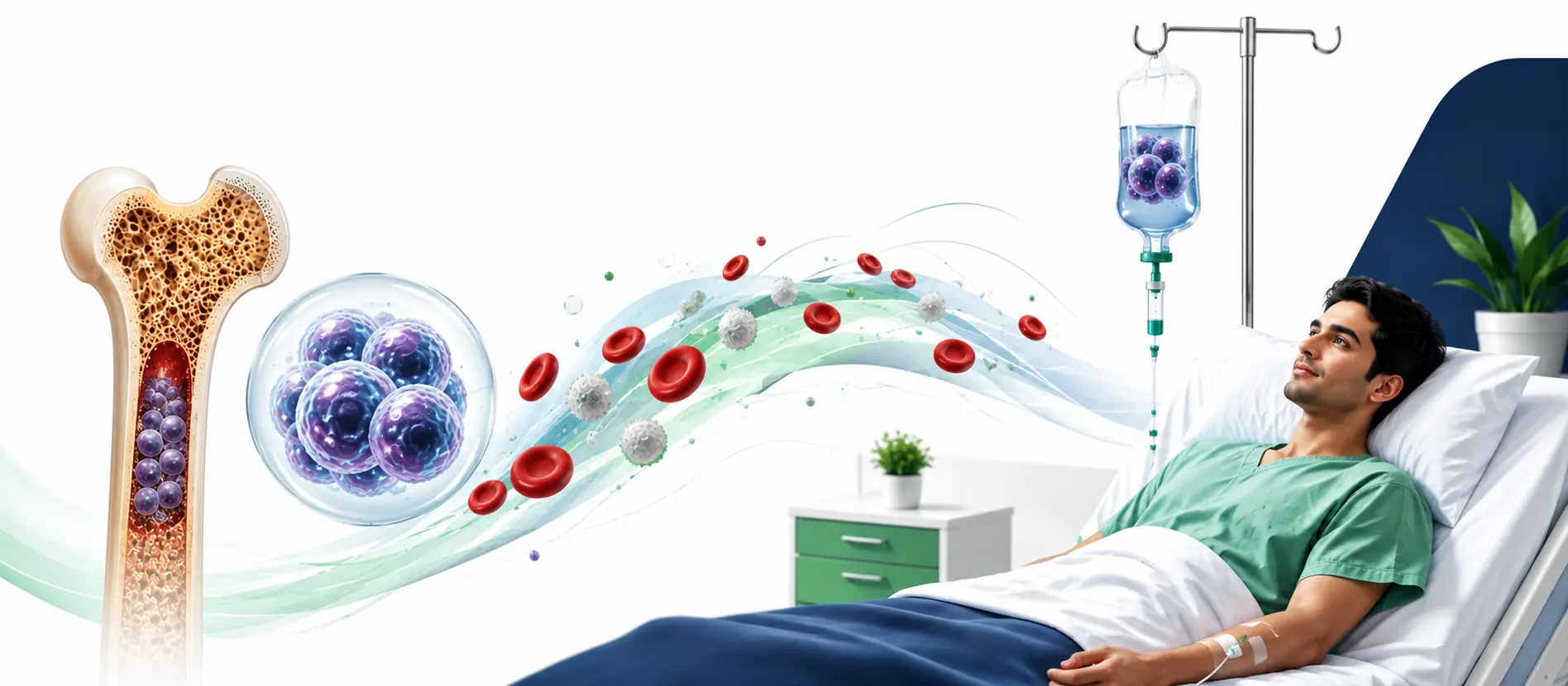
Bone marrow is the soft, spongy tissue inside your bones that produces red blood cells, white blood cells, and platelets.
When the marrow stops working correctly — because of blood cancers such as leukaemia, lymphoma, or multiple myeloma, or conditions such as aplastic anaemia and thalassaemia — a bone marrow transplant can replace diseased or damaged marrow with healthy blood-forming stem cells.
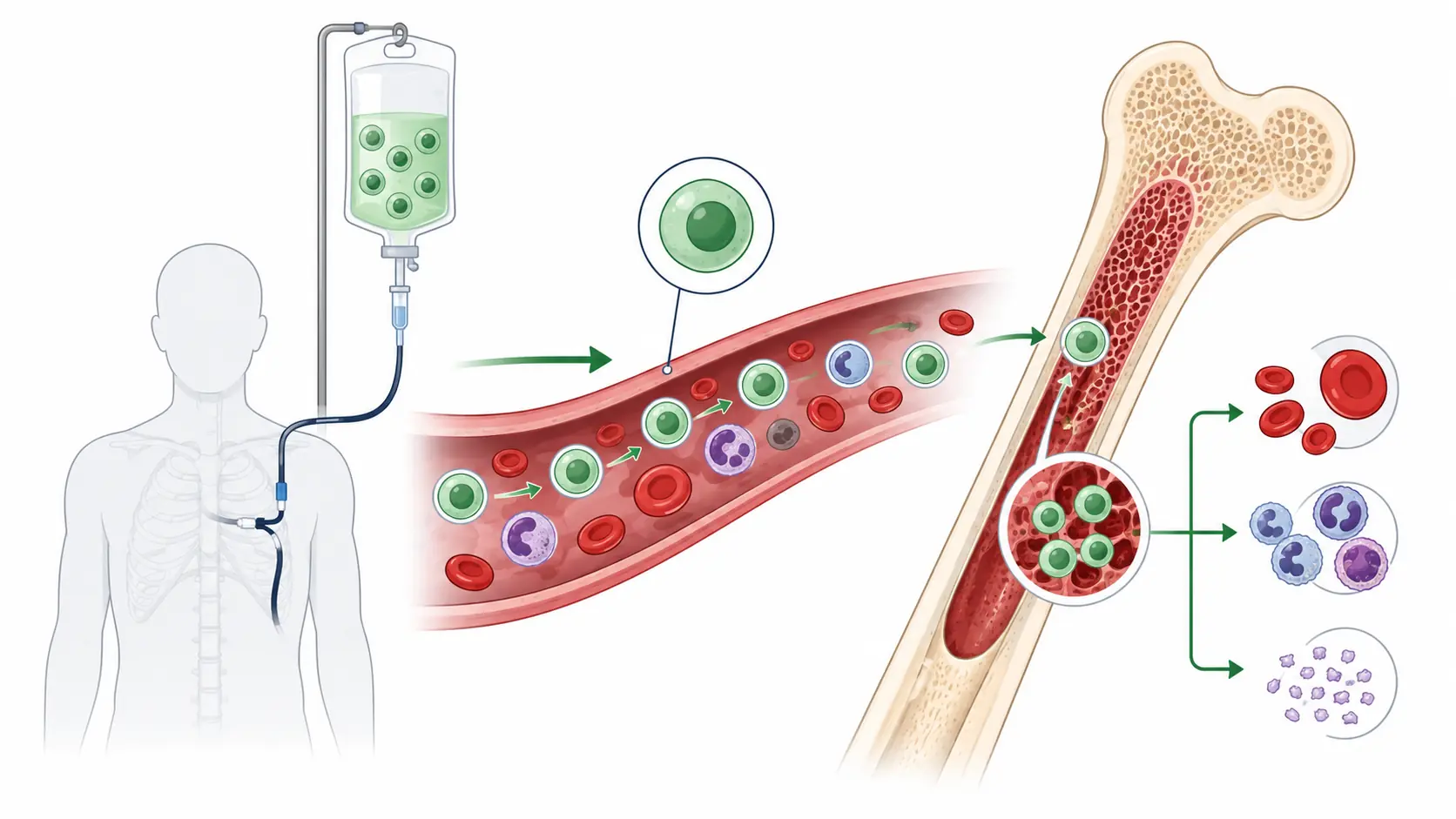
The transplant itself is not a surgery in the usual sense. After chemotherapy and sometimes radiation, healthy stem cells are infused through a central line, similar to a blood transfusion. The cells travel through the bloodstream to the bone marrow, where they begin making healthy new blood cells. You can read more about the transplant process on the NMDP blood stem cell transplant timeline.
Who Needs a Bone Marrow Transplant?
- Leukaemia, including acute myeloid leukaemia and acute lymphoblastic leukaemia in selected cases
- Lymphoma, especially relapsed or high-risk Hodgkin and non-Hodgkin lymphoma
- Multiple myeloma, where autologous stem cell transplant is commonly used after induction therapy
- Aplastic anaemia, where the bone marrow fails to make enough blood cells
- Thalassaemia and sickle cell disease, especially in carefully selected younger patients with a matched donor
- Other immune, genetic, or marrow failure disorders where HSCT may offer long-term remission or cure
A full evaluation includes blood tests, bone marrow tests, infection screening, organ function checks, disease staging, and donor matching where needed. If you are exploring related cancer care, see our cancer treatment page.
Autologous vs. Allogeneic BMT — What's the Difference?
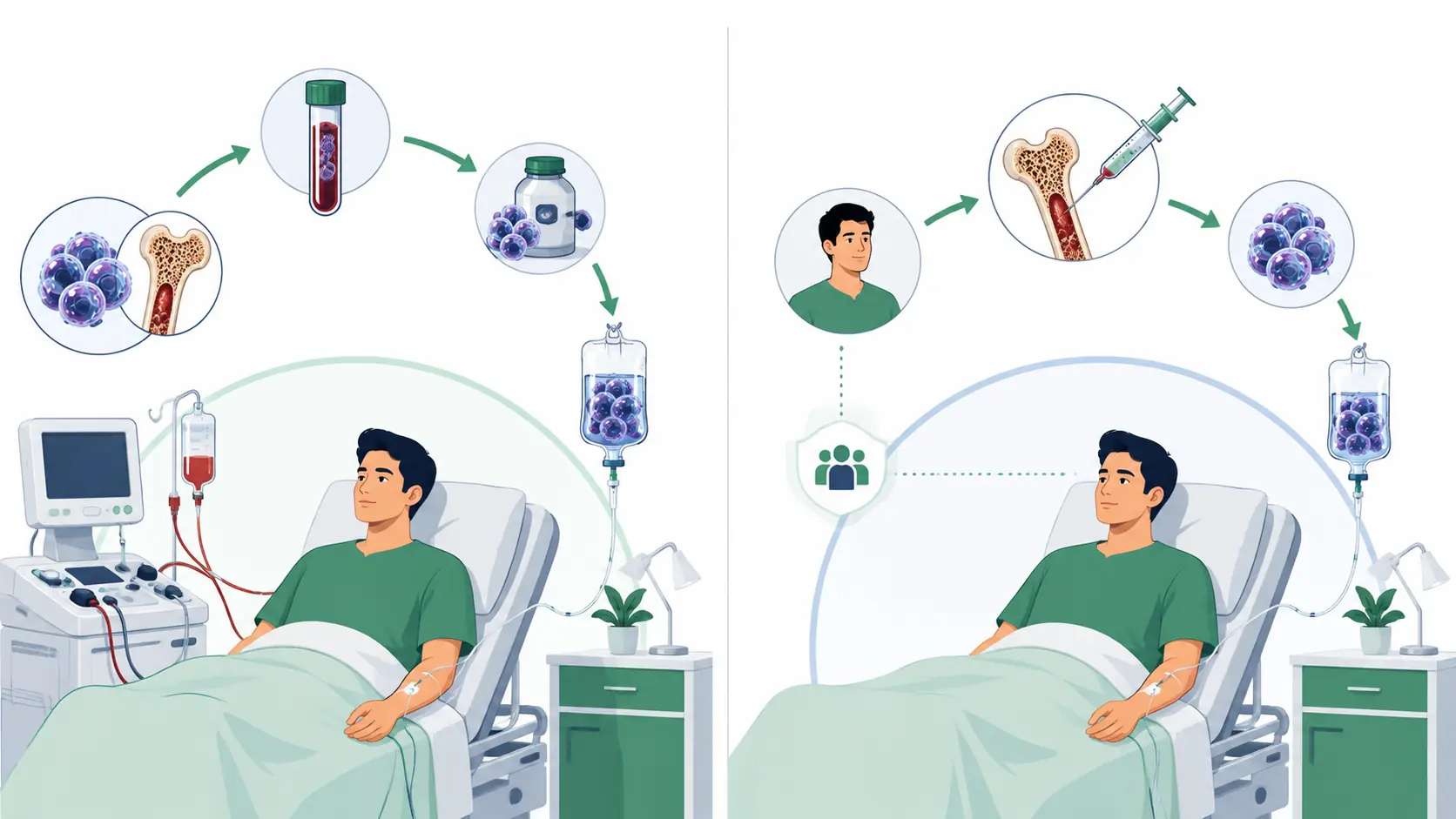
The main difference is where the stem cells come from. Your hematology team recommends the transplant type based on diagnosis, disease stage, treatment response, donor availability, and overall health.
Autologous Transplant
Uses the patient's own stem cells, collected and stored before high-dose chemotherapy. Common in multiple myeloma and some lymphomas, with lower rejection and GVHD risk.
Allogeneic Transplant
Uses stem cells from a matched donor. This may offer a powerful graft-versus-cancer effect but carries higher risks, including graft-versus-host disease.
Matched Sibling / Unrelated Donor
A donor may be a fully matched sibling or an unrelated donor found through a registry. HLA matching helps reduce serious complications.
Haploidentical / Cord Blood Transplant
When a full match is unavailable, selected centres may use half-matched family donors or cord blood, depending on the patient's diagnosis and risk profile.
What to Expect — Step by Step

Evaluation & disease staging
Your hematology team reviews diagnosis, treatment response, organ function, infection status, and transplant suitability.
Stem cell collection or donor matching
For autologous BMT, your own stem cells are collected. For allogeneic BMT, donor HLA matching and donor clearance are completed.
Conditioning therapy
High-dose chemotherapy, and sometimes radiation, prepares the body by clearing diseased marrow and making space for healthy stem cells.
Transplant day: stem cell infusion (1–5 hours)
Stem cells are infused through a drip or central line. The infusion is usually painless and feels similar to receiving a blood transfusion.
Isolation & engraftment (2–4 weeks)
Blood counts are monitored daily while the new stem cells settle in the marrow and begin producing healthy blood cells.
Recovery & immune rebuilding
Most recovery takes 6–12 months, while full immune rebuilding may take 1–2 years, especially after allogeneic transplant.
Key Benefits
Can cure or achieve long-term remission in selected blood cancers and bone marrow failure disorders
The transplant infusion itself is usually painless and takes only a few hours through a drip
New blood cells typically start forming within 2–4 weeks after transplant
Autologous transplant has lower rejection and GVHD risk because it uses the patient's own cells
Allogeneic transplant can provide a graft-versus-cancer effect in selected high-risk diseases
India offers BMT / HSCT at costs often 5–10 times lower than Western countries
Risks — and What We Do to Minimise Them
BMT / HSCT is intensive treatment and carries risks including infection, bleeding, low blood counts, mouth ulcers, organ stress, relapse, infertility risk, and medication side effects. In allogeneic transplant, graft-versus-host disease (GVHD) is an important risk where donor immune cells may attack the patient's tissues.
These risks are why Health Nirvaana works with hospitals that have dedicated hematology transplant units, HEPA-filtered isolation rooms, infection-control protocols, transfusion support, experienced ICU backup, and long-term follow-up programs. Your transplant team will review your personal risk profile before treatment begins.
Bone Marrow Transplant Cost in India vs. Other Countries
| Region | Package Cost (USD) |
|---|---|
| India | $18,000 – $45,000 |
| Singapore | $80,000 – $150,000 |
| USA / UK / Western Europe | $200,000 – $500,000 |
Prices are indicative, all-inclusive package estimates. Actual cost depends on diagnosis, transplant type, donor matching, chemotherapy protocol, infection risk, hospital stay, blood product needs, and individual clinical profile.
Frequently Asked Questions
Is bone marrow transplant the same as stem cell transplant?
In most modern treatment settings, BMT and HSCT are used closely together. Many transplants now use blood-forming stem cells collected from the bloodstream rather than directly from bone marrow.
Is the bone marrow transplant infusion painful?
No. The stem cell infusion is usually painless and is given through a central line or drip, similar to a blood transfusion. The intensive part is the chemotherapy before transplant and the recovery period after infusion.
How long does engraftment take after BMT?
Engraftment usually occurs within 2–4 weeks, when the transplanted stem cells begin producing new blood cells. During this period, infection prevention and close monitoring are critical.
How long do I need to stay in India for BMT?
Most international patients should plan for several weeks to a few months, depending on transplant type, engraftment, complications, and follow-up needs. Hospital stay commonly ranges from 21–35 days, often in an isolation unit.
Which is better: autologous or allogeneic transplant?
Neither is universally better. Autologous transplant uses your own cells and has lower rejection risk, while allogeneic transplant uses donor cells and may be needed for diseases where replacing the immune system offers the best chance of remission or cure.
What is the success rate of bone marrow transplant?
Success varies widely by disease, stage, remission status, age, donor match, infection risk, and transplant type. Many programs quote disease-dependent success ranges around 70–90% in suitable patients, but your hematologist should provide a personalised estimate.
Can Health Nirvaana help with donor testing and travel support?
Yes — our team assists with hospital appointments, donor work-up coordination, medical visa invitation letters, airport pickup, interpreter support, accommodation, and ongoing care coordination.
Why Choose Health Nirvaana
We work with accredited hospitals that offer specialised hematology, oncology, stem cell transplant, infection-control, transfusion medicine, and ICU support. Every patient is assigned a dedicated care coordinator from first enquiry through evaluation, transplant admission, recovery, and follow-up planning.
Ready to take the next step?
Share your diagnosis, latest blood reports, bone marrow biopsy, PET/CT or scan reports, and treatment history with our team to get a personalised BMT / HSCT plan and cost estimate.