
Endoscopic Spine Surgery in India
Endoscopic Spine Surgery in India
Patients researching the least invasive back surgery options often start by checking the endoscopic spine surgery cost in India against prices back home.
Trusted by patients from Uganda, Sierra Leone, DR Congo, South Sudan, Ethiopia and 30+ countries for affordable, high-success spinal care.
What Is Endoscopic Spine Surgery?
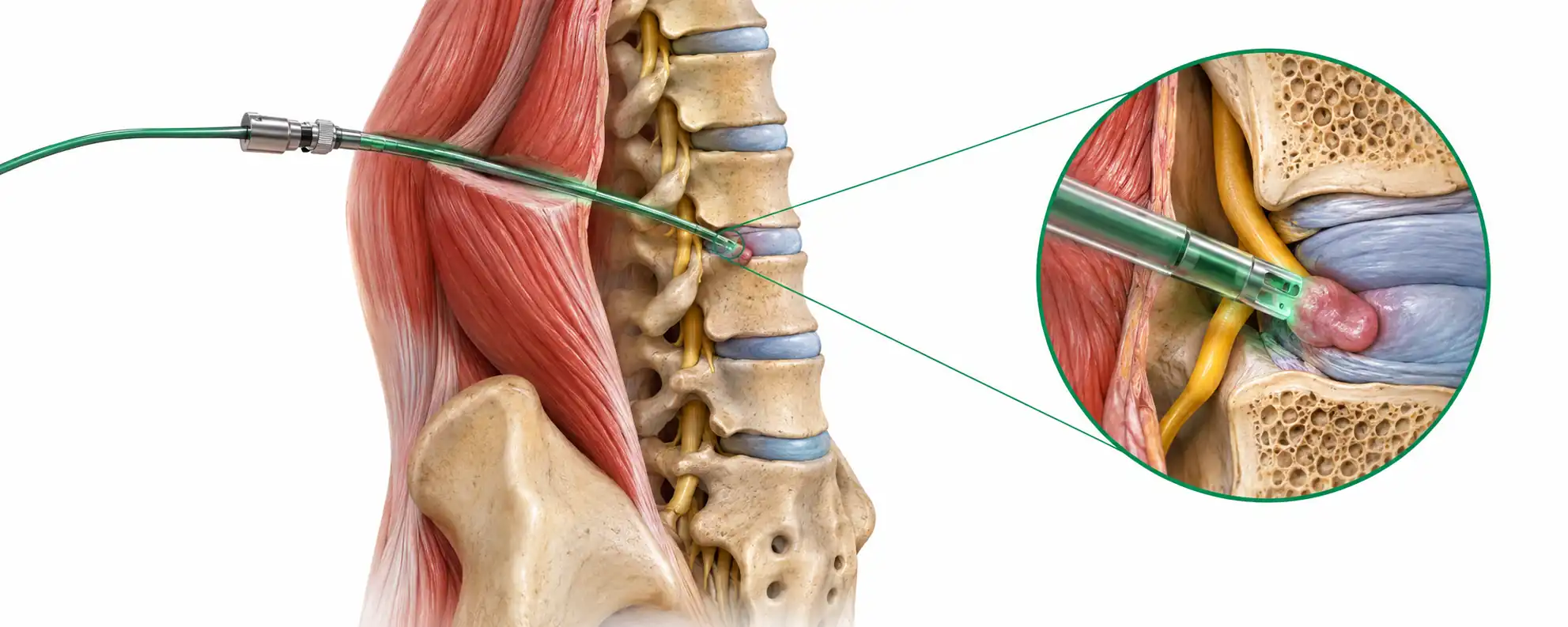
Endoscopic spine surgery is the most minimally invasive form of spinal surgery currently available — where a standard microdiscectomy uses a small incision and a microscope, this technique uses an even smaller tube, often less than 1 cm in diameter, through which a camera and micro-instruments pass at the same time.
The surgeon works while watching a live video feed on a screen, rather than looking directly into the surgical field. There's no cutting of muscle fibres — the tube simply passes between muscle layers, separating them temporarily, and they fall back into place once it's removed. You can read more about minimally invasive spine techniques from the NIH's overview of herniated discs.
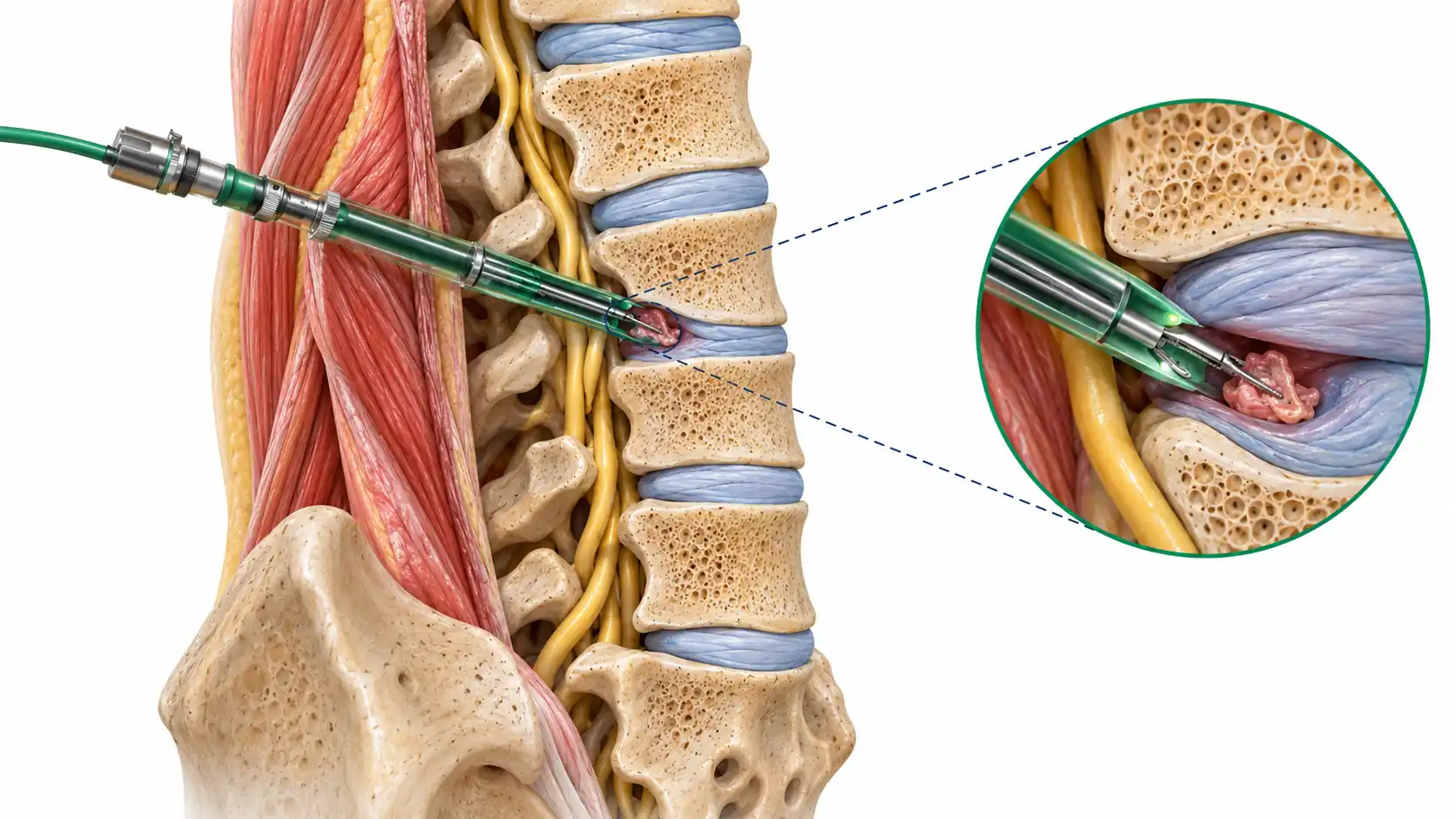
Endoscopic spine surgery treats the same problems as open microdiscectomy — herniated discs, foraminal stenosis, and some forms of spinal canal narrowing — but with faster recovery, less post-operative pain, and shorter hospital stays.
Who Needs Endoscopic Spine Surgery?
- A single-level herniated disc pressing on a spinal nerve
- Foraminal stenosis — narrowing of the channel through which the nerve exits the spine
- Sciatica or nerve-related leg pain that hasn't responded to conservative treatment
- A preference for the smallest possible incision and fastest recovery for a suitable defect
- A bone spur compressing a nerve root, confirmed on MRI or CT
- Note: multi-level disease, instability requiring fusion, or severe canal stenosis typically need conventional open or minimally invasive open techniques instead
Your spine surgeon will confirm whether your MRI findings are suitable for the endoscopic approach. If your case involves instability rather than a straightforward disc herniation, you may also want to read our spine fusion surgery cost in India page.
Types of Endoscopic Spine Surgery We Facilitate
The right technique depends on where the disc or bone spur is pressing on the nerve.
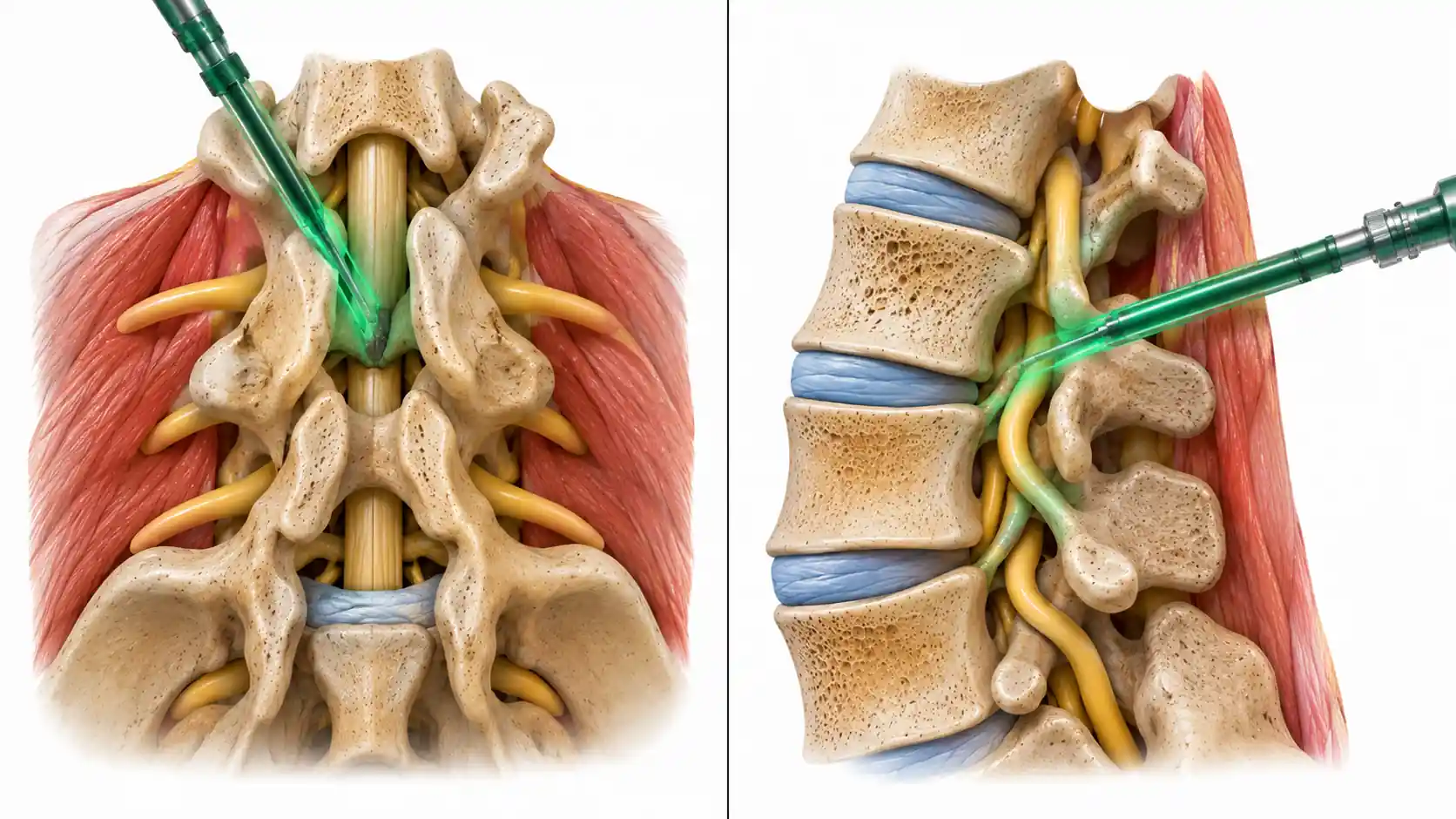
Interlaminar Endoscopic Discectomy
Accesses the disc through the space between adjacent vertebral laminae, commonly used for central and paracentral disc herniations.
Transforaminal Endoscopic Discectomy
Accesses the disc from the side, through the natural foramen — well suited to foraminal and far-lateral disc herniations.
Foraminal Stenosis Decompression
Widens a narrowed nerve exit channel to relieve compression, using the same small-tube endoscopic approach.
Bone Spur (Osteophyte) Removal
Removes bony overgrowth compressing a nerve root, guided by direct camera vision throughout.
What to Expect — Step by Step
Pre-operative assessment
An MRI confirms the level and nature of the problem; a CT scan may add bony detail, followed by anaesthesia assessment.
The operation (45 minutes–2 hours)
Usually performed under general anaesthesia or sedation. A small nick in the skin and a dilating tube create the working channel for the endoscope.
Recovery (Hours 1–4)
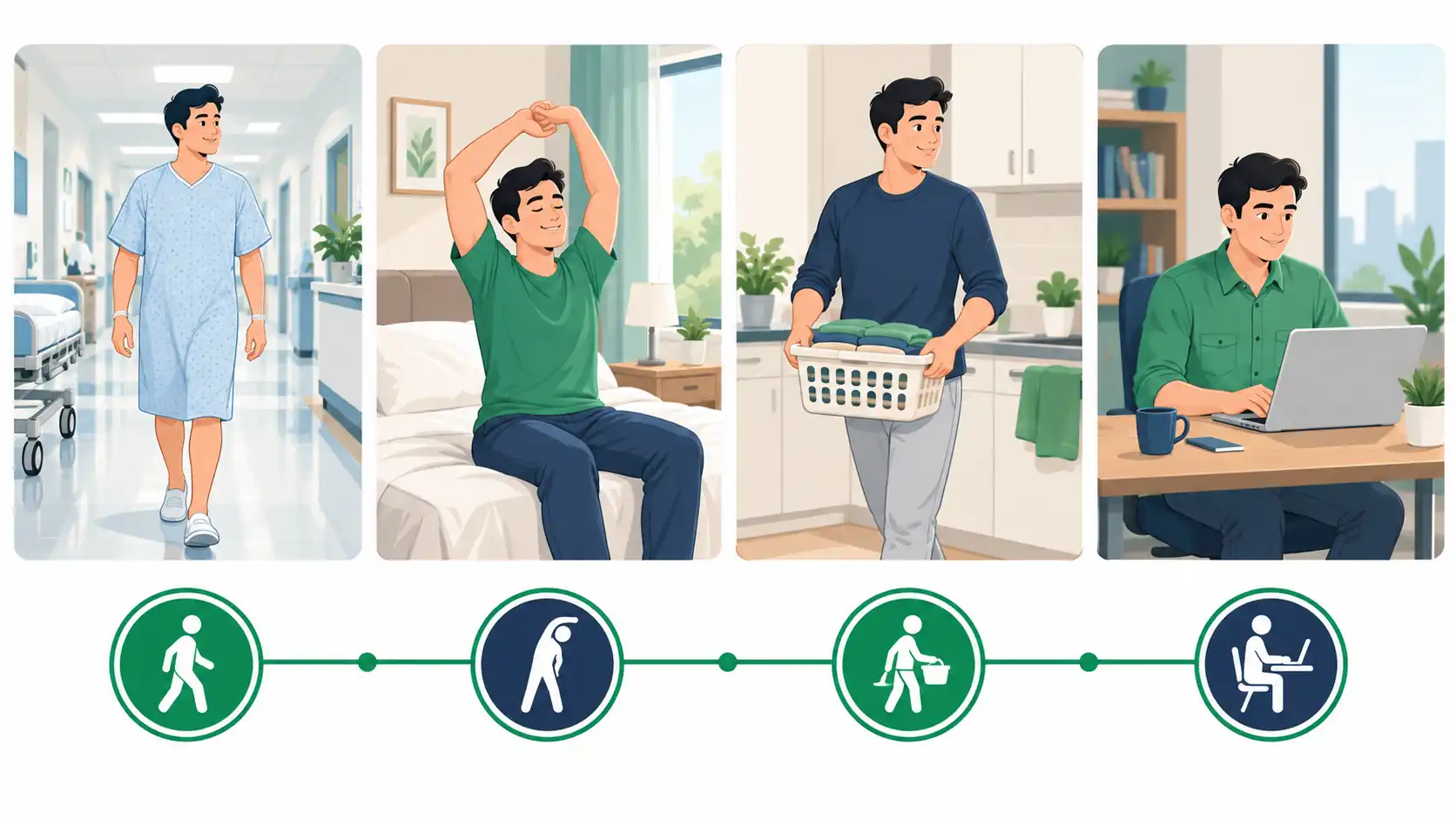
Most patients are walking within 1–2 hours of waking, with significantly less pain than after open surgery.
Discharge (Day 0–1)
Same-day discharge is routine for straightforward cases, with overnight observation for patients the team wants to monitor.
Recovery in India (10–14 days)
Daily walking from day one, with a wound check at 5–7 days.
Cleared to fly home
You're cleared to travel once neurological symptoms have stabilised and the wound is clean.
Key Benefits
The least disruptive spinal surgery available — incision under 1 cm, minimal blood loss
Many patients go home the same day; most within 24 hours
Significantly less post-operative back pain, since muscles are never cut
Most patients resume light activity within days, desk work within 1–2 weeks
India is one of the highest-volume countries globally for this technique
Achieves nerve decompression results similar to standard microdiscectomy
Risks — and What We Do to Minimise Them
Like any spine procedure, endoscopic spine surgery carries risks including infection, bleeding, nerve irritation, incomplete decompression, or — occasionally — the need to convert to a standard open approach if the anatomy proves unsuitable.
These risks are why we only work with accredited hospitals with high-volume endoscopic spine programmes and surgeons experienced in this technically demanding approach. Your surgeon will review your personal risk profile and MRI findings in detail before you commit to surgery.
Endoscopic Spine Surgery Cost in India
| Region | Package Cost (USD) |
|---|---|
| India | $3,500 – $6,000 |
| Singapore | $15,000 – $30,000 |
| United Kingdom | $12,000 – $25,000 |
| United States | $25,000 – $60,000 |
Prices are indicative, all-inclusive package estimates. Specialised endoscopic equipment adds cost compared to open surgery. Actual cost depends on the hospital, surgeon experience, and your individual clinical profile. Contact Health Nirvaana for a personalised quote.
Frequently Asked Questions
What is the endoscopic spine surgery cost in India?
Endoscopic spine surgery cost in India typically ranges from $3,500 to $6,000 as an all-inclusive package, compared to $25,000–$60,000 in the United States for the same procedure.
Is endoscopic spine surgery available for all spinal problems?
No. It's best suited to single-level disc herniations and some forms of foraminal stenosis. Multi-level disease, instability requiring fusion, or severe canal stenosis typically cannot be addressed endoscopically and require conventional open or minimally invasive open techniques.
How does this compare to a standard microdiscectomy?
Both achieve similar clinical results in terms of nerve decompression. The difference is invasiveness: endoscopic surgery has a smaller incision, less muscle disruption, faster discharge, and less post-operative pain. Standard microdiscectomy remains the gold standard for many surgeons; endoscopic is a further refinement for appropriate cases.
How long do I need to stay in India for endoscopic spine surgery?
We recommend 10–14 days — enough time for the procedure, same-day or next-day discharge, a wound check at 5–7 days, and confirmation that your symptoms have stabilised before flying home.
Will I need physiotherapy after endoscopic spine surgery?
Most patients recover with daily walking and gradual activity rather than intensive physiotherapy, given how little muscle disruption the technique causes — your surgeon will advise if any additional rehabilitation is needed.
Can I get a medical visa and travel support?
Yes — our team assists with medical visa invitation letters, hospital appointments, airport pickup, interpreter support, and accommodation for you and an attendant.
Why Choose Health Nirvaana
We work only with high-volume endoscopic spine programmes and experienced surgeons, so your endoscopic spine surgery cost in India stays transparent from your first enquiry to your flight back home.
Ready to take the next step?
Share your MRI reports with our team and get a personalised treatment plan and cost estimate — no obligation.