
Cervical Spine Surgery (ACDF) in India
Cervical Spine Surgery (ACDF) in India
Patients researching neck surgery abroad often start by comparing the ACDF surgery cost in India against prices back home before booking a consultation.
Trusted by patients from Uganda, Sierra Leone, DR Congo, South Sudan, Ethiopia and 30+ countries for affordable, high-success spinal care.
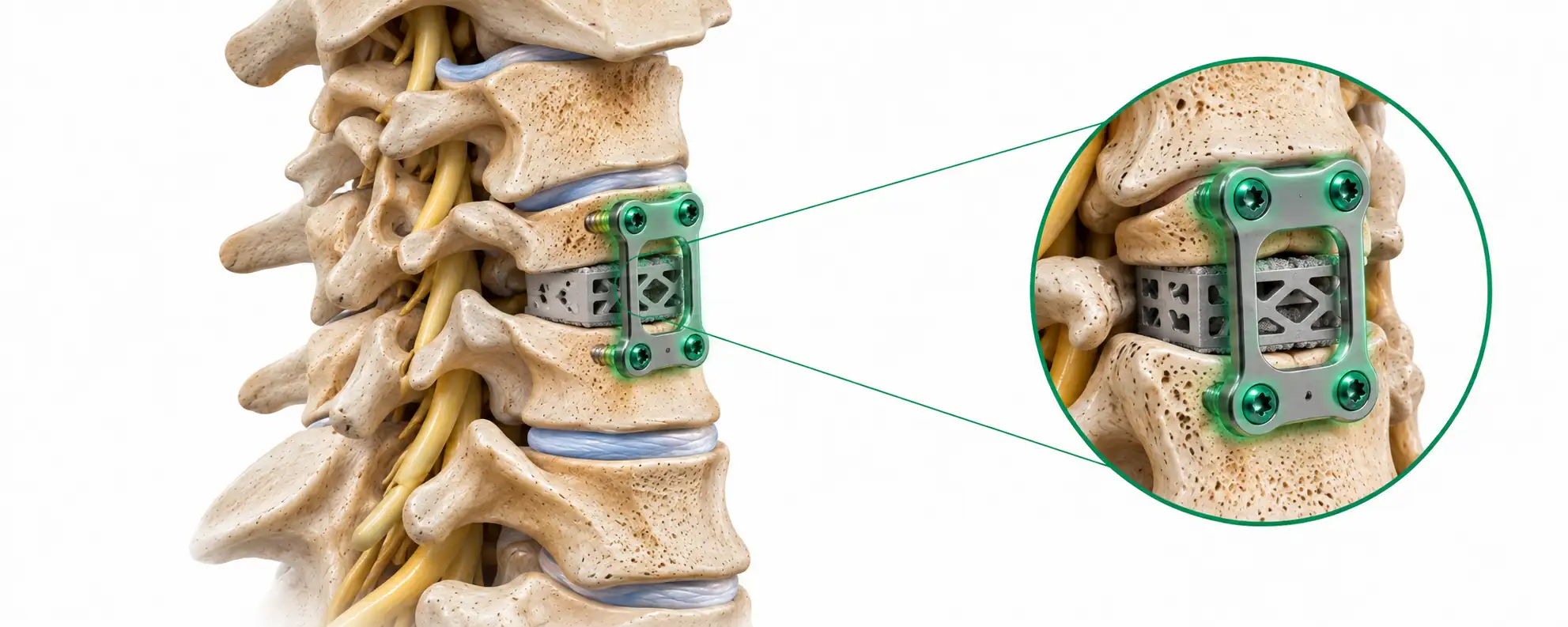
What Is ACDF (Anterior Cervical Discectomy and Fusion)?
The cervical spine is the section of your backbone in the neck — seven vertebrae stacked between the base of the skull and the top of the chest, with a disc between each pair acting as a cushion and allowing movement.
When a cervical disc herniates or the bones and joints of the neck degenerate and form bone spurs, they can press on a nerve root or the spinal cord itself, causing pain, tingling, numbness, or weakness that travels into the arm and hand — or, if the cord itself is compressed, clumsiness and unsteady walking. You can read more about this condition from the NIH's overview of cervical spine disorders.
ACDF addresses this by approaching the neck from the front, removing the offending disc entirely, relieving pressure on the nerve or cord, and filling the disc space with a bone graft or cage that fuses the two vertebrae together over the following months — a small titanium plate holds everything in position while the bone heals.
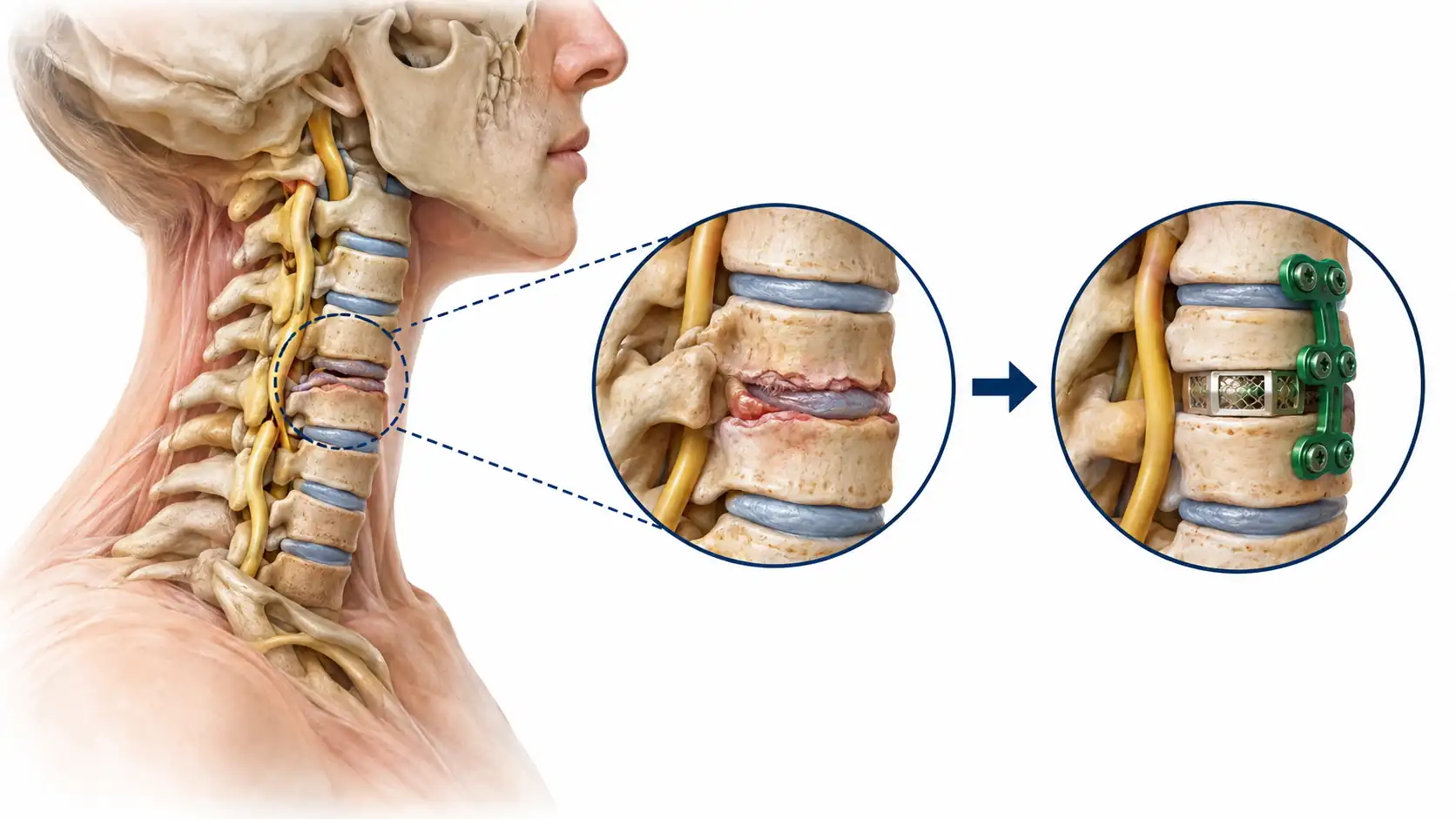
Who Needs ACDF?
- Cervical radiculopathy — pain, tingling, numbness, or weakness travelling from the neck into the shoulder, arm, or fingers
- Cervical myelopathy — clumsiness in the hands, difficulty with fine motor tasks, or unsteady walking from spinal cord compression
- An MRI-confirmed disc herniation or bone spur pressing on a nerve root or the spinal cord
- Symptoms that haven't improved with medication, physiotherapy, or injections
- Bladder or bowel control changes alongside neck symptoms — a sign of more serious cord compression requiring urgent evaluation
- Progressive weakness or sensory loss that is worsening rather than improving
Your spine surgeon will confirm whether ACDF is right for you after reviewing your MRI and neurological exam. Patients with lower back rather than neck symptoms may also find our spine fusion surgery cost in India page useful.
Types of ACDF We Facilitate
The right approach depends on how many levels of your neck are affected.
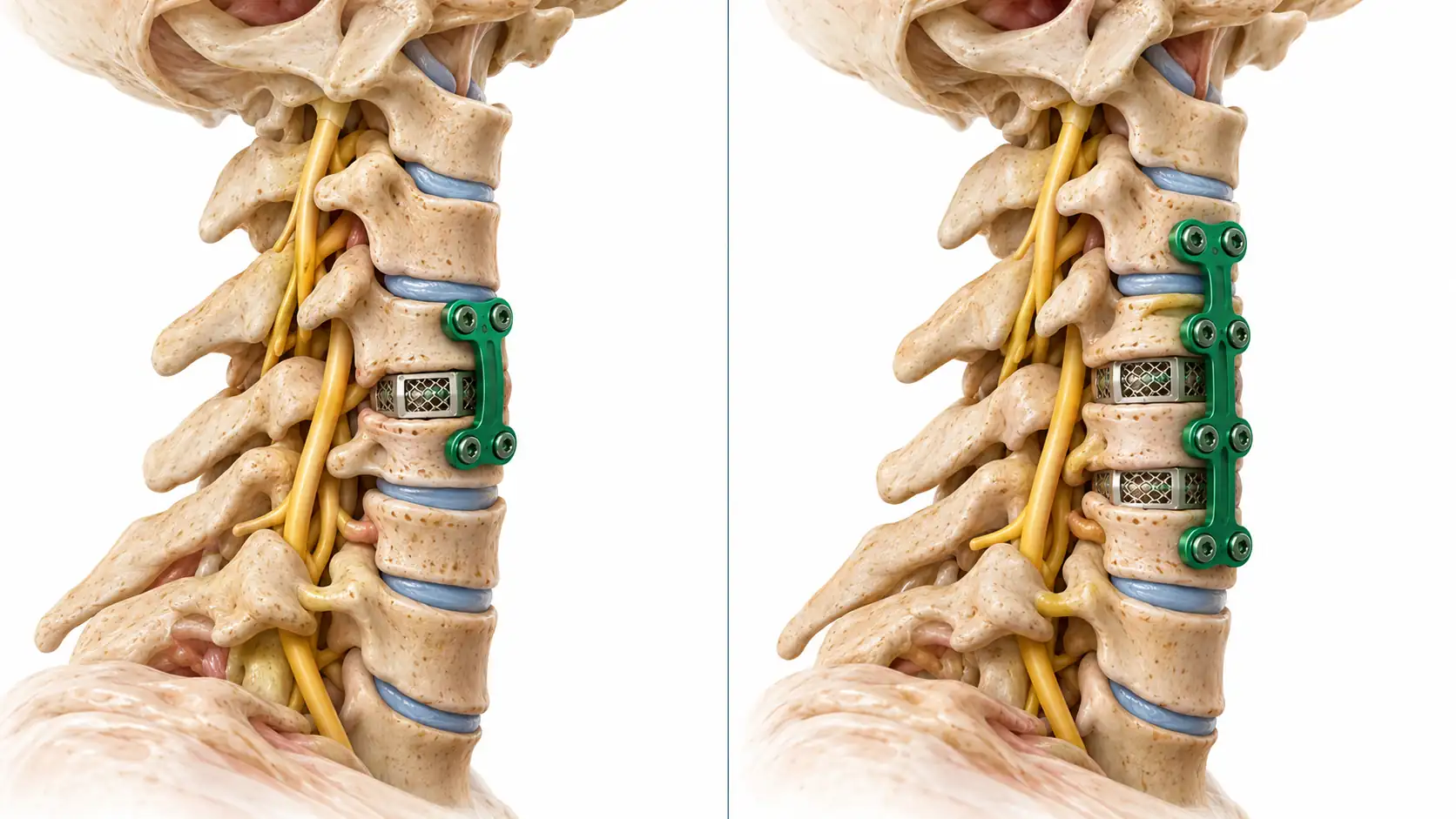
Single-Level ACDF
Treats one affected disc level, the most common form of the procedure with the fastest recovery.
Multi-Level ACDF
Addresses two or more disc levels in the same operation for patients with more extensive degeneration.
ACDF with Titanium Plate Fixation
A small plate secures the graft or cage in position across the fusion while the bone heals — the standard, well-established approach.
Revision ACDF
A more complex procedure for a level that has failed to fuse or developed adjacent segment problems over time.
What to Expect — Step by Step

Pre-operative assessment
An MRI confirms the level(s) of compression, a CT scan may add bony detail, and a neurological exam documents baseline arm strength and sensation.
The operation (1–2 hours per level)
Under general anaesthesia, a small incision in a natural neck crease allows the surgeon to remove the disc and place a cage and titanium plate.
Post-operative (Days 1–5)
The neck is supported in a soft collar; arm pain and tingling often begin improving within 24 hours, and any swallowing sensitivity resolves completely.
Recovery in India (14–21 days)
Wound check at 7–10 days, with a follow-up X-ray confirming the cage is correctly positioned.
Cleared to fly home
You're cleared to travel once symptoms are stable and the wound has healed.
Full recovery (3–6 months)
The fusion solidifies over 3–6 months, confirmed by imaging; most patients are back to normal activities within 4–6 weeks, with heavy lifting restricted until fusion is confirmed.
Key Benefits
Directly removes the disc or bone spur pressing on the nerve or spinal cord, providing rapid relief
Arm pain often improves within 24–48 hours of surgery
The front-of-neck approach avoids disrupting the large back-of-neck muscles
Most patients are discharged 2–3 days after surgery and walk normally immediately
Return to desk work is typical within 2–4 weeks
A confirmed solid fusion means the treated level is permanently stable
Risks — and What We Do to Minimise Them
Like any spine surgery, ACDF carries risks including infection, bleeding, temporary hoarseness or swallowing difficulty, nerve injury, and — in a small number of cases — the bone failing to fuse fully. Adjacent segment disease, where the levels above and below the fusion face increased stress over time, is a recognised long-term consideration, occurring in roughly 3% of patients per year after surgery.
These risks are why we only work with accredited hospitals with experienced spine surgical teams and structured post-op imaging follow-up to confirm the fusion is progressing correctly. Your surgeon will review your personal risk profile in detail before you commit to surgery.
ACDF Surgery Cost in India
| Region | Package Cost (USD) |
|---|---|
| India | $4,000 – $7,000 |
| Singapore | $15,000 – $30,000 |
| United Kingdom | $15,000 – $25,000 |
| United States | $35,000 – $80,000 |
Prices are indicative, all-inclusive package estimates, priced per level — two-level ACDF costs more. Actual cost depends on the hospital, implant choice, and your individual clinical profile. Contact Health Nirvaana for a personalised quote.
Frequently Asked Questions
What is the ACDF surgery cost in India?
ACDF surgery cost in India typically ranges from $4,000 to $7,000 per level, compared to $35,000–$80,000 in the United States for the same procedure.
Will I lose movement in my neck after fusion?
You'll lose a small amount of movement at the fused level, but this is rarely noticeable in daily life. The neck has multiple levels that all contribute to its overall range of motion, and the remaining levels compensate well after a one or two-level fusion.
I've heard that fusion causes adjacent segment disease. Is that true?
Adjacent segment disease — increased stress on the vertebrae above and below a fusion — is a recognised long-term consideration, occurring in roughly 3% of patients per year. For patients with significant neurological symptoms, the benefit of treating the current problem generally outweighs this long-term risk.
How soon will my arm pain improve?
Many patients notice improvement within 24–72 hours of surgery. Full recovery of nerve function — particularly numbness and weakness — can take longer, sometimes 3–6 months, because nerves recover more slowly than pain resolves.
How long do I need to stay in India for ACDF?
We recommend 14–21 days — enough time for a wound check at 7–10 days, a follow-up X-ray confirming cage position, and confirmation that your symptoms are stable before flying home.
Can I get a medical visa and travel support?
Yes — our team assists with medical visa invitation letters, hospital appointments, airport pickup, interpreter support, and accommodation for you and an attendant.
Why Choose Health Nirvaana
We work only with accredited spine hospitals and experienced cervical spine surgeons, so your ACDF surgery cost in India stays transparent from your first enquiry to your flight back home.
Ready to take the next step?
Share your MRI reports with our team and get a personalised treatment plan and cost estimate — no obligation.