
Hair Transplant (FUE / FUT) in India
Hair Transplant (FUE / FUT) in India
Patients comparing clinics abroad often start by checking the hair transplant cost in India against prices for the same FUE and FUT techniques at home.
Trusted by patients from Uganda, Sierra Leone, DR Congo, South Sudan, Ethiopia and 30+ countries for affordable, high-quality cosmetic surgery.
What Is a Hair Transplant?
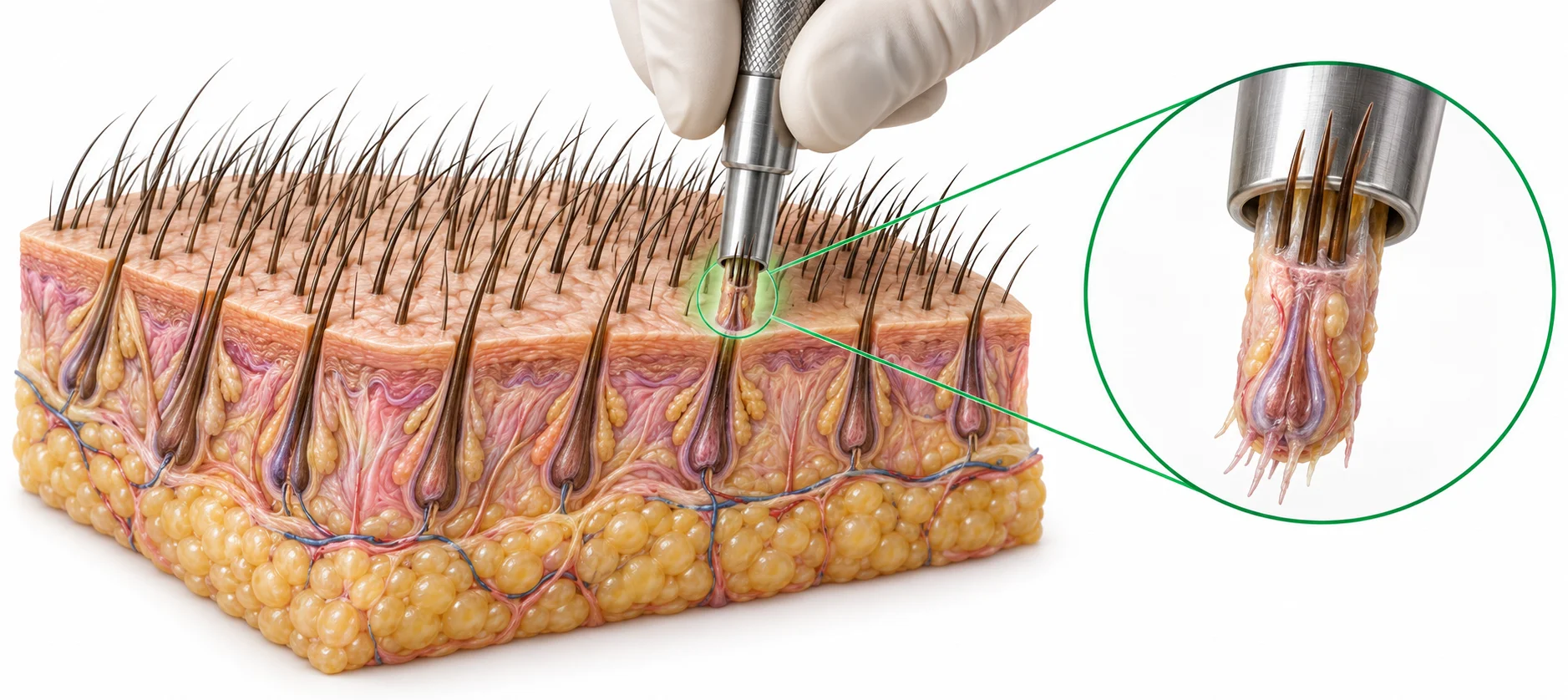
Hair transplantation surgically moves hair follicles from an area of the scalp with dense, permanent hair, typically the back and sides of the head, to areas where hair has thinned or is absent.
The transplanted follicles retain their original genetic programming: they're resistant to the hormone-related thinning that causes male and female pattern hair loss, and continue to grow in their new position for life. You can read more about hair loss and treatment options from the American Academy of Dermatology's guide to hair loss surgery.
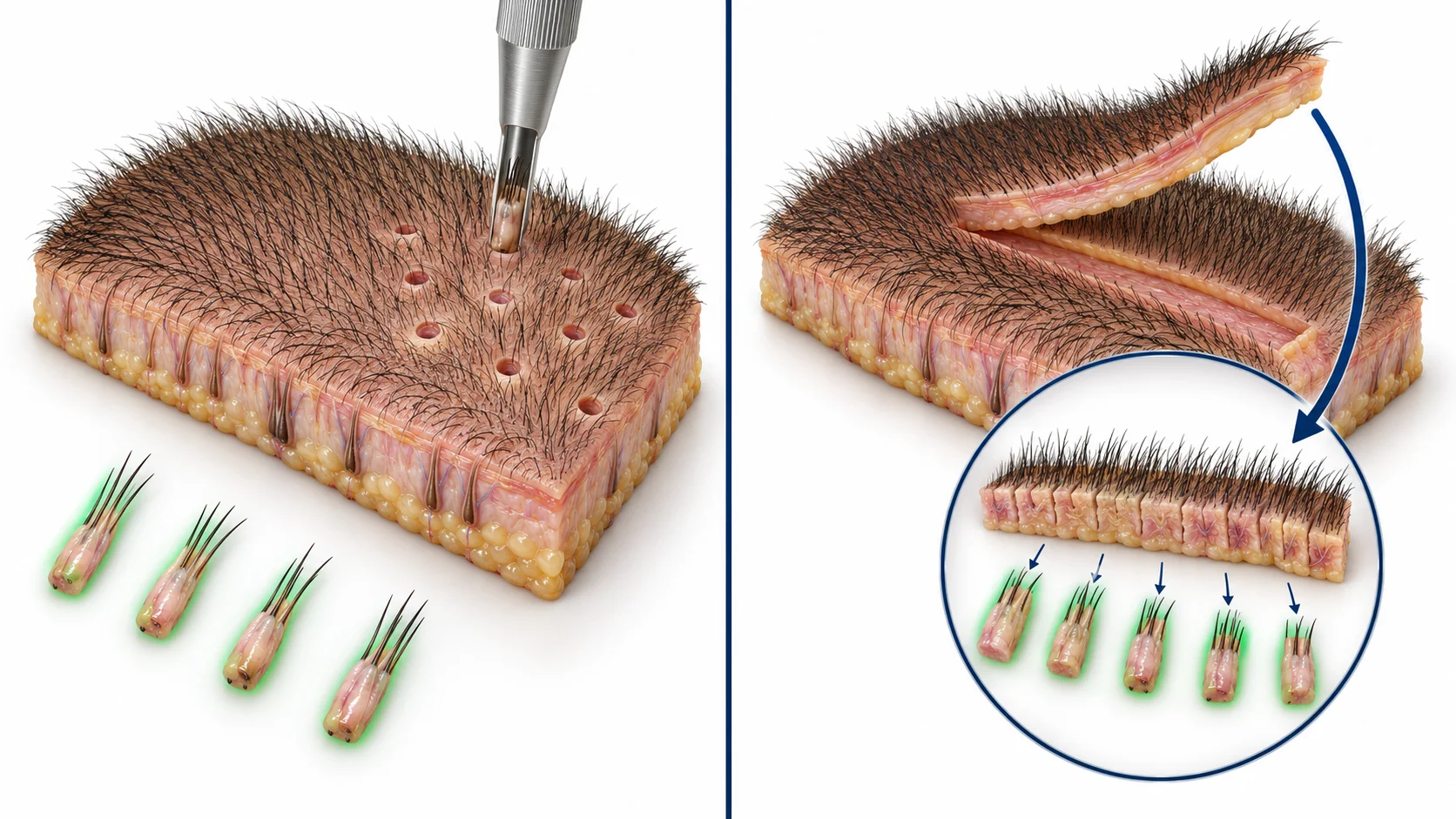
There are two main techniques. FUE (Follicular Unit Extraction) harvests individual follicular units one by one using a tiny circular punch, leaving no linear scar. FUT (Follicular Unit Transplantation) removes a narrow strip of scalp and dissects it into individual units under a microscope, which can harvest a larger number of grafts in a single session. India, particularly cities including Pune, Mumbai, and Delhi, has become a significant global destination for hair transplantation, with high-volume clinics performing the same techniques at 70–80% lower cost than Western countries.
Who Needs a Hair Transplant?
- A receding hairline, typically needing 1,500–2,500 grafts
- Crown thinning or more extensive Norwood grade 5–6 patterns, which may need 3,000–5,000 grafts, sometimes over two sessions
- A preference for FUE's scarless approach and the ability to wear hair short
- A need for very large graft counts or limited donor density, better suited to FUT
- A wish for permanent, completely natural results using real hair follicles rather than an artificial solution
- Realistic expectations about the timeline, since shedding and regrowth happen in stages over months
Your surgeon will confirm the right technique and graft plan for your pattern of loss. Patients also considering facial procedures may want to read our facelift cost in India page.
Types of Hair Transplant We Facilitate
The right technique depends on the pattern of loss, the graft count needed, and your styling preferences.
FUE (Follicular Unit Extraction)
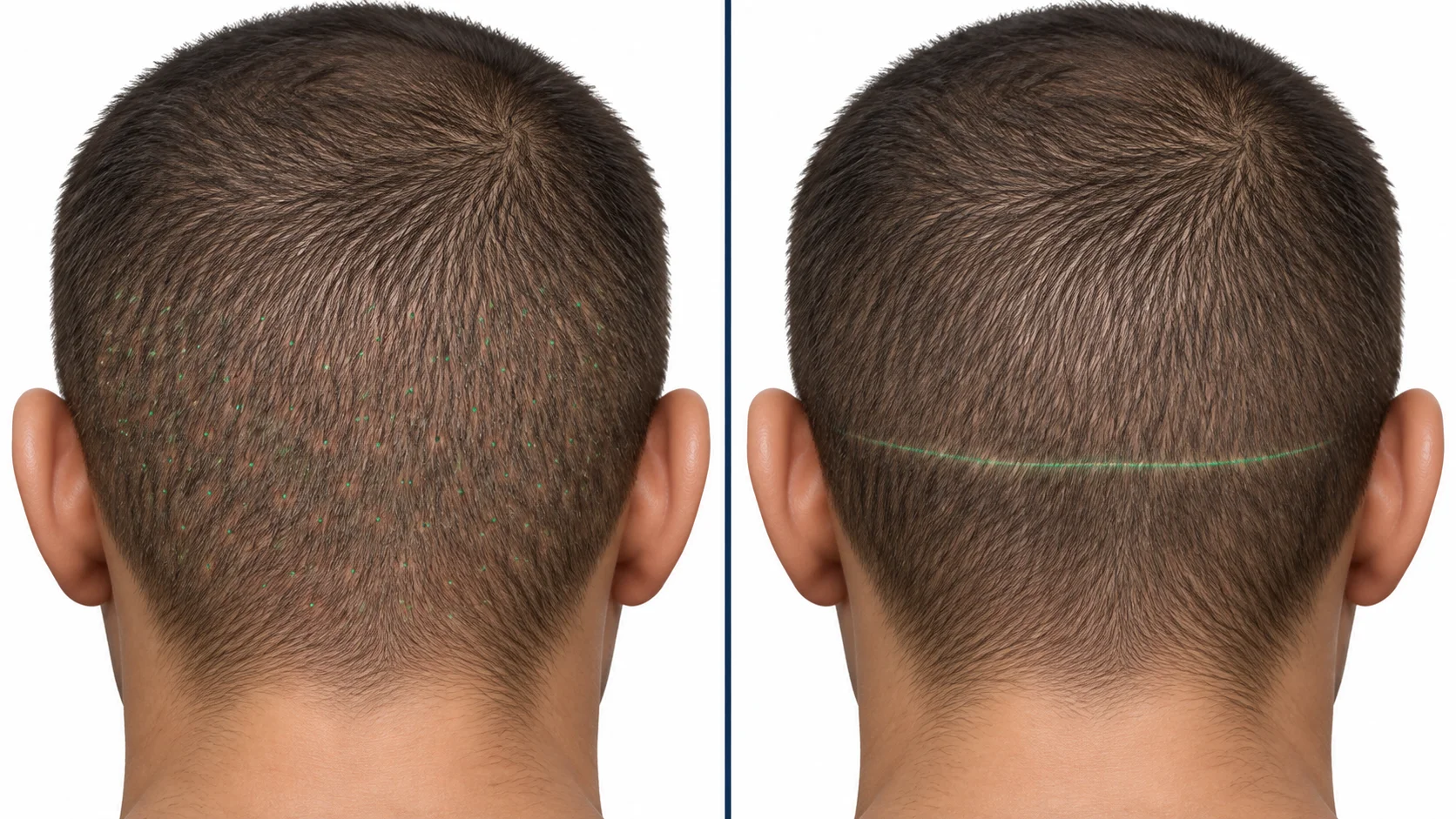
Individual follicular units are harvested one by one with a tiny punch, leaving no linear scar — the current gold standard for most patients, especially those who want to wear their hair short.
FUT (Follicular Unit Transplantation)
A narrow strip of scalp is removed and dissected into follicular units under a microscope, sometimes preferred for very large graft counts or limited donor density.
Combined FUE + FUT Sessions
For patients needing a very large graft count, combining both techniques can maximise the grafts harvested in a single session.
Follow-Up & Second Sessions
For extensive thinning planned conservatively, a second session uses preserved donor hair to build on the results of the first.
What to Expect — Step by Step

Local anaesthetic and harvesting (6–10 hours)
Local anaesthetic is injected into the donor and recipient areas, and grafts are harvested one by one (FUE) or from a strip (FUT).
Graft placement
Tiny incisions are made in the recipient area at the correct angle and direction, and grafts are placed one by one — meticulous, time-consuming work.
Days 1–10
Small scabs form at each graft site and fall off naturally within 7–10 days.
Weeks 2–4 (Shedding)
The transplanted hairs shed within the first 2–4 weeks — completely normal and expected. The follicle itself remains in place.
Months 3–6 (New growth)
New hairs begin to emerge, initially thin and fine, gradually thickening over the following months.
Months 12–18 (Full density)
Full density and natural texture are visible — the result that's photographed and compared to pre-surgery images.
Key Benefits
Permanent results — transplanted follicles grow for life and don't respond to the hormones that caused the original loss
FUE leaves no linear scar — the donor area is undetectable even with a shaved head
Results look completely natural because real hair follicles are transplanted
A day procedure — no hospital stay, local anaesthetic only, most patients are comfortable that evening
Significant new growth from months 4–6, with full density at 12–18 months
India's high-volume clinics use the same microscopes and techniques as Western centres
Risks — and What We Do to Minimise Them
Like any surgical procedure, hair transplantation carries risks including infection, bleeding, temporary scalp numbness, and folliculitis (inflammation around new grafts). A poor hairline design or low graft survival, usually the result of inexperienced technique rather than the procedure itself, can produce an unnatural "pluggy" look.
These risks are why we only work with accredited clinics with experienced hair restoration surgeons who have an aesthetic eye for hairline design and a track record in natural hair direction and angle. Your surgeon will plan your session conservatively, preserving donor hair for future sessions if needed.
Hair Transplant Cost in India
| Region | Package Cost (USD) |
|---|---|
| India | $1,000 – $3,500 |
| Singapore | $6,000 – $15,000 |
| United Kingdom | $5,000 – $15,000 |
| United States | $8,000 – $20,000+ |
Prices are indicative and per session, covering 2,000–4,000 grafts; price per graft varies. Singapore has relatively few specialist centres and charges premium rates; the UK industry is regulated but quality varies significantly between clinics; and major US hair restoration clinics charge premium rates. Contact Health Nirvaana for a personalised quote.
Frequently Asked Questions
What is the hair transplant cost in India?
Hair transplant cost in India typically ranges from $1,000 to $3,500 per session, covering 2,000–4,000 grafts, compared to $8,000–$20,000+ in the United States for the same procedure.
How many grafts will I need?
This depends entirely on the extent of thinning and the density you want to achieve. A receding hairline typically requires 1,500–2,500 grafts, while more extensive crown thinning or a Norwood grade 5–6 pattern may require 3,000–5,000 grafts, sometimes achieved over two sessions.
Will people be able to tell I've had a hair transplant?
With modern FUE and skilled hairline design, no — the result should look completely natural. The key is choosing a surgeon with an aesthetic eye for hairline design and experience reproducing natural hair direction and angle. An unnaturally straight or low hairline, or a "pluggy" look, is a feature of poor technique, not of the procedure itself.
What if I continue to lose hair after the transplant?
Transplanted hairs are permanent. However, surrounding native hairs that haven't yet been lost may continue to thin over time, which is why planning the transplant conservatively, preserving donor hair for future sessions if needed, is part of good surgical judgement.
How long do I need to stay in India?
We recommend 7–10 days, covering the procedure itself and the initial healing period before flying home. Your care coordinator will confirm the schedule for your specific treatment plan.
Why Choose Health Nirvaana
We work only with accredited clinics and experienced hair restoration surgeons, so your hair transplant cost in India stays transparent from your first enquiry to your flight back home.
Ready to take the next step?
Share a few photos of your hair and scalp with our team and get a personalised treatment plan and cost estimate — no obligation.