
Partial & Radical Nephrectomy (Robotic / Laparoscopic) in India
Partial & Radical Nephrectomy (Robotic / Laparoscopic) in India
Patients diagnosed with a kidney tumour often start by checking the nephrectomy cost in India against prices for the same robotic and laparoscopic techniques at home.
Trusted by patients from Uganda, Sierra Leone, DR Congo, South Sudan, Ethiopia and 30+ countries for affordable, high-success urologic cancer care.
What Is Partial or Radical Nephrectomy?
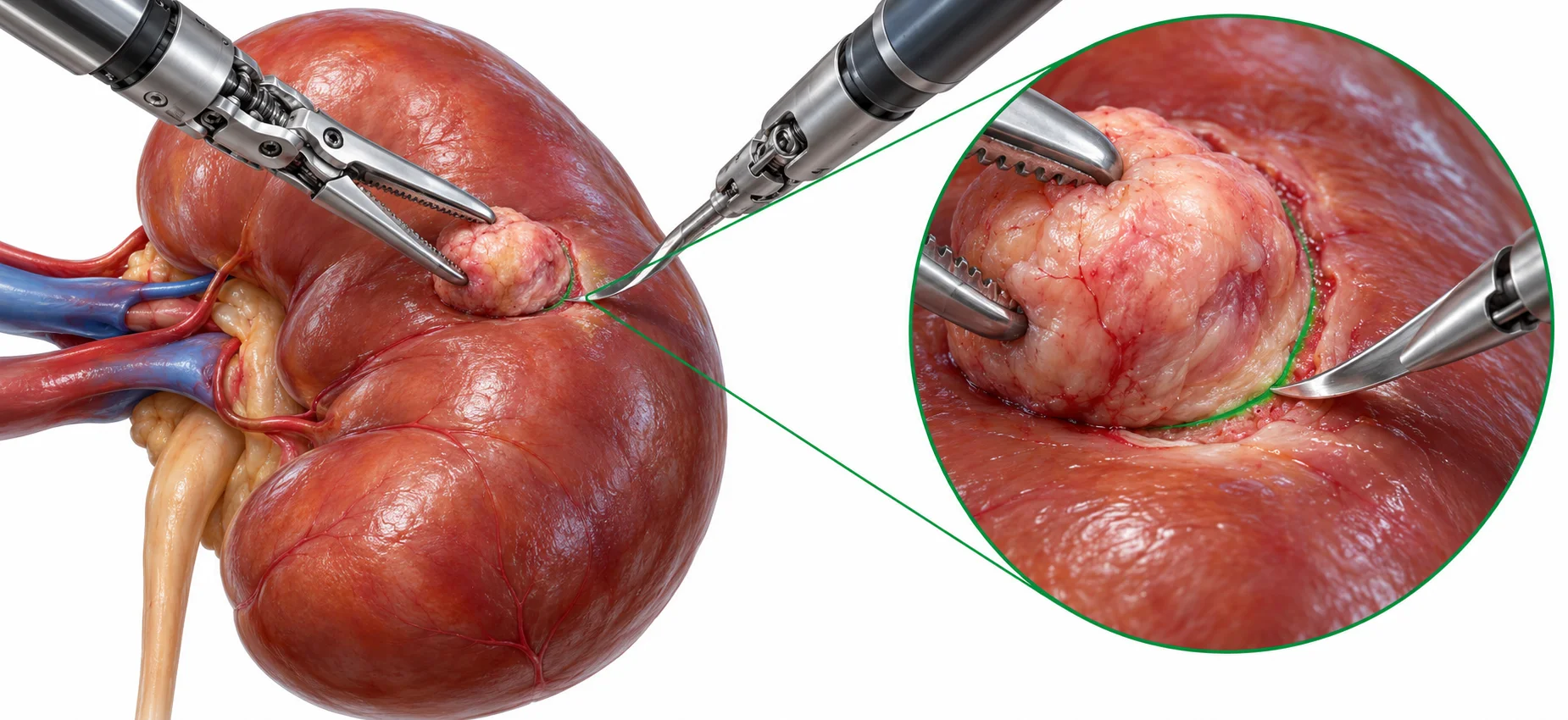
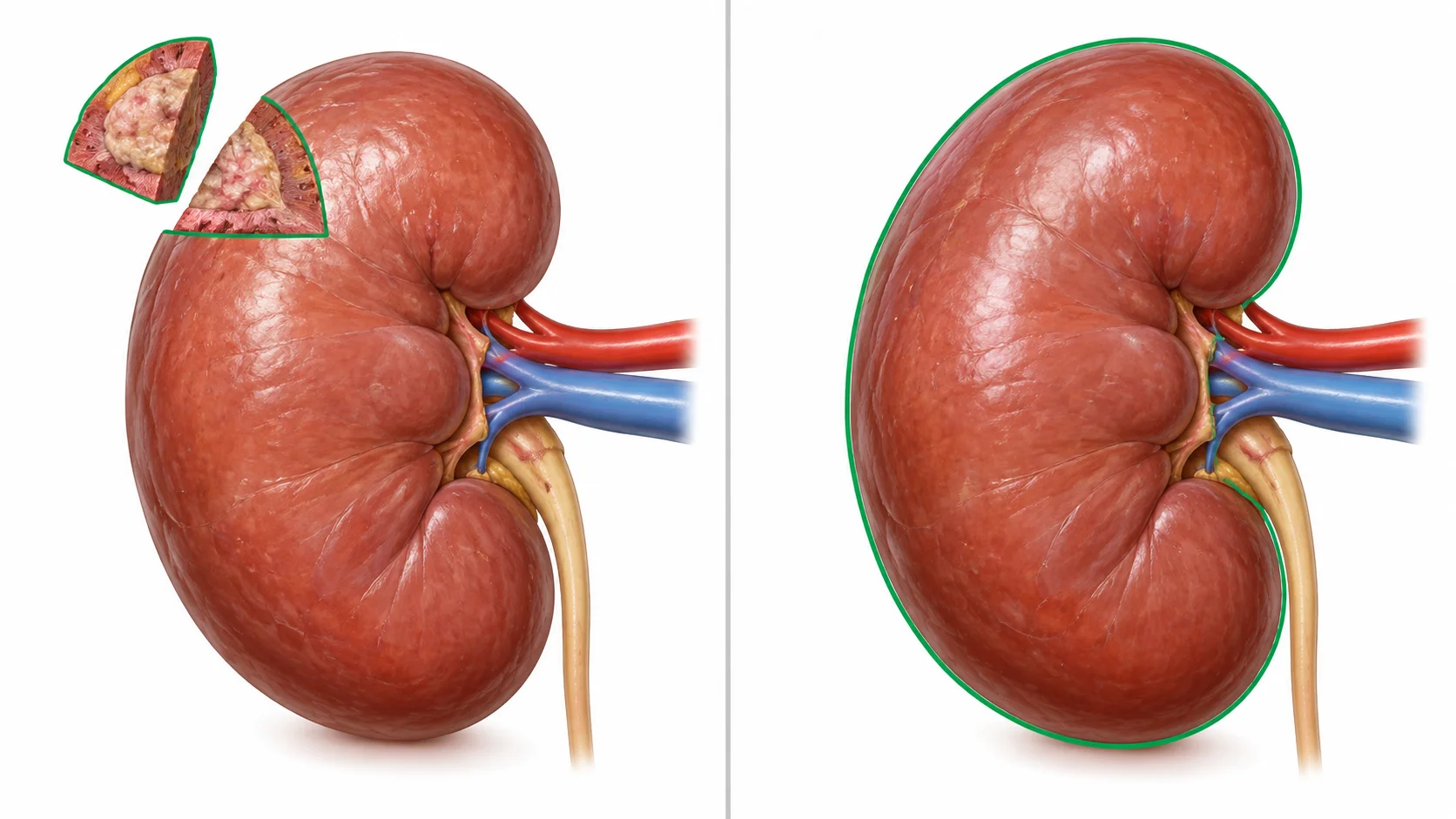
A nephrectomy is the surgical removal of a kidney, either entirely (radical nephrectomy) or partially (partial nephrectomy, where only the diseased portion is removed and the rest of the kidney is preserved). The most common reason is kidney cancer, though it's also performed for a non-functioning kidney or in preparation for living-donor kidney transplantation.
Partial nephrectomy is strongly preferred when technically feasible, because every unit of functioning kidney tissue preserved has a direct impact on long-term kidney function, important for blood pressure control, cardiovascular health, and avoiding dialysis later in life. For tumours smaller than 7 cm that are surgically accessible, partial nephrectomy gives equivalent cancer control to full removal. You can read more about kidney cancer and treatment options from the National Cancer Institute's kidney cancer treatment guide.
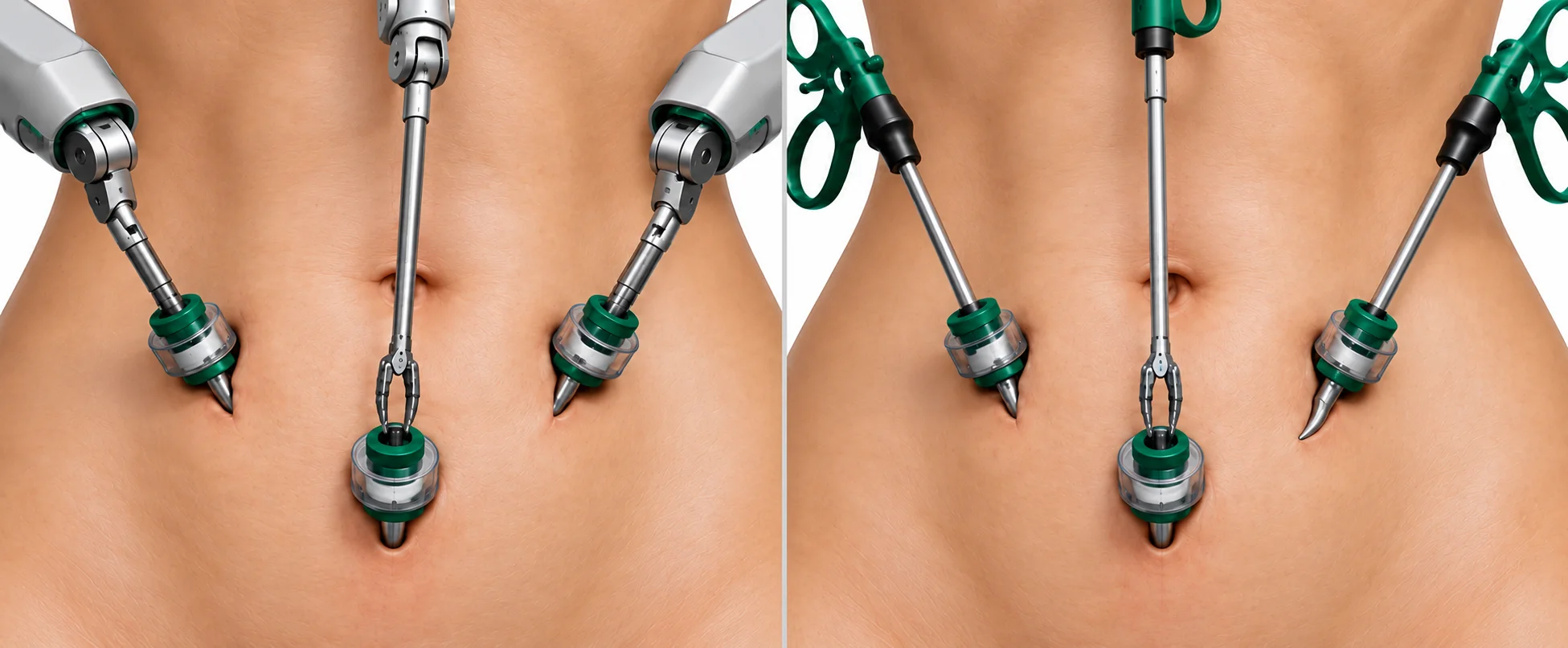
The robotic approach, using the da Vinci surgical system, is ideal for partial nephrectomy because the precision of robotic instruments allows surgeons to excise a tumour with a clear margin while preserving as much healthy kidney as possible, with less blood loss and a faster recovery than open surgery. Laparoscopic (standard keyhole) nephrectomy is the alternative minimally invasive approach, used for radical nephrectomy where the entire kidney is being removed.
Who Needs Nephrectomy?
- A diagnosis of kidney cancer (renal cell carcinoma)
- A tumour smaller than 7 cm that's surgically accessible, suitable for kidney-preserving partial nephrectomy
- A larger or more complex tumour requiring full removal of the kidney (radical nephrectomy)
- A non-functioning kidney causing recurrent infections or pain
- Preparation for living-donor kidney transplantation
- A preference for the robotic or laparoscopic approach over open surgery, for faster recovery
Your urologic oncologist will confirm whether partial or radical nephrectomy, and which surgical approach, suits your tumour's size and position. Patients also considering prostate cancer surgery may find our robotic prostate cancer surgery cost in India page useful.
Types of Nephrectomy We Facilitate
The right approach depends on the tumour's size, position, and whether kidney function can be preserved.
Robotic Partial Nephrectomy
Uses the da Vinci surgical system for precise tumour excision with a clear margin, preserving as much healthy kidney as possible.
Laparoscopic Radical Nephrectomy
Standard keyhole removal of the entire kidney, the preferred minimally invasive approach when partial removal isn't suitable.
Robotic Radical Nephrectomy
Robotic precision applied to full kidney removal for select complex cases where it offers an advantage over standard laparoscopy.
Donor Nephrectomy
Minimally invasive removal of a healthy kidney from a living donor, in preparation for kidney transplantation.
What to Expect — Step by Step

Pre-operative imaging and staging
CT or MRI imaging confirms the tumour's size and position, guiding whether partial or radical nephrectomy is recommended.
Surgical planning
Your urologic oncologist confirms the robotic or laparoscopic approach best suited to your case.
The operation
Performed through small keyhole incisions under general anaesthesia, with robotic precision used where it benefits tissue preservation.
Hospital recovery (3–6 days)
You're monitored in hospital with significantly less post-operative pain than after open surgery, thanks to the keyhole approach.
Early recovery at home
Pain and activity levels continue to improve steadily in the days following discharge.
Return to normal activity (3–4 weeks)
Most patients return to normal activity within 3–4 weeks, roughly half the recovery time of open nephrectomy, with follow-up imaging to confirm results.
Key Benefits
Robotic partial nephrectomy preserves kidney function while removing the tumour completely
Small incisions, minimal blood loss, less post-operative pain, and discharge within 3–6 days rather than 7–10 for open surgery
Equivalent cancer control to open surgery for appropriately selected tumours
Most patients return to normal activity within 3–4 weeks, roughly half the recovery time of open surgery
India's high-volume robotic surgery programmes mean surgeons with extensive experience across tumour positions
Avoids an open incision in most cases, keeping recovery fast even for complex tumours
Risks — and What We Do to Minimise Them
Like any kidney surgery, nephrectomy carries risks including infection, bleeding, injury to surrounding organs, and, with partial nephrectomy, a small chance the surgical margin isn't fully clear, requiring further treatment. Removing kidney tissue, especially in a radical nephrectomy, can also affect long-term kidney function.
These risks are why we only work with accredited hospitals with experienced robotic urologic oncology surgeons, careful patient selection for partial versus radical surgery, and structured follow-up imaging. Your surgeon will review your personal risk profile in detail before you commit to surgery.
Nephrectomy Cost in India
| Region | Package Cost (USD) |
|---|---|
| India | $4,500 – $10,000 |
| Singapore | $18,000 – $35,000 |
| United Kingdom | $20,000 – $40,000 |
| United States | $40,000 – $100,000+ |
Prices are indicative; partial nephrectomy sits at the higher end of India's range due to its added complexity. In Singapore, robotic surgery adds a premium over laparoscopic; in the UK, robotic availability varies by centre; and in the US, robotic partial nephrectomy is a major surgical episode under the billing system. Contact Health Nirvaana for a personalised quote.
Frequently Asked Questions
What is the nephrectomy cost in India?
Nephrectomy cost in India typically ranges from $4,500 to $10,000, with partial nephrectomy at the higher end due to its complexity, compared to $40,000–$100,000+ in the United States for the same procedures.
What's the difference between partial and radical nephrectomy?
Partial nephrectomy removes only the diseased portion of the kidney, preserving the rest. Radical nephrectomy removes the entire kidney. Partial nephrectomy is strongly preferred when technically feasible, because preserving kidney tissue has a direct impact on long-term kidney function.
Is robotic surgery better than laparoscopic surgery for nephrectomy?
Robotic surgery is ideal for partial nephrectomy, since the precision of robotic instruments allows surgeons to excise a tumour with a clear margin while preserving as much healthy kidney as possible. Laparoscopic surgery remains a strong minimally invasive option, particularly for radical nephrectomy where the entire kidney is being removed.
Will removing part of my kidney affect my long-term health?
Preserving kidney tissue through partial nephrectomy helps protect long-term kidney function, which matters for blood pressure control, cardiovascular health, and avoiding the need for dialysis later in life — one of the main reasons it's preferred over radical nephrectomy when feasible.
How long until I'm back to normal activity?
Most patients return to normal activity within 3–4 weeks, roughly half the recovery time of open nephrectomy, thanks to the robotic or laparoscopic keyhole approach.
How long do I need to stay in India?
We recommend 14–21 days, covering the procedure, hospital stay, and follow-up imaging before flying home. Your care coordinator will confirm the schedule for your specific treatment plan.
Why Choose Health Nirvaana
We work only with accredited hospitals running high-volume robotic urologic oncology programmes, so your nephrectomy cost in India stays transparent from your first enquiry to your flight back home.
Ready to take the next step?
Share your imaging and pathology reports with our team and get a personalised treatment plan and cost estimate — no obligation.