
Pituitary Tumour Surgery in India
Pituitary Tumour Surgery in India
Families researching treatment for a pituitary tumour often begin by comparing the pituitary tumor surgery cost in India against prices at home before travelling.
Trusted by patients from Uganda, Sierra Leone, DR Congo, South Sudan, Ethiopia and 30+ countries for affordable, high-success neurosurgical care.
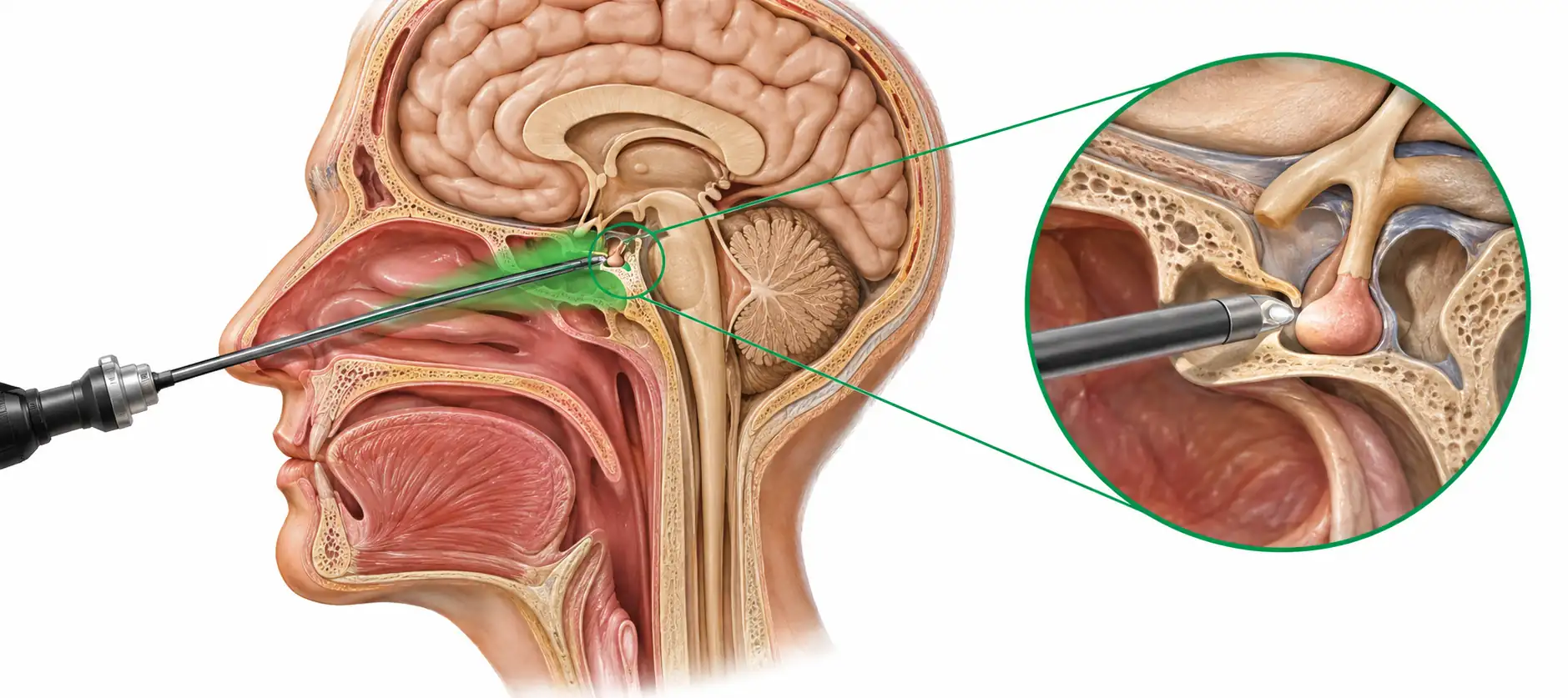
What Is Endoscopic Endonasal Pituitary Tumour Surgery?
The pituitary gland is a pea-sized gland at the base of the brain that controls the hormonal output of the entire body — growth, metabolism, reproduction, stress response, and fluid balance all pass through it.
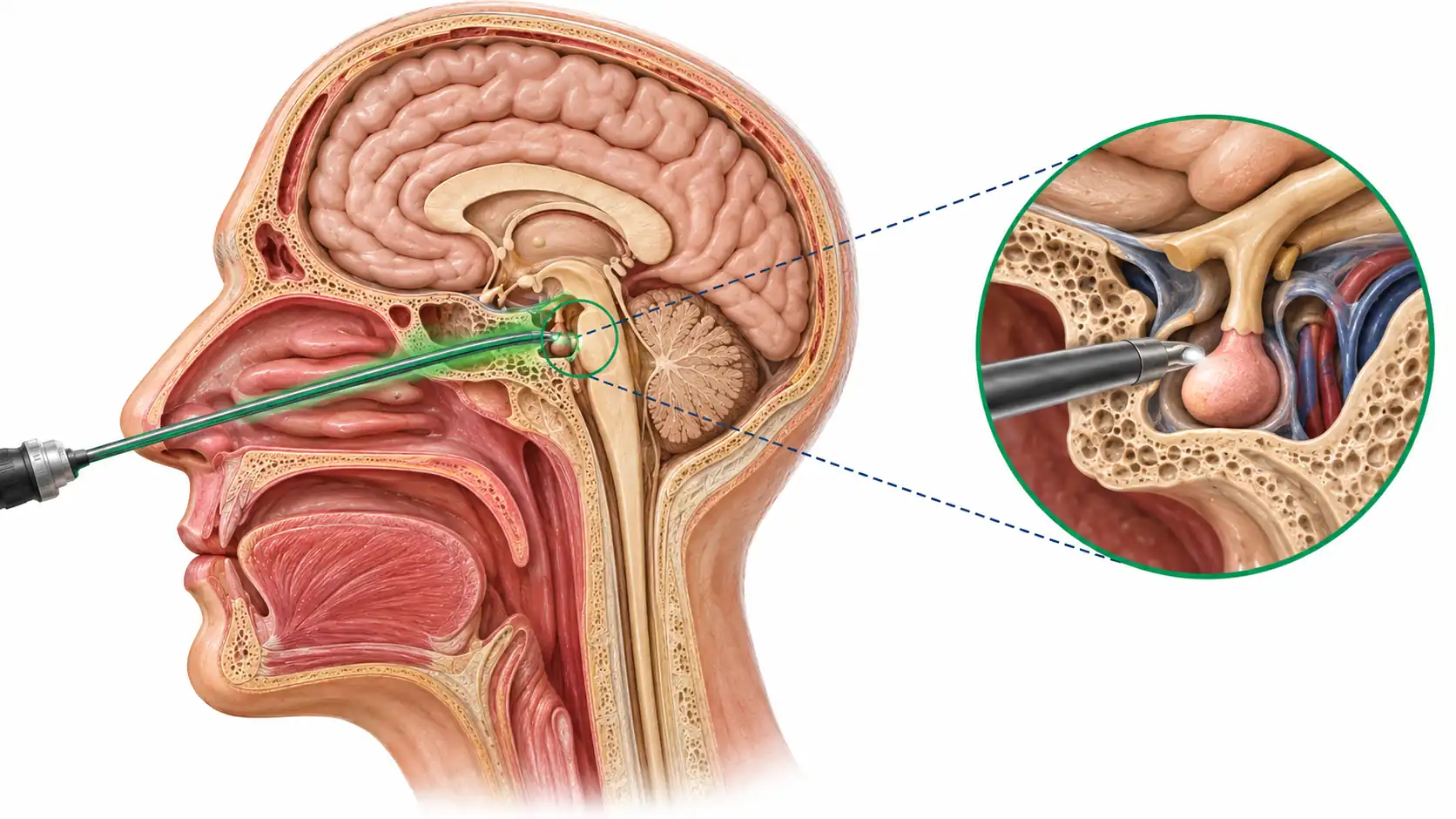
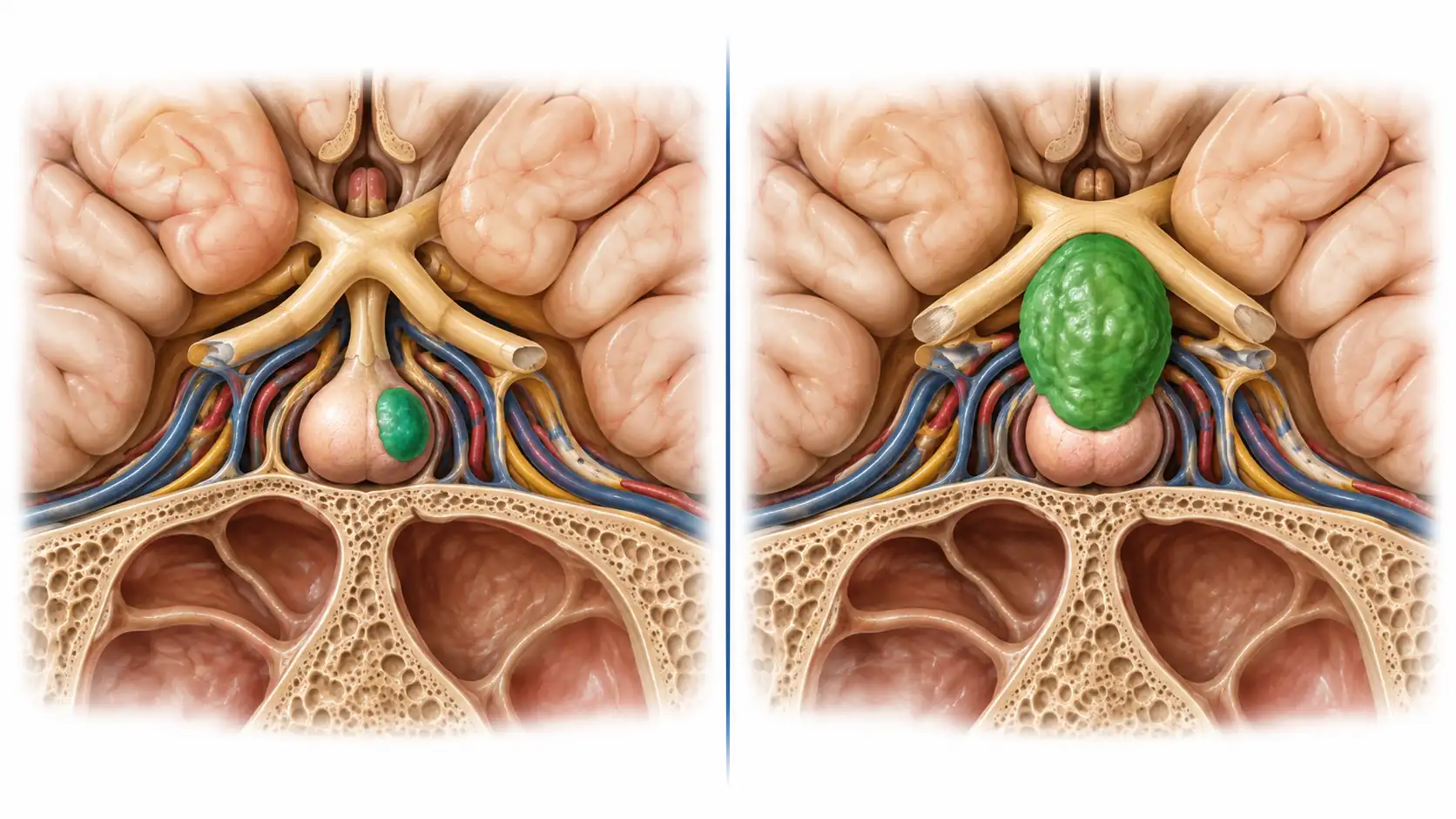
When a tumour grows in the pituitary gland, it can cause problems in two ways: by pressing on the optic nerves that run directly above the gland, causing vision loss, and by disrupting the gland's hormonal output. Most pituitary tumours are adenomas — benign, non-cancerous growths — but a tumour pressing on the optic chiasm can cause progressive vision loss if untreated, and hormone-producing tumours can cause serious systemic effects over time. You can read more about this condition from the NIDDK's overview of pituitary tumours.
The modern surgical approach is endoscopic endonasal surgery — through the nose. The surgeon enters through one or both nostrils, passes through the nasal passages, and accesses the pituitary gland directly through the base of the skull, all without any incision on the outside of the head and without touching the brain itself. The tumour is removed under direct camera vision.
Who Needs Pituitary Tumour Surgery?
- Vision loss or visual field changes from a tumour pressing on the optic nerves
- Excess growth hormone production (acromegaly) confirmed by hormonal blood testing
- Excess cortisol production (Cushing's disease) causing systemic symptoms
- Hormone deficiency caused by the tumour damaging normal pituitary function
- An MRI-confirmed pituitary adenoma with symptoms not controlled by medication
- A tumour that has grown large enough to threaten surrounding brain structures
Your neurosurgeon and endocrinologist will confirm the right treatment plan after reviewing your MRI, hormonal panel, and visual field test. Patients dealing with other forms of brain tumour may also find our brain tumor surgery cost in India page useful.
Types of Pituitary Tumour Surgery We Facilitate
The surgical goal and approach vary depending on whether the tumour is hormone-producing and how large it has grown.
Standard Endoscopic Endonasal Adenomectomy
The core keyhole-through-the-nose approach used for most pituitary adenomas, with no external incision.
Surgery for Functioning Adenomas
Targets hormone-secreting tumours such as those causing acromegaly or Cushing's disease, aiming for complete removal and hormonal cure.
Surgery for Non-Functioning Adenomas
Focuses on relieving pressure on the optic nerves and surrounding structures to protect and restore vision.
Extended Endonasal Approach
An expanded version of the same corridor for larger or more invasive tumours, often followed by targeted radiotherapy for any residual tissue.
What to Expect — Step by Step
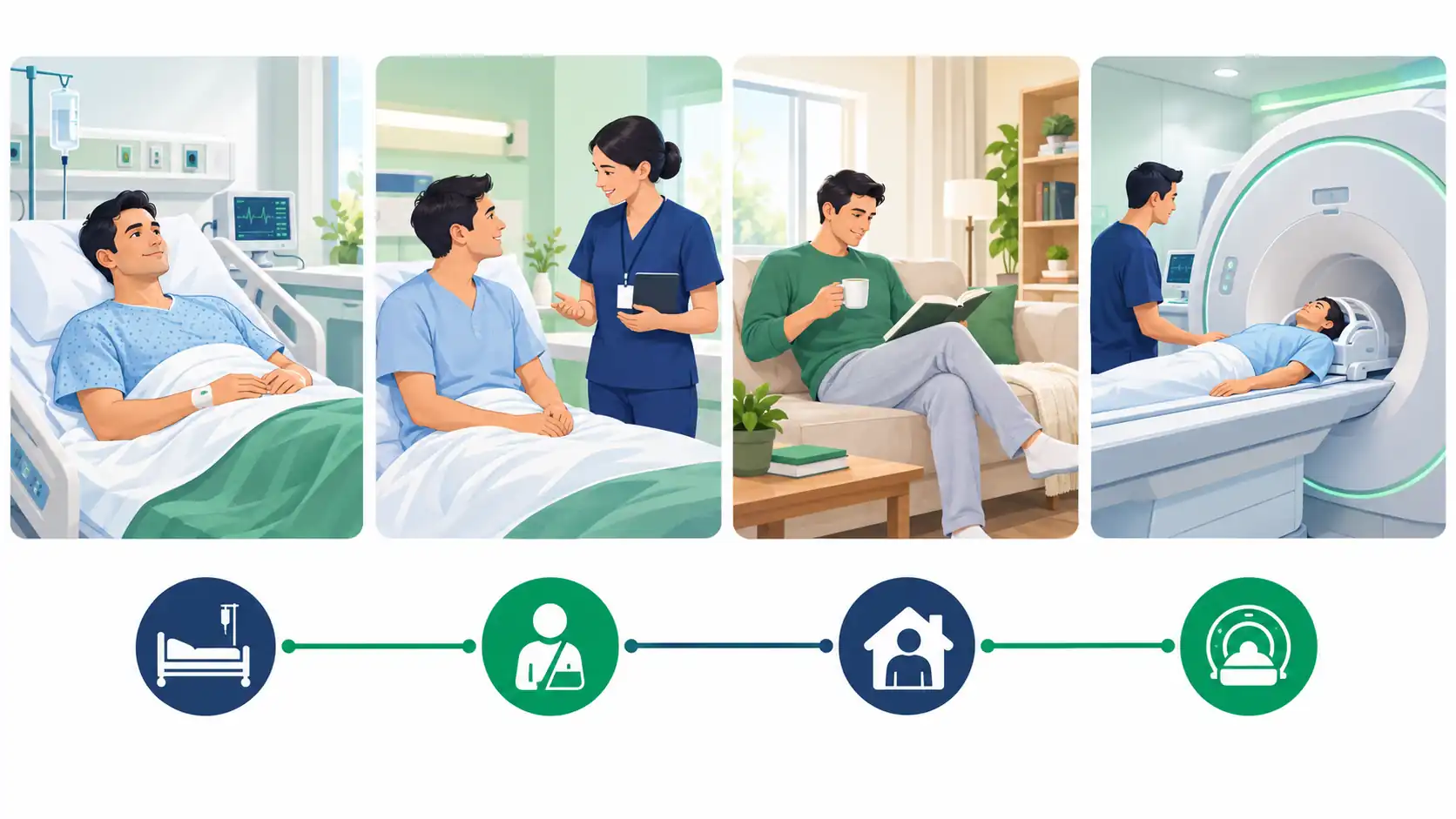
Pre-operative assessment
MRI of the pituitary region, a full hormonal blood panel, and a formal visual field test, alongside joint neurosurgery and endocrinology review.
The operation (2–4 hours)
Under general anaesthesia, the endoscope enters through the nostril and the tumour is removed piece by piece under camera guidance; a fat graft seals the skull base opening.
Post-operative (Days 1–7)
Nasal congestion and mild headache are common; fluid balance is monitored closely for temporary diabetes insipidus, which is managed with medication.
Discharge (Day 4–7)
Most patients are discharged 4–7 days after surgery, with nasal congestion settling over the following 2–3 weeks.
Recovery in India (14–21 days)
Nose blowing is avoided for 4 weeks to protect the skull base repair while you recover before flying home.
Follow-up (3 months)
A repeat MRI confirms how much tumour was removed, with hormonal blood tests at regular intervals checking the gland's recovery.
Key Benefits
No incision anywhere on the head or face — surgery enters entirely through the nostrils
No brain tissue is disturbed during the approach
Hospital stay of just 4–7 days, far shorter than older skull-opening approaches
Vision loss from optic nerve compression begins improving within days to weeks in most patients
Hormonal overproduction can be cured in a large proportion of cases when the tumour is fully removed
Backed by joint neurosurgery and endocrinology follow-up
Risks — and What We Do to Minimise Them
Like any pituitary surgery, this procedure carries risks including infection, bleeding, cerebrospinal fluid leakage from the skull base repair, temporary or occasionally lasting hormone deficiency, and temporary diabetes insipidus affecting fluid balance.
These risks are why we only work with accredited hospitals that have joint neurosurgery and endocrinology teams, dedicated post-op hormonal monitoring, and structured follow-up imaging protocols. Your surgical team will review your personal risk profile in detail before you commit to surgery.
Pituitary Tumor Surgery Cost in India
| Region | Package Cost (USD) |
|---|---|
| India | $5,000 – $10,000 |
| Singapore | $20,000 – $45,000 |
| United Kingdom | $20,000 – $40,000 |
| United States | $50,000 – $150,000 |
Prices are indicative, all-inclusive package estimates covering surgery, ICU/ward stay, and post-op hormonal monitoring. Actual cost depends on the hospital, tumour complexity, and your individual clinical profile. Contact Health Nirvaana for a personalised quote.
Frequently Asked Questions
What is the pituitary tumor surgery cost in India?
Pituitary tumor surgery cost in India typically ranges from $5,000 to $10,000 as an all-inclusive package, compared to $50,000–$150,000 in the United States for the same procedure.
Is a pituitary tumour the same as brain cancer?
No. The overwhelming majority of pituitary tumours are adenomas — benign, non-cancerous growths that do not spread to other parts of the body. The goal of surgery is cure rather than palliation, and the prognosis after successful removal is generally excellent.
Will my vision come back after surgery?
Vision loss caused by the tumour pressing on the optic chiasm typically begins to recover within days to weeks of surgery, as the pressure is relieved. Recovery isn't always complete — it depends on how long the nerves were compressed — but early improvement is a very positive sign.
What if the tumour is not completely removed?
Large or invasive tumours may not be fully resectable in a single operation. In these cases, residual tumour can be treated with targeted radiotherapy (stereotactic radiosurgery), planned after surgery once the extent of any remaining tissue is clear on MRI.
How long do I need to stay in India for this surgery?
We recommend 14–21 days — enough time for the 4–7 day hospital stay, nasal healing, and confirmation that you're stable before flying home.
Can I get a medical visa and travel support?
Yes — our team assists with medical visa invitation letters, hospital appointments, airport pickup, interpreter support, and accommodation for you and an attendant.
Why Choose Health Nirvaana
We work only with accredited neurosurgical centres and joint neurosurgery-endocrinology teams, so your pituitary tumor surgery cost in India stays transparent from your first enquiry to your flight back home.
Ready to take the next step?
Share your MRI and hormonal panel reports with our team and get a personalised treatment plan and cost estimate — no obligation.