
Spine Fusion Surgery in India
Spine Fusion Surgery in India
Understanding the real spine fusion surgery cost in India is the first step for international patients comparing options for chronic back pain relief.
Trusted by patients from Uganda, Sierra Leone, DR Congo, South Sudan, Ethiopia and 30+ countries for affordable, high-success spinal care.
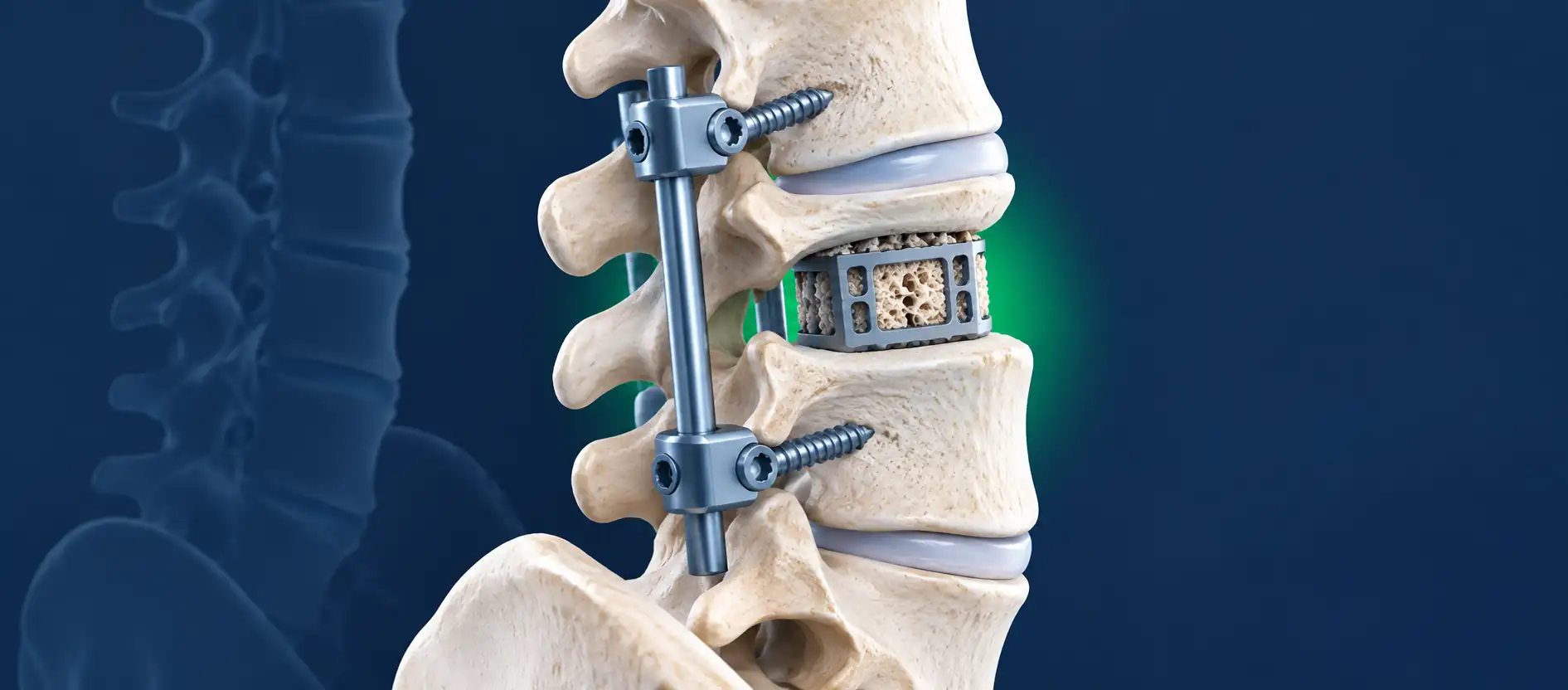
What Is Spine Fusion Surgery?
Spinal fusion permanently joins two or more vertebrae, eliminating the painful movement caused by degenerative disc disease, instability, or spondylolisthesis.
During the procedure, the surgeon places a bone graft — sometimes combined with your own bone or a synthetic substitute — between the affected vertebrae, while rods and screws hold the segment steady as it heals. Over the following months, new bone grows across the gap and permanently fuses the vertebrae into a single, stable unit, similar to how a broken bone heals. You can read more about the procedure from the Mayo Clinic's overview of spinal fusion.
Once the vertebrae fuse — usually confirmed by imaging at 6–12 months — the fused section can last a lifetime. Modern minimally invasive approaches use smaller incisions and cause less muscle disruption, which is why many patients today are eligible for same-day or next-day discharge rather than a long hospital stay.
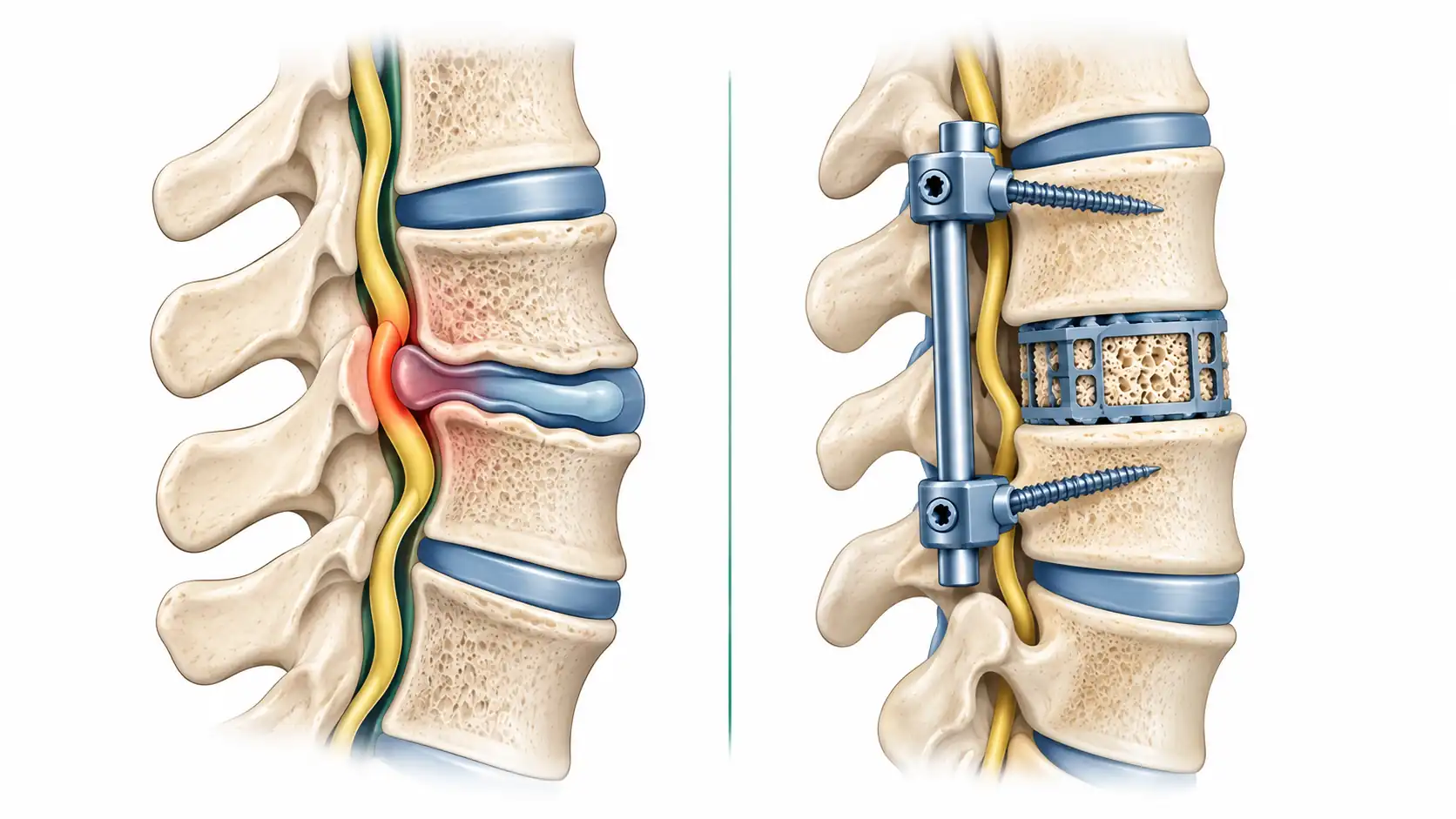
Who Needs Spine Fusion Surgery?
- Degenerative disc disease causing chronic, disabling back pain
- Spinal instability or spondylolisthesis, where one vertebra has slipped forward over another
- A herniated disc accompanied by spinal instability, not relieved by conservative treatment
- Scoliosis or other spinal deformities that need structural correction
- Spinal fractures or trauma affecting the stability of the spine
- A previous spine surgery that has failed to relieve symptoms

If medication, physiotherapy, and injections haven't controlled your symptoms, your surgeon may recommend fusion after reviewing your MRI or CT scans. Many of our spine patients have also explored joint-preserving options first — you can compare related orthopedic procedures on our knee replacement surgery in India page.
Types of Spine Fusion Surgery We Facilitate
The right technique depends on which part of the spine is affected and how much correction is needed.
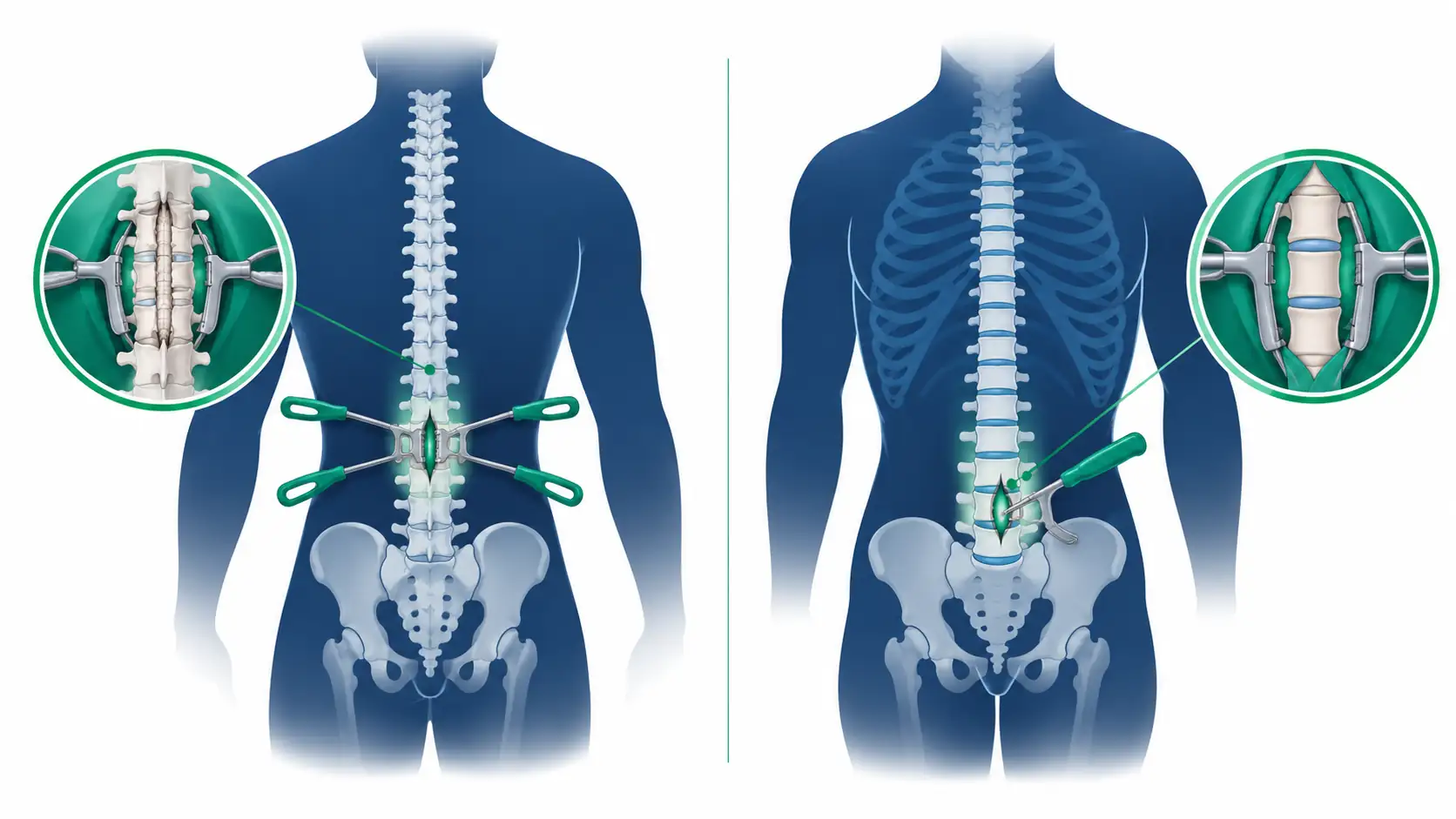
Posterior Lumbar Interbody Fusion (PLIF)
Accessed from the back of the spine; commonly used for lower back degenerative disease and instability.
Anterior Lumbar Interbody Fusion (ALIF)
Accessed through the abdomen, allowing a larger bone graft and better disc height restoration.
Transforaminal Lumbar Interbody Fusion (TLIF)
A posterior approach from one side, reducing nerve retraction compared to traditional PLIF.
Minimally Invasive / Robotic-Assisted Fusion
Smaller incisions, less blood loss, and faster recovery — available at select top-tier hospitals in our network.
What to Expect — Step by Step

Pre-op evaluation (2–3 days before surgery)
MRI/CT review, blood work, and a consultation with your spine surgeon to finalise the surgical plan.
Surgery day (2–7 hours)
Performed under general anaesthesia; duration depends on the number of levels being fused.
Ward monitoring (1–2 days)
Pain management and close observation of movement and sensation in the limbs.
Hospital recovery (1–5 days)
Walking is encouraged almost immediately to promote circulation; minimally invasive cases may go home within 24–48 hours.
Early recovery (3–6 weeks)
Most international patients are cleared to fly home within 2–4 weeks, once your surgeon confirms you're stable for travel.
Full fusion (3–12 months)
Bone continues to fuse over several months, with imaging follow-ups and adjacent segment care to confirm a solid fusion.
Key Benefits
Eliminates painful movement between unstable vertebrae
Relieves nerve-related pain, numbness, and weakness
Corrects spinal instability and deformity
A successful fused section can last a lifetime
Minimally invasive options mean faster discharge
Backed by structured physiotherapy and follow-up care
Risks — and What We Do to Minimise Them
Like any major spine surgery, fusion carries risks including infection, bleeding, nerve injury, hardware-related issues, or — in a small number of cases — the bone failing to fuse fully (non-union). A 12-year Swedish study found that 66% of fusion patients reported being "better or much better," compared with 31% of those treated non-surgically.
These risks are why we only work with accredited hospitals that have dedicated spine surgical teams, intraoperative neuromonitoring, and structured post-op protocols — including adjacent segment care and regular imaging follow-up to protect your long-term outcome. Your surgeon will review your personal risk profile in detail before you commit to surgery.
Spine Fusion Surgery Cost in India
| Region | Package Cost (USD) |
|---|---|
| India | $8,000 – $15,000 |
| Singapore | $30,000 – $60,000 |
| USA / UK / Western Europe | $60,000 – $150,000 |
Prices are indicative, all-inclusive package estimates. Actual cost depends on the hospital, surgeon experience, implant choice, and your individual clinical profile. Contact Health Nirvaana for a personalised quote.
Frequently Asked Questions
What is the spine fusion surgery cost in India?
Spine fusion surgery cost in India typically ranges from $8,000 to $15,000 as an all-inclusive package, compared to $60,000–$150,000 in the US, UK, or Western Europe for the same procedure.
Is spine fusion surgery safe and effective?
Yes. Fusion surgery has a 70–90% success rate for pain relief and achieving solid fusion at experienced centres, with decades of clinical outcome data supporting the procedure.
How long do I need to stay in India for spine fusion surgery?
Most international patients plan for 3–5 weeks in total — a few days for pre-op evaluation, 1–5 days in hospital, and several weeks of early recovery before flying home.
How long does it take to fully recover from spine fusion?
Most patients return to light daily activity within 3–6 months, while the bone graft itself can take up to 12 months to fully fuse, confirmed through follow-up imaging.
What's the difference between minimally invasive and traditional spine fusion?
Minimally invasive fusion uses smaller incisions and causes less muscle disruption, often allowing discharge within 24–48 hours, whereas traditional open fusion typically involves a longer hospital stay.
Can I get a medical visa and travel support?
Yes — our team assists with medical visa invitation letters, hospital appointments, airport pickup, interpreter support, and accommodation for you and an attendant.
Why Choose Health Nirvaana
We work only with accredited spine hospitals and internationally experienced spinal surgeons, so your spine fusion surgery cost in India stays transparent from your first enquiry to your flight back home.
Ready to take the next step?
Share your MRI/CT reports with our team and get a personalised treatment plan and cost estimate — no obligation.