
Kidney Transplant Surgery in India
Kidney Transplant Surgery in India
Considering kidney transplant cost in India? Here's what the surgery involves, who needs it, and what it costs — from $13,000, with a 90–95% one-year success rate at accredited transplant centres.
Trusted by patients from Uganda, Sierra Leone, DR Congo, South Sudan, Ethiopia and 30+ countries for affordable, high-success nephrology care.
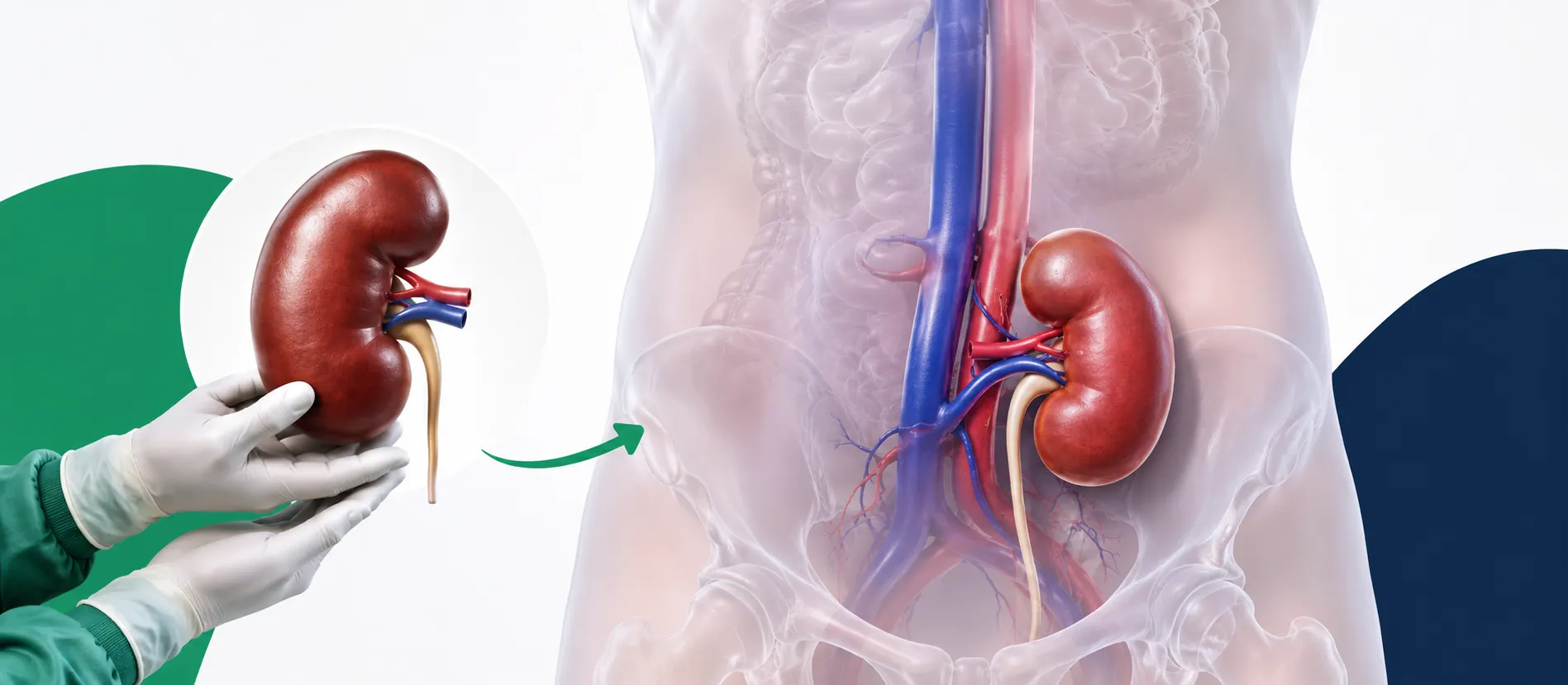
What Is a Kidney Transplant?
When the kidneys stop working properly — a condition called kidney failure — the body can no longer filter waste from the blood.
A kidney transplant involves placing a healthy kidney from a donor (a living relative or a deceased donor) into the patient's body. The new kidney takes over the filtering job, freeing the patient from the exhausting routine of dialysis. The transplanted kidney is placed in the lower abdomen and connected to the patient's blood vessels and bladder — the patient's own (non-functioning) kidneys are usually left in place.
It's one of the most established and widely performed transplant procedures worldwide, with decades of outcome data supporting both living-donor and deceased-donor transplants. You can read more about how kidney failure is assessed on the NIDDK's kidney failure page.
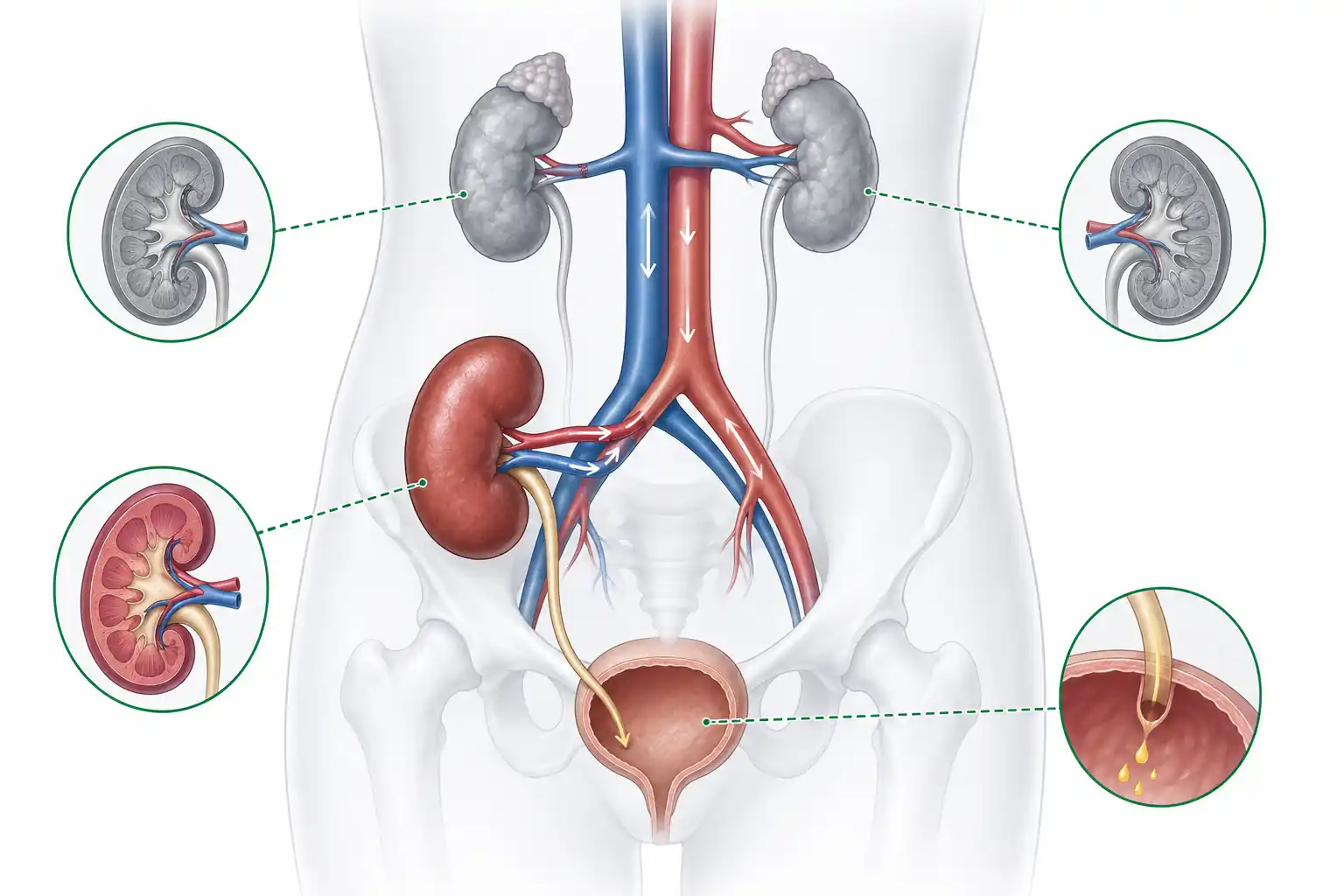
Who Needs a Kidney Transplant?
- End-stage renal disease (ESRD) — kidneys have permanently lost most of their filtering function
- Already on dialysis, or approaching the point where dialysis will soon be needed
- Chronic conditions that have damaged the kidneys, such as long-standing diabetes or high blood pressure
- Polycystic kidney disease or other inherited kidney conditions
- A suitable, medically cleared living donor is available — usually a close family member
A full evaluation — blood tests, tissue typing, and a general health assessment of both patient and donor — confirms suitability before transplant is scheduled. If you're also researching related conditions, see our heart valve replacement page, since heart and kidney health are often connected in long-term chronic disease.
Living Donor vs. Deceased Donor — What's the Difference?
Both options restore kidney function, but the source of the kidney affects timeline, matching process, and long-term outcomes.

Living Donor Transplant
A kidney from a living relative or matched donor. Tends to work better and last longer, and can usually be scheduled sooner since there's no wait for a matched deceased donor.
Deceased Donor Transplant
A kidney from a deceased donor, allocated through the transplant network. Involves a waiting period until a suitably matched organ becomes available.
ABO-Incompatible / Swap Transplant
Where a willing donor isn't a direct match, some centres offer desensitisation protocols or paired kidney exchange programmes to still make a living-donor transplant possible.
Pre-emptive Transplant
A transplant performed before the patient ever needs to start dialysis — generally associated with the best long-term outcomes when a living donor is available early.
What to Expect — Step by Step

Evaluation & donor work-up (1–2 weeks)
Blood tests, tissue typing, cross-matching, and full health assessment of both patient and donor.
Surgery day (3–5 hours)
Performed under general anaesthesia; donor and recipient surgeries are typically done in adjoining operating rooms on the same day.
Post-op monitoring (2–4 days)
Close observation of kidney function, urine output, and early signs of rejection.
Hospital recovery (5–10 days total)
Immunosuppressant medication is started and carefully calibrated; your care coordinator keeps your family updated.
Early recovery (4–6 weeks)
Most international patients are cleared to fly home within 6–8 weeks, once your transplant team confirms stable kidney function.
Full recovery (3–6 months)
Regular follow-up blood tests, lifelong immunosuppressant medication, and gradual return to normal activity.
Key Benefits
Freedom from dialysis — no more 3-times-a-week, 4-hour hospital sessions
Significantly longer life expectancy and better quality of life than staying on dialysis
Fewer dietary restrictions and more energy for daily life
About 90% of transplanted kidneys are still working well one year after surgery
Living-donor kidneys tend to work better and last longer than deceased-donor kidneys
Backed by lifelong follow-up care and medication management
Risks — and What We Do to Minimise Them
Like any major transplant surgery, kidney transplant carries risks including infection, bleeding, blood clots, and organ rejection — where the body's immune system attacks the new kidney. Lifelong immunosuppressant medication is required to prevent rejection, which itself increases susceptibility to infections and carries other long-term side effects that your transplant team will monitor closely.
These risks are why we only work with accredited transplant hospitals with dedicated nephrology and transplant surgery teams, structured donor evaluation protocols, and long-term post-transplant follow-up programmes. Your transplant team will review your personal risk profile — and your donor's — in detail before surgery is scheduled.
Kidney Transplant Cost in India vs. Other Countries
| Region | Package Cost (USD) |
|---|---|
| India | $13,000 – $20,000 |
| Singapore | $50,000 – $100,000 |
| USA / UK / Western Europe | $260,000 – $300,000 |
Prices are indicative, all-inclusive package estimates. Actual cost depends on the hospital, surgeon experience, donor type (living or deceased), and your individual clinical profile.
Frequently Asked Questions
Is kidney transplant surgery safe?
Yes. Kidney transplant is one of the most established and widely performed transplant surgeries, with a 90–95% one-year graft survival rate at experienced centres.
Is a living donor or deceased donor kidney better?
Living-donor kidneys generally work better and last longer, and can usually be scheduled sooner since there's no wait for a matched deceased donor. Deceased-donor transplants remain a strong option when no living donor is available.
Can a family member with a different blood type still donate?
In some cases, yes — through ABO-incompatible desensitisation protocols or paired kidney exchange programmes, which some transplant centres in India offer. Your transplant team will assess this during donor work-up.
How long do I need to stay in India for a kidney transplant?
Most international patients (and their donor) plan for 6–8 weeks total — including evaluation, the 5–10 day hospital stay, and recovery time before your transplant team confirms you're stable to fly home.
What is the kidney transplant cost in India compared to the US or UK?
Kidney transplant cost in India typically runs $13,000–$20,000, compared to $260,000–$300,000 in the US, UK, or Western Europe for the same procedure — often at hospitals with comparable accreditation and outcomes.
Can I get a medical visa and travel support for me and my donor?
Yes — our team assists with medical visa invitation letters for both patient and donor, hospital appointments, airport pickup, interpreter support, and accommodation throughout your stay.
Why Choose Health Nirvaana
We work only with accredited transplant hospitals and internationally experienced nephrology and transplant surgery teams. Every patient — and their donor — is assigned a dedicated care coordinator, from your first enquiry through surgery to your flight back home.
Ready to take the next step?
Share your (and your donor's) medical reports with our team and get a personalised treatment plan and cost estimate — no obligation.