
Interventional Coronary Angioplasty with Stent (PCI) in India
Coronary Angioplasty with Stent (PCI) in India
Trusted by patients from Uganda, Sierra Leone, DR Congo, South Sudan, Ethiopia and 30+ countries for affordable, high-success cardiac care.
What Is Coronary Angioplasty with Stent (PCI)?
When the arteries supplying blood to your heart become narrowed by fatty deposits (plaque), it restricts blood flow and can cause chest pain or a heart attack.
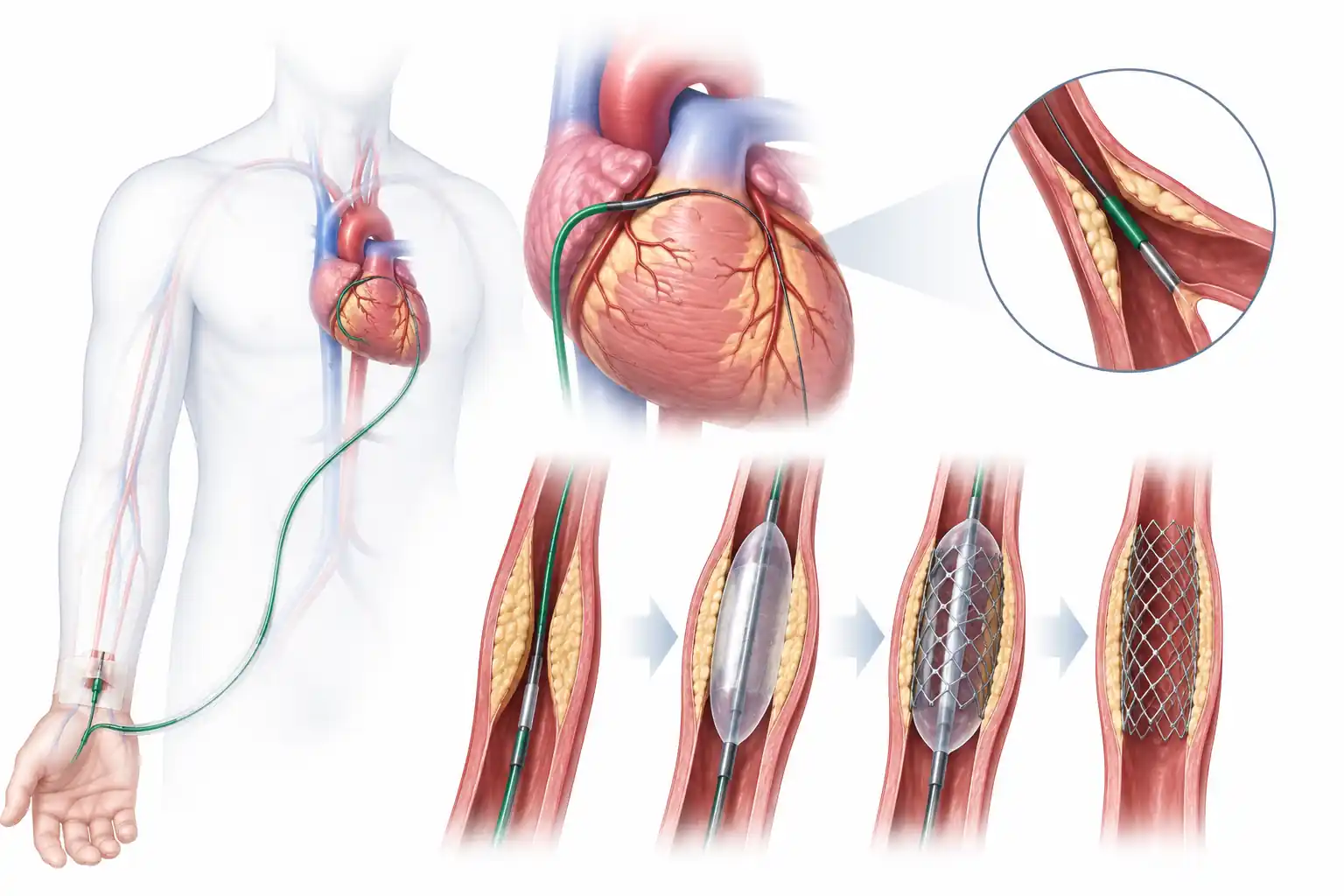
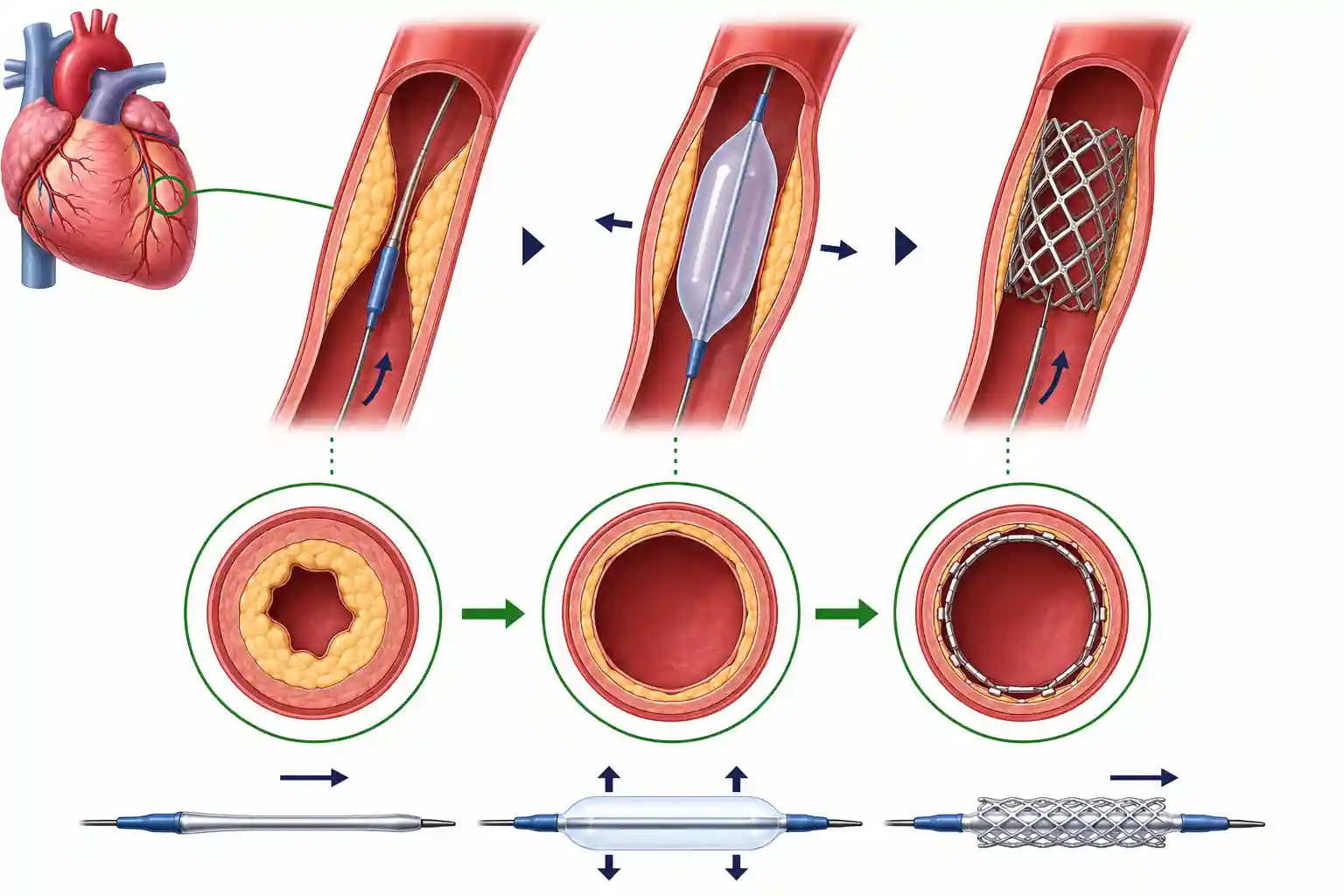
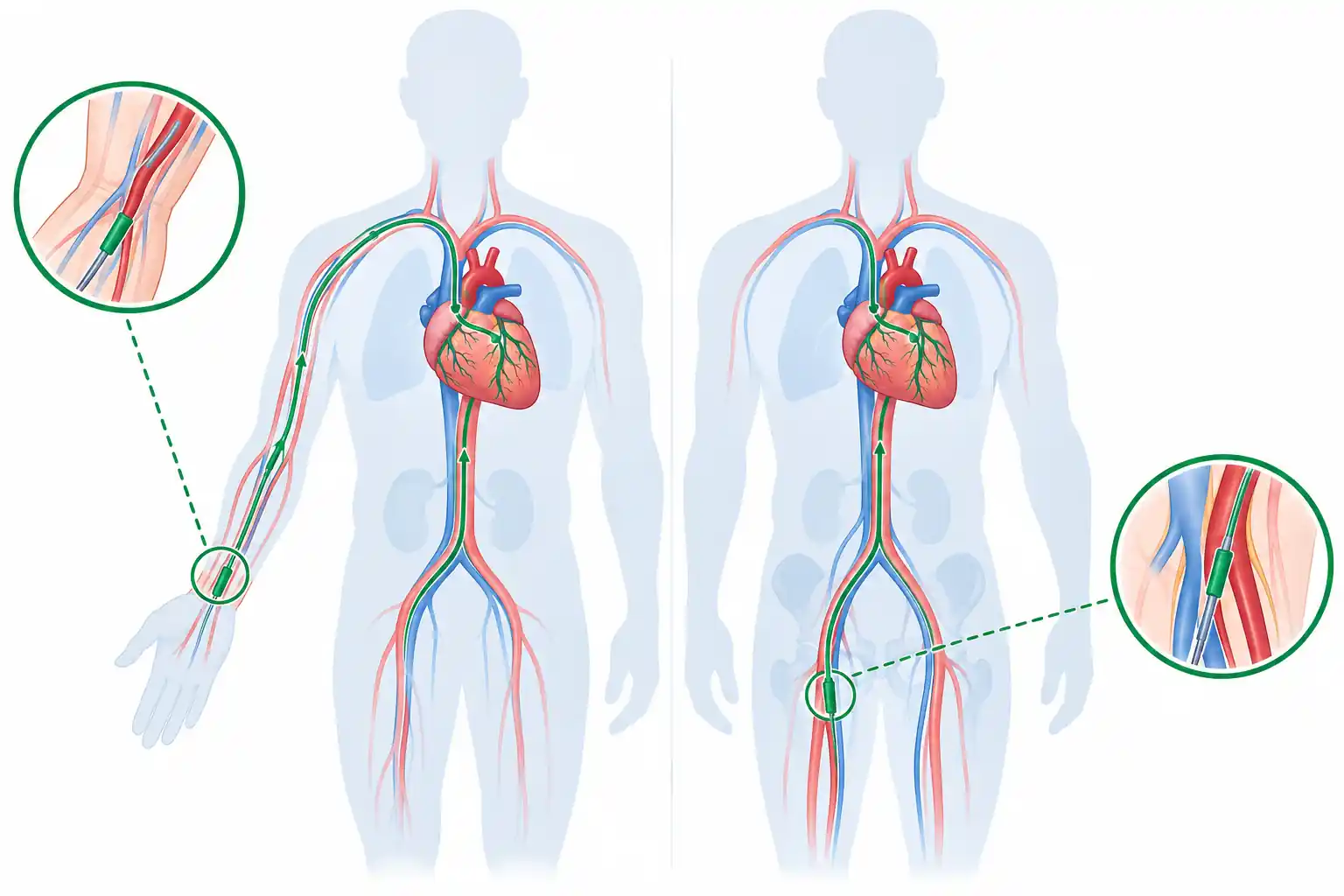
Percutaneous coronary intervention (PCI) — commonly called angioplasty and stenting — is a minimally invasive procedure that opens the blocked artery from the inside. A cardiologist threads a thin catheter into the artery through a small puncture, usually in the wrist (radial artery) or groin (femoral artery), and guides it to the blockage using real-time X-ray imaging. A tiny balloon at the tip is inflated to push the plaque aside and widen the artery, and a small metal mesh tube called a stent is left in place to hold the artery open.
Most stents used today are drug-eluting stents, which slowly release medication into the artery wall to reduce the chance of the artery re-narrowing over time. The whole procedure typically takes 30 minutes to 2 hours, and most patients go home the same day or the following morning.
Who Needs Angioplasty and Stenting?
- Chest pain (angina) that comes on with exertion or at rest, caused by narrowed coronary arteries
- A heart attack in progress, where an artery is suddenly and completely blocked — here PCI is performed as an emergency, time-critical procedure
- An abnormal stress test or coronary angiogram showing a significant blockage in one or two vessels
- Symptoms that persist despite medication and lifestyle changes
- Blockages that are limited enough in number and location to be treated with a stent rather than bypass surgery
Your cardiologist determines suitability using a coronary angiogram, which maps exactly where and how severe the blockages are before deciding between angioplasty, medication alone, or bypass surgery.
Types of PCI We Facilitate
The exact technique depends on your clinical situation and how urgently the artery needs to be opened.
Elective (Planned) PCI
Performed for stable angina after tests confirm a significant blockage. Usually same-day or overnight-stay, scheduled in advance.
Primary (Emergency) PCI
Performed urgently during a heart attack to reopen a fully blocked artery as fast as possible, minimising damage to the heart muscle.
Radial Access
Catheter inserted through the wrist artery. Increasingly preferred — patients can sit up and move sooner, with lower bleeding risk than groin access.
Drug-Eluting Stent (DES)
The standard stent used today; releases medication over several weeks to reduce the risk of the artery narrowing again.
What to Expect — Step by Step

Pre-procedure evaluation
ECG, blood tests, and a coronary angiogram to map the exact location and severity of the blockage.
Procedure day (30 min – 2 hours)
Performed under local anaesthesia with light sedation; you're awake throughout but shouldn't feel pain at the artery.
Recovery monitoring (few hours)
The puncture site is checked and closed with a compression bandage, stitch, or closure device, and your heart rhythm is monitored.
Hospital stay (same day – 2 days)
Elective cases are often discharged the same day or next morning; emergency cases may stay slightly longer for observation.
Medication plan
You'll start dual antiplatelet therapy (typically aspirin plus a second blood-thinning medication) to protect the new stent from clotting — it's essential not to stop these early without your cardiologist's advice.
Full recovery (1–2 weeks)
Most patients return to normal daily activities within a week, with a cardiac follow-up to review medication and lifestyle changes.
Key Benefits
Opens blocked heart arteries quickly — often within 30 minutes to 2 hours
No general anaesthesia or large incision — just a small puncture in the wrist or groin
Rapid relief from chest pain; many patients feel better within hours
Drug-eluting stents keep the re-narrowing risk low, generally under 5%
Most patients return to normal daily activity within about a week
Can be performed emergently to limit heart muscle damage during a heart attack
Risks — and What We Do to Minimise Them
PCI is generally very safe, but as with any procedure involving the heart's blood vessels, there are risks — including bleeding or bruising at the puncture site, an allergic reaction to the contrast dye, irregular heart rhythm, artery damage, and, rarely, stent thrombosis (a clot forming at the stent), heart attack, or stroke.
These risks are why we only work with accredited hospitals with experienced interventional cardiology teams, on-site cardiac surgical backup, and clear guidance on the antiplatelet medication you'll need afterward to protect the stent. Your cardiologist will review your personal risk profile before the procedure.
PCI Cost Comparison
| Region | Package Cost (USD) |
|---|---|
| India | $3,000 – $8,000 |
| Singapore | $12,000 – $25,000 |
| USA / UK / Western Europe | $30,000 – $80,000 |
Prices are indicative, all-inclusive package estimates. Actual cost depends on the hospital, surgeon experience, number and type of stents used, and your individual clinical profile. Contact Health Nirvaana for a personalised quote.
Frequently Asked Questions
Is angioplasty with stenting safe?
Yes. PCI is one of the most commonly performed cardiac procedures worldwide, with success rates of 95–99% at experienced centres, and serious complications are uncommon.
How is PCI different from bypass surgery (CABG)?
PCI is a catheter-based procedure done through a small puncture, with no incision in the chest, and is typically used for one or two blockages. Bypass surgery is a more invasive open-heart operation generally recommended for multiple blockages or complex disease, such as left main artery involvement.
Will I need to take medication after the procedure?
Yes — you'll be prescribed dual antiplatelet therapy, usually aspirin plus a second blood-thinning medication, for a period determined by your cardiologist. This protects the stent from clotting, and it's important not to stop these medications early without medical advice.
Can the artery become blocked again after a stent?
It's possible, but drug-eluting stents have significantly reduced this risk compared to older bare-metal stents, with re-narrowing occurring in well under 5% of cases. Regular follow-up and staying on your prescribed medication both help lower this risk further.
How long do I need to stay in India for angioplasty?
Most international patients plan for about 1–2 weeks total — a day or two before the procedure for evaluation and angiography, 1–2 days in hospital, and a short recovery period before flying home, once your cardiologist confirms you're fit to travel.
How much does angioplasty cost in India compared to the US or UK?
Angioplasty with stenting in India typically costs $3,000–$8,000, compared to $30,000–$80,000 in the US, UK, or Western Europe for the same procedure — often at hospitals with comparable accreditation and outcomes.
Can I get a medical visa and travel support?
Yes — our team assists with medical visa invitation letters, hospital appointments, airport pickup, interpreter support, and accommodation for you and an attendant.
Why Choose Health Nirvaana
We work only with accredited cardiac hospitals and internationally experienced interventional cardiologists. Every patient is assigned a dedicated care coordinator — from your first enquiry, through the procedure, to your flight back home.
Ready to take the next step?
Share your angiogram or cardiac test reports with our team and get a personalised treatment plan and cost estimate — no obligation.