
TAVR / TAVI (Transcatheter Aortic Valve Replacement) in India
TAVR / TAVI (Transcatheter Aortic Valve Replacement) in India
Trusted by patients from Uganda, Sierra Leone, DR Congo, South Sudan, Ethiopia and 30+ countries for affordable, high-success cardiac care.
What Is TAVR / TAVI?
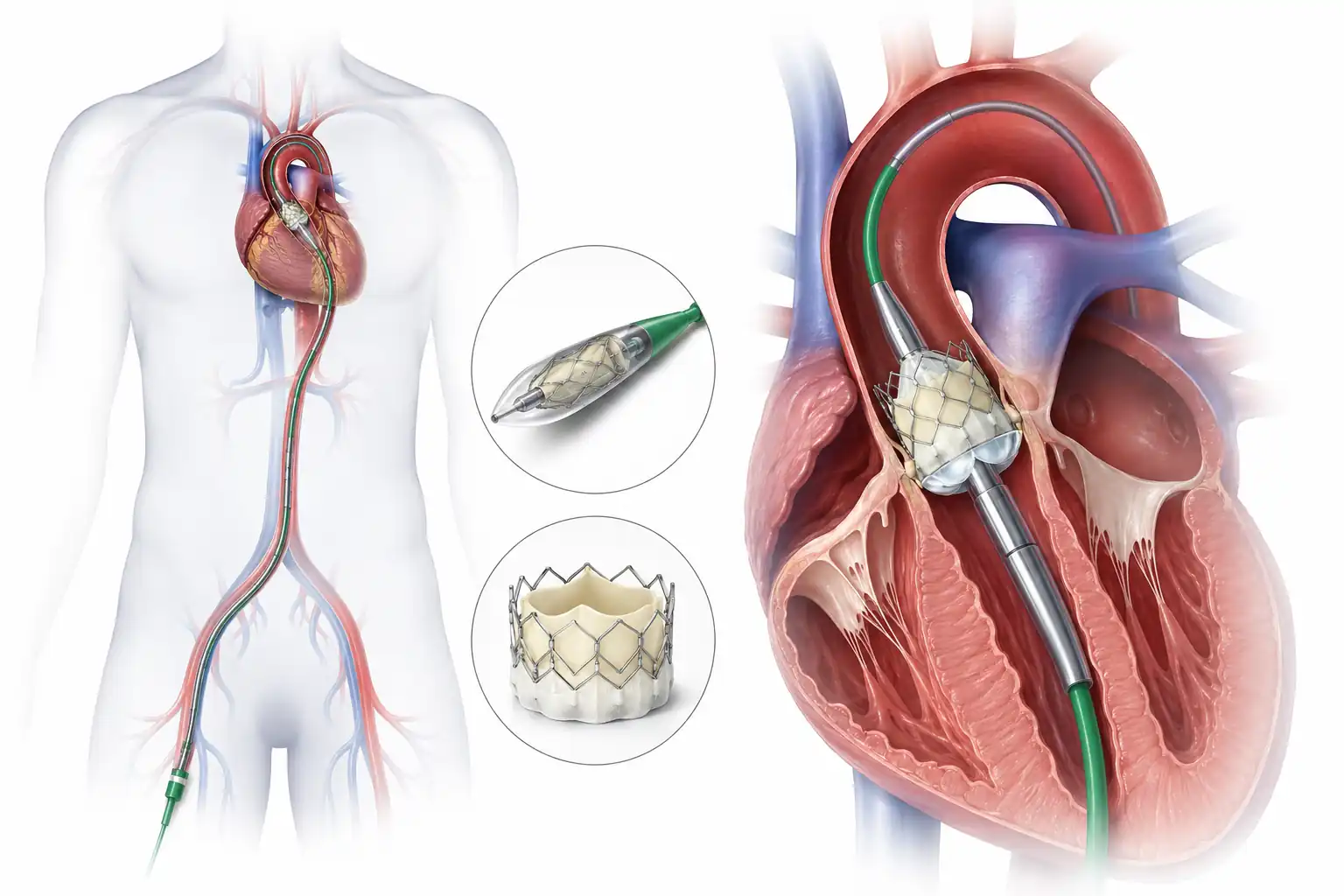
TAVR — also called TAVI (Transcatheter Aortic Valve Implantation) — is a minimally invasive procedure that replaces a narrowed or failing aortic valve without opening the chest.
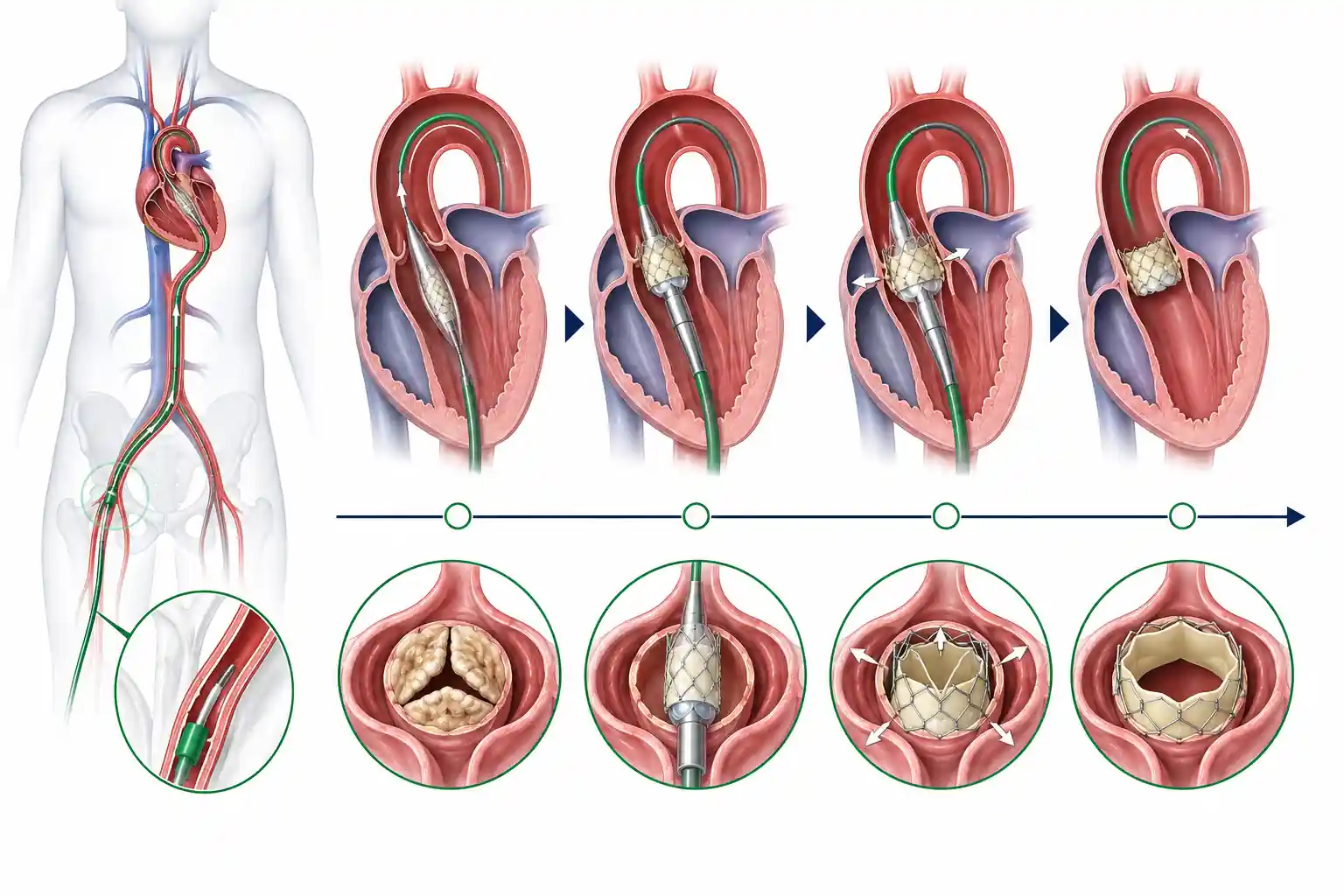
Instead of a large incision and a heart-lung machine, the cardiologist threads a thin, flexible catheter through a small entry point — most commonly an artery in the groin — and guides a collapsible new valve up to the heart. Once positioned inside your old, diseased valve, the new valve is expanded and immediately takes over its job, restoring normal blood flow. In cases where the groin arteries aren't suitable, the team can use an alternate access route, such as through the collarbone area or a small incision near the tip of the heart.
TAVR was first approved for patients considered too high-risk for open-heart surgery. Since then, large clinical trials have shown it performs as well as, or better than, traditional open surgery even in intermediate- and low-risk patients, which is why it's now used across a much broader range of patients.
Who Needs TAVR?
- You've been diagnosed with severe aortic stenosis — a narrowed aortic valve confirmed on echocardiogram
- You have symptoms such as breathlessness, chest tightness, dizziness, or fainting on exertion
- Your heart team considers you at intermediate, high, or extreme risk for open-heart surgery due to age or other health conditions
- You're increasingly also a candidate if you're at low surgical risk, based on recent trial evidence supporting TAVR across risk groups
- A CT scan and echocardiogram confirm your valve and blood-vessel anatomy are suitable for catheter-based delivery
The decision is made by a multidisciplinary "heart team" — an interventional cardiologist and a cardiac surgeon reviewing your case together — not by a single doctor's opinion.
Access Routes We Facilitate
The way the new valve reaches your heart depends on your blood-vessel anatomy, assessed in advance with a CT scan.
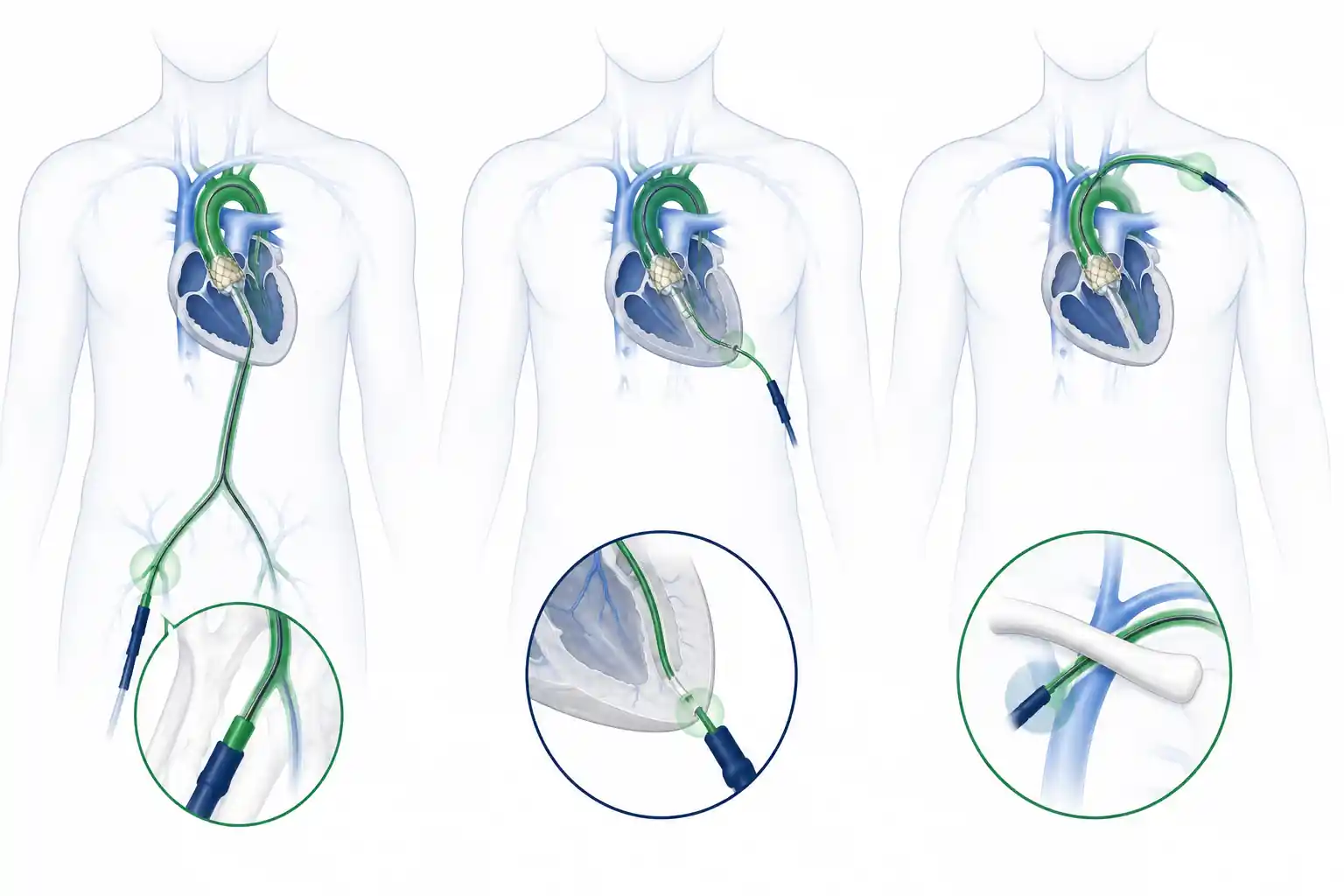
Transfemoral
The most common route, entering through an artery in the groin. Fully catheter-based, no incisions near the heart or lungs, and typically the fastest recovery.
Transapical
Used when the femoral arteries are too narrow or diseased. A small incision is made near the tip (apex) of the heart to deliver the valve directly.
Subclavian / Transaortic
Alternate routes through an artery under the collarbone or directly through the aorta, used in select cases where transfemoral access isn't possible.
Valve-in-Valve TAVR
For patients whose earlier surgical bioprosthetic valve has worn out, a new TAVR valve can often be placed inside the old one, avoiding repeat open-heart surgery.
What to Expect — Step by Step

Pre-op evaluation (2–3 days before)
CT angiography, echocardiogram, blood work, and heart-team review to confirm you're a candidate and plan the access route and valve size.
Procedure day (1–2 hours)
Performed in a catheterisation lab under general or local anaesthesia with sedation; the new valve is delivered by catheter and expanded inside the old valve.
Recovery monitoring (few hours to 1 day)
Close observation of heart rhythm and the vascular access site, since conduction disturbances can occasionally occur soon after the procedure.
Hospital stay (1–3 days)
Many patients are walking the same day or the next morning, well ahead of a typical open-heart-surgery recovery.
Early recovery (1–2 weeks)
Most international patients can fly home within 2–3 weeks once the surgeon confirms the access site has healed and heart rhythm is stable.
Full recovery (2–4 weeks)
Gradual return to normal activity, with follow-up echocardiograms to confirm the new valve is working well.
Key Benefits
No open-chest surgery — usually just a small access point in the groin
Most patients go home within 1–3 days and resume light activity within a week
Relieves breathlessness, dizziness, and chest tightness quickly by restoring blood flow
A safer option for older or higher-risk patients who may not tolerate open-heart surgery
Trial data now supports outcomes comparable to open surgery even in lower-risk patients
Backed by structured follow-up and echocardiogram monitoring
Risks — and What We Do to Minimise Them
TAVR is less invasive than open-heart surgery, but it isn't risk-free. Possible complications include bleeding or injury at the vascular access site, stroke, leakage around the new valve (paravalvular leak), and disturbances to the heart's electrical system that may require a permanent pacemaker.
These risks are why we only work with accredited hospitals that have an experienced multidisciplinary heart team, dedicated cardiac catheterisation labs, and structured monitoring before and after the procedure. Your suitability and personal risk profile are reviewed in detail using CT and echocardiogram imaging before you commit to the procedure.
TAVR / TAVI Cost Comparison
| Region | Package Cost (USD) |
|---|---|
| India | $18,000 – $35,000 |
| Singapore | $45,000 – $80,000 |
| USA / UK / Western Europe | $120,000 – $250,000 |
Prices are indicative, all-inclusive package estimates. Actual cost depends on the hospital, surgeon experience, valve/implant choice, access route required, and your individual clinical profile. Contact Health Nirvaana for a personalised quote.
Frequently Asked Questions
Is TAVR safe?
Yes. TAVR is a well-established, widely studied procedure with success rates of around 90–95% at experienced centres. It's now performed more often than open surgical aortic valve replacement in many countries, backed by more than a decade of outcome data.
How is TAVR different from open-heart valve surgery?
Open-heart surgery requires a large chest incision and typically a heart-lung machine. TAVR delivers the new valve through a catheter, usually via the groin, without stopping the heart in most cases — resulting in a smaller incision, shorter hospital stay, and faster recovery.
Am I too old, or too high-risk, for TAVR?
Age or higher surgical risk alone rarely rules someone out — TAVR was originally developed for patients considered too risky for open surgery. A CT scan, echocardiogram, and heart-team review will determine your candidacy and the right access route for your anatomy.
How long does a TAVR valve last?
Follow-up studies now extend past 10 years and continue to show good durability, with ongoing improvements to valve design. As with any bioprosthetic valve, your surgeon will monitor valve function over time with periodic echocardiograms.
How long do I need to stay in India for TAVR?
Most international patients plan for 2–3 weeks total — a few days before the procedure for evaluation and imaging, 1–3 days in hospital, and 1–2 weeks of recovery before flying home.
How much does TAVR cost in India compared to the US or UK?
TAVR in India typically costs $18,000–$35,000, compared to $120,000–$250,000 in the US, UK, or Western Europe for the same procedure — often at hospitals with comparable accreditation and outcomes.
Can I get a medical visa and travel support?
Yes — our team assists with medical visa invitation letters, hospital appointments, airport pickup, interpreter support, and accommodation for you and an attendant.
Why Choose Health Nirvaana
We work only with accredited cardiac hospitals and internationally experienced interventional cardiologists and cardiac surgeons. Every patient is assigned a dedicated care coordinator — from your first enquiry, through the procedure, to your flight back home.
Ready to take the next step?
Share your echocardiogram and CT scan reports with our team and get a personalised treatment plan and cost estimate — no obligation.